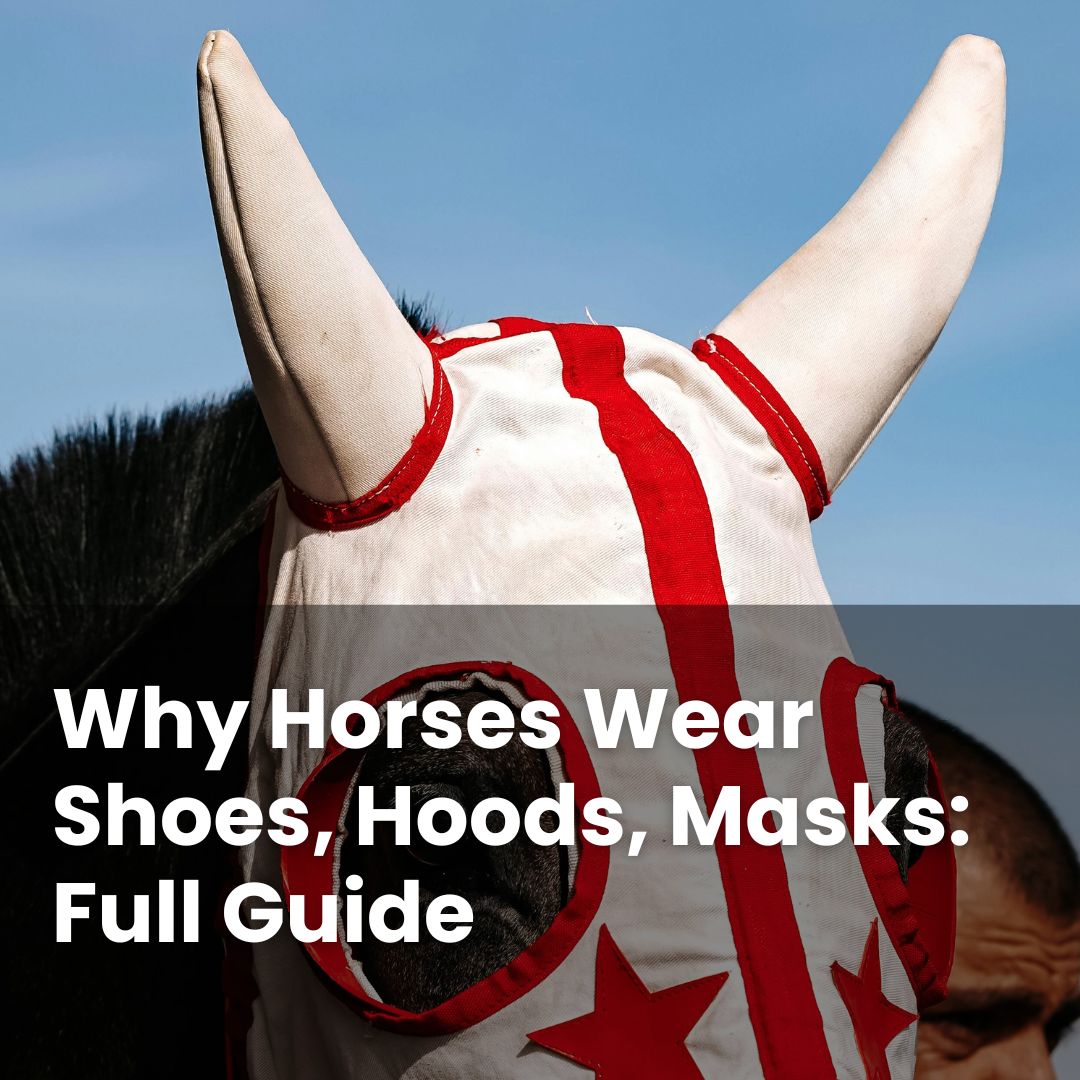
Horses are often seen wearing various types of gear, from metal shoes to colourful hoods and masks. Each item serves a particular purpose, and understanding them might help anyone appreciate the choices made for these animals.
This blog post looks at horse shoes, how farriers fit them, and why hoods and masks are often used. It also touches on red hoods and the occasions they might appear.
Whether new to horse care or simply curious, this guide provides clear explanations of the main functions of these items.
Why Do Horses Wear Shoes?
Horses’ hooves are constantly exposed to surfaces that could wear them down. Shoes are one of the ways caretakers address this, helping with protection and movement.
For horses that work regularly or compete in sporting activities, shoes might influence how the hooves interact with the ground. They might affect traction, stability, and the way the hoof makes contact with surfaces.
Shoes might also be part of more specific plans to support a horse’s limbs or address hoof conditions. The type of shoe used, its shape, and its material might influence how a horse moves and responds during exercise or performance.
Not every horse needs shoes. Some do well barefoot, particularly if they spend most of their time on soft surfaces. Regular trimming and observation are still essential to maintain healthy hooves and prevent uneven wear.
How Farriers Fit Horse Shoes Safely
A farrier is trained to assess hooves and fit shoes appropriately. They examine the hoof, stance, and way a horse moves to decide how a shoe should be applied.
Old shoes are removed, and the hoof is prepared so that a new shoe fits evenly. Metals used include steel for sturdiness or aluminium for lighter work, sometimes preferred in racing contexts to reduce effort during movement. Shoes are secured with nails driven into the outer part of the hoof, avoiding sensitive areas.
Farriers might also use additional aids like pads or studs to improve footing in certain conditions or to assist recovery from minor injuries. Shoes are checked and adjusted regularly, as hooves grow and change shape over time.
Once hoof care is addressed, attention often turns to head coverings, which serve very different purposes.

Discover The Best Online Casinos
Browse our list of top-recommended casino sites, read reviews from real players & be the first to get access to the latest casino bonuses
Why Do Horses Wear Hoods?
Hoods are coverings worn over the head, sometimes including the ears. They are designed to affect how a horse experiences its surroundings, subtly guiding attention and reactions.
Some hoods narrow vision or reduce sounds, helping horses remain settled in busy environments. Materials are chosen for comfort and airflow, allowing the horse to move naturally while wearing them.
Designs vary: some cover only the ears, while others extend to parts of the face. The choice of hood depends on what the horse needs in terms of focus and comfort.
Purpose of Hoods for Race and Performance Horses
For racehorses or horses in competitive activities, hoods might assist in high-stimulation environments. Crowded areas, noise, and visual distractions are less overwhelming with the right design.
Trainers might test hoods during schooling to find what works best for each horse. For example, a horse that reacts to side movement might wear a hood with restricted side vision, while ear inserts might help reduce reactions to sudden sounds. The goal is to support the horse’s responsiveness to the handler’s guidance.
Why Do Horses Wear Masks?
Masks are used to protect a horse’s face and eyes. Unlike hoods, their primary purpose is protection rather than concentration. They are available in various designs depending on the conditions and the horse’s needs.
Benefits of Fly Masks and Protective Masks
Fly masks are a common type of face covering, keeping insects away from sensitive areas such as the eyes, nose, and ears. This may reduce irritation, rubbing, and minor injuries. Many models include ear covers, detachable nose pieces, and fine mesh that allows the horse to blink freely while maintaining protection.
Protective masks offer additional safeguards against dust, sunlight, wind, or accidental knocks. Some are designed to block a measured percentage of UV rays, which can be useful for horses with pale muzzles, sun-sensitive skin, or specific eye conditions. Ensuring a good fit is important so the mask stays in place without rubbing and the horse’s vision remains clear.
Different masks provide different levels of coverage or visibility, which means that the choice of colour or design may be considered as much for practical purposes as for the horse’s protection.
What Are Red Hoods and Why Are They Used?
Red hoods are brightly coloured coverings, usually including the ears and sometimes the eyes. They serve the same basic functions as other hoods, such as reducing distractions and assisting the horse in responding to its surroundings.
The bright colour makes them highly visible for handlers, trainers, and officials, which is useful in busy or crowded settings. They are often used during training, parades, or competitive activities to indicate that ear covers or inserts are in place and to allow horses to be quickly identified.
Racing and Visibility Reasons for Red Hoods
In horse racing, red hoods are particularly useful for visibility. The colour helps trainers, handlers, and officials spot horses from a distance and check whether ear covers or inserts are being worn, which may need to be declared under the rules.
While they offer similar functional benefits to standard hoods, such as reducing distractions, it is the high-visibility colour that distinguishes them and makes them especially practical in racing environments.
When Should Horses Wear Each Type of Gear?
Choosing gear depends on the horse’s activities, environment, and temperament.
Shoes are suited to horses working on harder surfaces, competing in sports, or needing support for particular conditions.
Hoods might be applied to horses that are easily distracted or in busy settings, such as schoolings, parades, or competitions.
Masks might be useful in warmer months, areas with many insects, or for horses needing extra facial protection.
All equipment must fit well and be comfortable, and guidance from a farrier or veterinarian is valuable.
For those hypothetically engaging with horse racing betting, it is important to set a budget, avoid chasing losses, and limit participation. Organisations like GamCare and GambleAware provide confidential support if gambling causes stress or financial difficulty.
Understanding the reasons for shoes, hoods, and masks shows how care decisions are made with the horse’s comfort, health, and performance in mind.