Ever watched a boxing match end abruptly between rounds and wondered what just happened? Boxing has its own set of unique terms and abbreviations, and RTD is one that often causes confusion for fans and newcomers alike.
Understanding RTD is important for anyone interested in boxing’s official rules and how fights are decided. The term affects how matches are recorded and classified, so it’s a useful one to get to grips with.
Curious about what sets an RTD apart from a knockout or a technical decision? Here’s exactly what RTD means, how it works, and why it can make a big difference in a boxing match.
What Does RTD Stand For in Boxing?
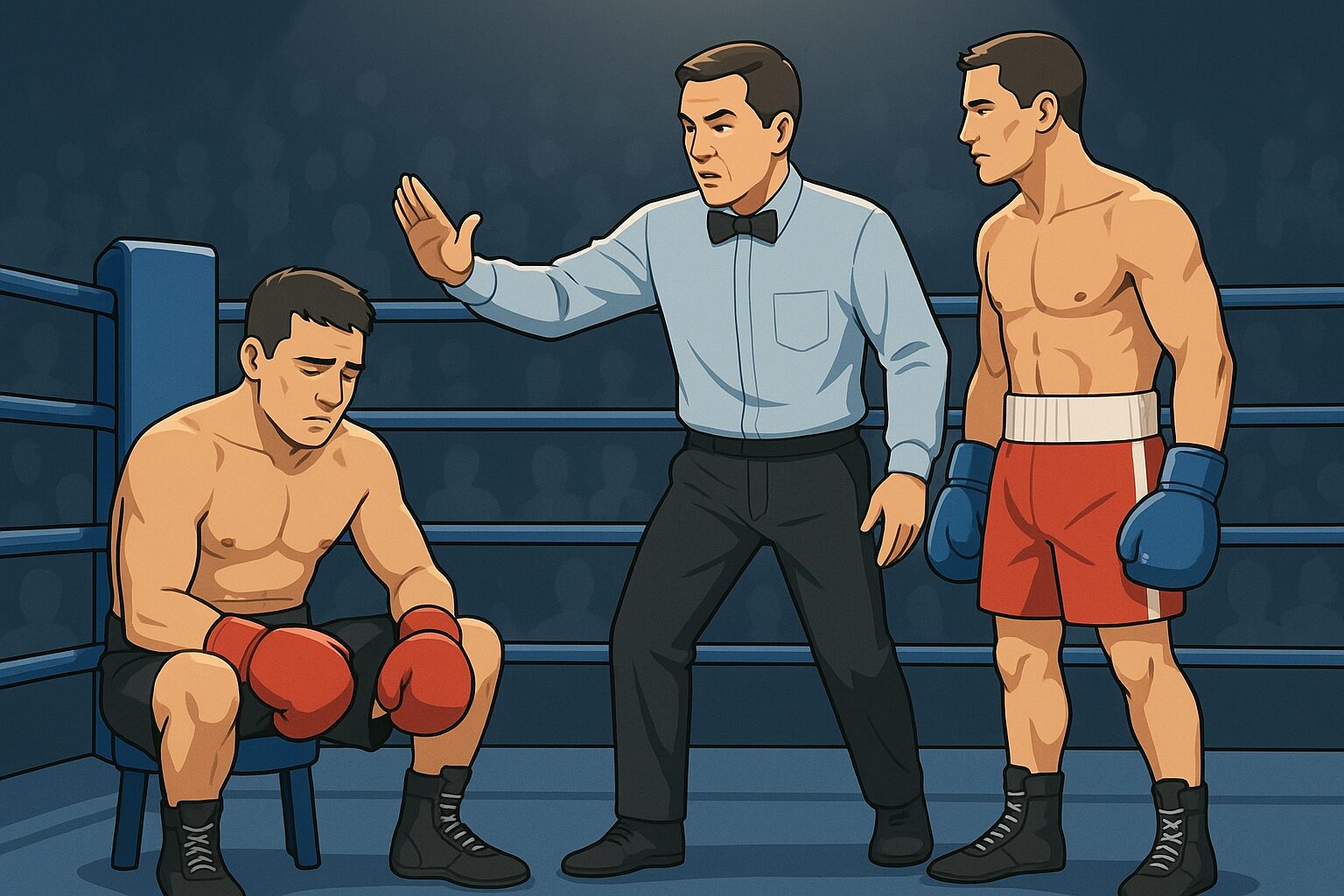
RTD in boxing stands for Retired or Retirement. It appears in official match results when a boxer does not come out for the next round, usually during the one‑minute break between rounds. The referee will confirm the decision with the corner and ringside officials, then announce the retirement. You will often see it listed with a round number, for example RTD 7, meaning the boxer failed to answer the bell for round eight.
The decision to retire can be made by the boxer, their corner, or their coach, and a ringside doctor may advise that the bout should not continue. Sometimes the corner signals this by literally throwing in the towel. Unlike a knockout, the boxer is still able to stand and respond, but they choose not to continue.
Common reasons include a serious cut, a swollen eye that impairs vision, a hand or shoulder injury, illness, or a tactical call to prevent unnecessary damage when a fight has turned one‑sided. It is a welfare‑first outcome and is distinct from a technical knockout that happens during active action, though some records group retirements under the wider TKO umbrella while noting RTD to show it occurred between rounds.
You’ll see RTD used in records to distinguish this outcome from others like knockouts or technical knockouts. With the basics covered, it helps to understand how an RTD actually comes about during a bout.
How Does an RTD Happen in a Boxing Match?
An RTD takes place when a boxer or their corner decides not to continue at the start of a new round. This decision is made during the one-minute break and communicated before the next bell. The boxer usually remains on the stool while the chief second signals to the referee or the commission inspector. If there is any uncertainty, the referee may walk over and ask the boxer directly whether they wish to continue.
Corners may stop the fight for several reasons. These can include visible injuries like cuts and swelling that affect vision, suspected concussion symptoms such as confusion or delayed responses, or damage to hands, ribs or shoulders. Illness or severe fatigue that prevents proper defence can also prompt a retirement. The ringside doctor can be consulted between rounds and may advise or instruct a stoppage if continuing would be unsafe. The guiding principle is always the boxer’s safety and long-term welfare.
Unlike a knockout or technical knockout, the referee is not counting a boxer out in the ring. The call is made in the corner, away from active exchanges, which keeps the process controlled and clear. If a corner throws in the towel during a round, steps on to the apron, or the referee halts the action due to unanswered punches, the result is recorded as a TKO rather than an RTD. RTD refers specifically to a retirement between rounds, before the next bell sounds.
Once the corner informs the referee, the bout is stopped and recorded as an RTD. The time is usually logged as the start of the next round, even though no punches are thrown, and the opponent is awarded the win by retirement. Officials will note which round was not answered, and the scorecards no longer matter once the retirement is confirmed. In some records it may appear as a TKO via retirement, but the outcome and method are treated the same. With the mechanics in mind, the next step is how the rules describe this process.

Discover The Best Online Casinos
Browse our list of top-recommended casino sites, read reviews from real players & be the first to get access to the latest casino bonuses
What Are the Official Rules for RTD Decisions?
Under major boxing authorities, an RTD is recognised when a boxer fails to answer the bell for the next round and no further punches are thrown. It can be initiated by the boxer or by their corner during the one‑minute interval, signalling that they will not continue.
The corner must tell the referee or ringside officials of the decision before the round begins, usually by informing the referee or inspector on the apron. In some jurisdictions a towel may be thrown to indicate retirement, though the referee still has to accept and confirm it. The referee may also consult the ringside doctor if injury is involved.
The referee confirms the retirement, signals to the timekeeper and ends the bout. The stoppage time is typically recorded as the end of the previous round or the start of the next, depending on local practice.
The opponent is awarded the win, marked as RTD rather than KO or TKO. Bodies such as the British Boxing Board of Control and the World Boxing Association apply this consistently, so results are recorded in a standard way across events and on official records.
With that framework in place, it’s worth looking at the referee’s role in confirming an RTD.
How Do Referees Decide on an RTD?
Referees play an important role in confirming an RTD. When a corner signals their boxer will not continue, the referee is notified before the next round starts. They will check with the boxer and the team to make sure the decision is understood and clearly for safety.
Referees follow strict procedures set by governing bodies. Their job is to stop the bout in a fair, consistent manner and ensure the result is properly communicated to the officials at ringside. Once confirmed, the match ends immediately.
That process is different from an in-ring stoppage, which brings us to how RTD compares with a technical knockout.
Key Differences Between RTD and Technical Knockout
An RTD occurs when a boxer does not answer the bell for the next round, with the decision coming from the corner during the rest period.
A technical knockout is called by the referee while the action is taking place. This happens when a boxer cannot defend themselves, is taking excessive damage, or is otherwise at risk.
Both outcomes prioritise safety, but an RTD is a corner decision between rounds, while a TKO is the referee’s intervention during a round. Understanding that distinction helps when you’re reading fight results and commentary.
What Impact Does an RTD Have on a Boxer’s Record?
An RTD is officially logged as a win for the opponent and a loss for the boxer who retires. It sits alongside KOs, TKOs, points decisions and draws on a professional record. It is treated as a form of stoppage, so it adds to the winner’s stoppage tally and counts as a stoppage defeat for the boxer who does not continue. Promoters and statisticians often include RTDs when talking about a fighter’s KO percentage, even though it is not a knockout in the strict sense.
On record sheets, the result will show as RTD, making it clear the bout ended by retirement rather than an in-ring stoppage from the referee. The timing is usually listed at the end of the previous round, for example RTD 6, to indicate the boxer did not answer the bell for the next session. This remains part of a boxer’s history, is recognised by major sanctioning bodies and commissions, and is displayed distinctly in databases and rankings summaries.
An RTD can also have practical implications beyond the line on a ledger. A stoppage win may help a boxer’s standing or influence future matchmaking, but the context matters. Pundits and matchmakers will consider whether the retirement came due to an injury, a corner’s tactical call or a one-sided bout, rather than viewing every RTD as the same.
Knowing how it appears on a record often clears up assumptions. It is not a no contest or a disqualification, and it differs from a referee’s mid-round stoppage. That distinction leads neatly into the most common misconceptions.
Common Misconceptions About RTD in Boxing
A frequent misconception is that RTD means the boxer was knocked out or the referee forced the stoppage. In reality, RTD reflects a decision from the boxer or their corner between rounds. It happens when a fighter does not answer the bell for the next round, often after honest discussions with the trainer and, at times, on the advice of the ringside doctor. The corner notifies the referee that their boxer will not continue, and the bout is officially ended as an RTD rather than a KO or TKO.
Another belief is that RTD is somehow less serious than a KO or TKO. In fact, it is an official stoppage and carries the same weight in a boxer’s record. It is recorded as a loss inside the distance for the boxer who retires and a stoppage win for their opponent, with titles and rankings affected in the same way as any other non‑decision finish. From a regulatory and record‑keeping perspective, it is treated as a clear conclusion to the contest.
It’s also wrong to assume an RTD shows a lack of effort or poor sportsmanship. These calls are typically made to protect health and preserve a fighter’s career. They can follow a serious cut, an injury such as a damaged hand, a swollen eye that impairs vision, or sustained punishment that makes a turnaround unrealistic and unsafe. Corners have a duty of care and will sometimes protect a brave athlete from taking unnecessary risks, even if the fighter wants to carry on.
Understanding why corners step in helps make sense of when RTDs occur. They are often the result of measured judgement, where long‑term wellbeing is prioritised over short‑term pride, and where the safest option is to pull a boxer out between rounds rather than allow avoidable harm.
Why Might a Corner Choose to Retire Their Boxer?
Corners carry the responsibility of safeguarding their fighter’s wellbeing. They may retire a boxer due to injuries like deep cuts, severe swelling that affects vision, or concerns about head trauma. Clear signs such as disorientation, delayed answers to instructions, or an eye closing shut tell the team that safety must come first. The ringside doctor’s advice often shapes that decision, and officials expect corners to act with caution.
Fatigue can also be decisive. If a boxer’s legs have gone, their hands are dropping, or they are slow to react to incoming shots, the corner may judge that they can no longer protect themselves. When a fighter is being overwhelmed and defensive skills are slipping, asking them to continue can create unnecessary risk.
There are tactical reasons too. If a game plan has failed, adjustments are not working, and the boxer is taking sustained punishment, the team might call it to preserve the fighter for future bouts. Ending it early can prevent avoidable damage and support the boxer’s long-term career.
The process is usually handled between rounds. The chief second will consult the boxer, the cutperson and, where needed, the doctor before informing the referee or throwing in the towel. While a proud fighter may want to carry on, the corner’s duty of care allows them to overrule that instinct.
Regulations and medical suspensions are another consideration. Worsening cuts or suspected fractures can lead to longer recovery times if a bout is pushed on, affecting training and future dates. Stopping at the right moment respects the sport’s safety standards and protects the boxer’s health.
Is RTD Used in Amateur and Professional Boxing?
RTD is recognised in both professional and amateur boxing, although wording can vary between organisations. You may also hear broadcasters or ring announcers say a boxer has “retired”, which refers to the same outcome between rounds.
In professional boxing, RTD is the common term for a retirement between rounds. It is used when a boxer or their corner indicates during the break that they will not continue. This can follow a trainer withdrawing their fighter, a towel being thrown, an injury, or advice from the ringside doctor.
The referee will confirm the decision with the commission and timekeeper, and the result is then recorded as RTD with the relevant round number. You will see it listed in official bout sheets and on recognised databases and records.
In amateur boxing, the same scenario may be recorded as a corner retirement or abandonment, depending on the ruleset. Some codes also distinguish this from a referee stops contest, which occurs during a round rather than at the interval.
Despite these wording differences, the emphasis is the same at every level. The process prioritises clear communication between the corner, referee and officials, and above all the boxer’s safety.
Summary: Understanding RTD in Boxing
RTD, or Retired, is an outcome where a boxer or their corner decides not to continue, typically between rounds. It is recorded officially and prioritises the boxer’s health.
The procedure is straightforward across both professional and amateur codes, with corners notifying the referee and the result entered as RTD rather than KO or TKO.
Recognising what RTD means and how it differs from other outcomes makes fight results easier to read and discussions clearer. If you want to explore more rules, definitions, and examples, visit our boxing rules hub for detailed guides and comparisons.