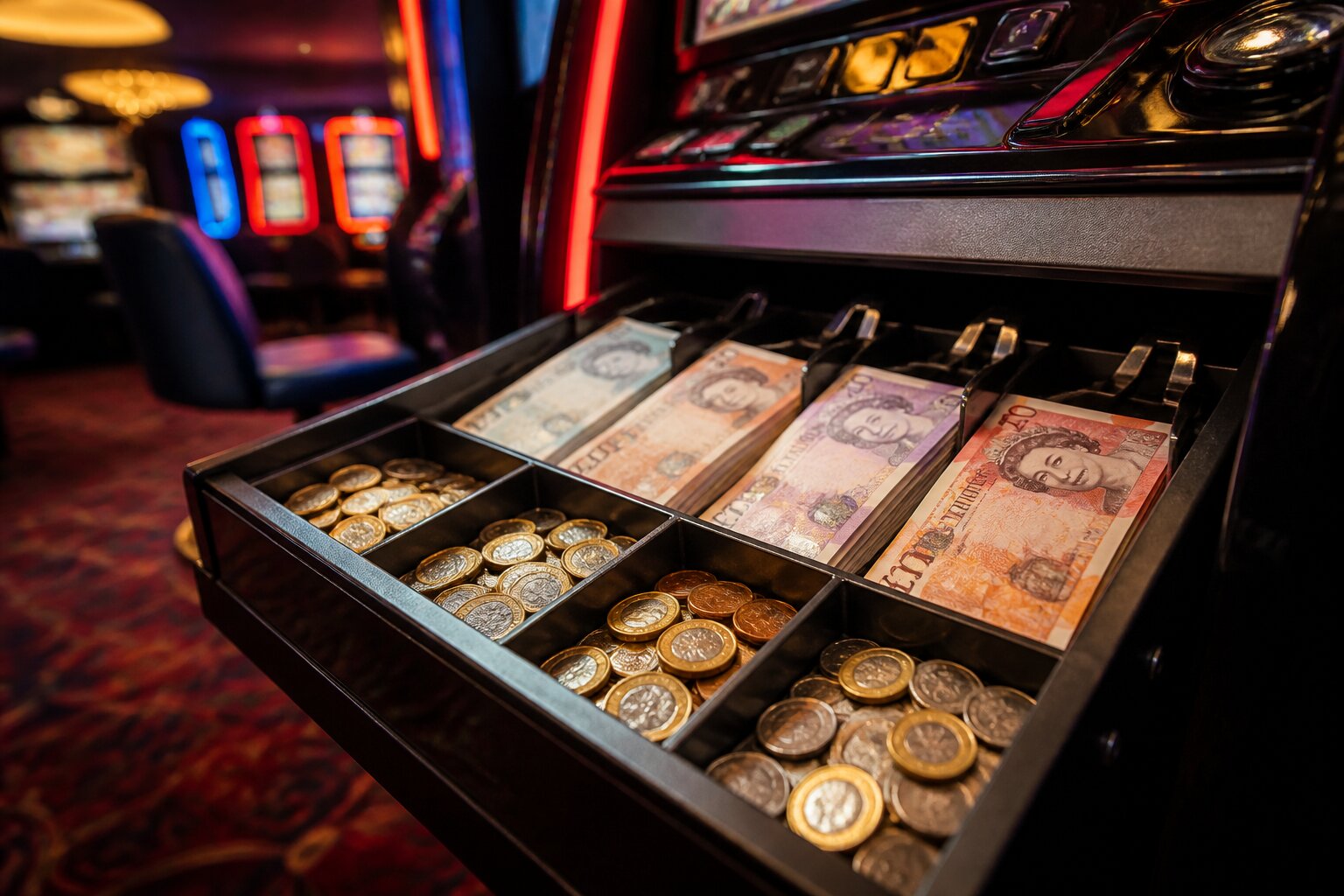
Ever wondered just how much cash a slot machine can actually hold? Whether it’s the cabinets in an arcade or the virtual slots online, there’s more going on behind the scenes than most players realise.
From safes beneath the reels in land-based machines to the digital wallets used online, the methods for storing and paying out winnings vary considerably. The amounts involved depend on factors such as the machine type, the venue and the payout systems operators use.
Curious about what happens when you press that spin button, or how payouts reach winners? This guide explains how slot machines hold and move money, both in-person and online, and what that means for players.
What Is Inside A Slot Machine?
A slot machine may look simple from the outside, but inside it’s a piece of carefully engineered equipment built for secure and reliable operation.
Traditional land-based machines contain a central computer that runs the Random Number Generator (RNG), which produces each spin’s outcome. You will also find a bill acceptor that counts and routes notes into a locked cash box, a ticket printer for cash-outs, mechanical reels or video graphics, a player interface, speakers and lighting equipment. All cash compartments use strong locks and alarms and are accessible only to authorised staff.
Online slots operate entirely with software. There is no physical cash handling; payments and winnings are managed electronically through the operator’s account systems and encrypted payment providers.
These internal differences affect how payouts are processed, so the experience of playing in a venue and playing online can feel quite distinct.
How Do Slot Machines Handle Cash And Credits?
In land-based machines, money inserted via notes or coins is counted and stored securely, while credits are added to the player’s display for immediate use. When players cash out, modern machines often issue a coded ticket that can be redeemed at a kiosk or with staff, cutting down the need to handle coins.
All transactions are recorded digitally within the machine’s system for accurate accounting and to prevent unauthorised access. Operators maintain audit trails and routine checks to ensure everything matches up.
Online slots use the player’s account balance as a digital wallet. Deposits, wagers and payouts move through secure electronic systems with encryption and verification. The operator’s platform records every transaction so that account balances and payouts are clear and traceable.
Where the handling methods differ, the underlying aim is the same: to keep funds secure and records reliable.

Discover The Best Online Casinos
Browse our list of top-recommended casino sites, read reviews from real players & be the first to get access to the latest casino bonuses
How Are Payouts Calculated In Slot Machines?
Payouts are governed by software logic and regulated standards to make sure outcomes are fair and transparent.
The Random Number Generator (RNG) decides each spin’s result. The machine’s Return to Player (RTP) percentage describes the average portion of stakes that the game returns to players over many spins; RTP is a long-term theoretical figure rather than a short-term guarantee.
Games are independently tested to confirm RNG integrity and that the published RTP is consistent with outcomes. Operators display or publish RTP figures so players can compare games. Variation in RTP between titles is normal, but testing and regulation keep those figures honest.
Knowing how RNG and RTP work helps explain why outcomes feel unpredictable and why win patterns cannot be relied upon.
What Limits The Amount Of Cash A Slot Machine Can Hold?
Several practical and regulatory factors set limits on what a slot machine can physically contain.
Design constraints mean a machine’s cash box is only so large—typically sized for daily operation rather than holding vast sums. Venues schedule regular collections to keep cash levels manageable, and machines include alerts to tell staff when a box is nearing capacity.
Regulatory rules also shape limits. Operators must follow standards for cash security, collection frequency and fraud prevention, and many venues set internal policies on maximum amounts held in machines or the timing for emptying them.
Different venues and operators may vary their procedures depending on footfall and security arrangements, but the common principle is keeping cash exposure low and managing it in controlled cycles.
How Do Casinos Refill And Empty Slot Machines?
Refilling and emptying machines is a controlled activity carried out by authorised staff under supervision.
Typically, at least two staff members are involved when cash boxes are accessed. Full boxes are sealed, logged and moved to a counting room or secure area for auditing. When machines need ticket paper or coins topped up, trained staff carry out the task using the same security measures.
These processes are recorded for traceability and to comply with regulatory reporting requirements. The goal is to maintain accurate records, prevent mistakes and keep cash movement transparent.
If you have questions about a venue’s procedures, their support team can explain how they manage cash handling and security.
Are There Legal Restrictions On Slot Machine Cash Amounts?
Yes. UK law and regulatory guidance set standards for how operators must manage cash and payouts.
Rules cover limits on cash storage, the frequency and method of cash collections, and requirements for monitoring and reporting. There are also limits on stakes and maximum payouts for different categories of machines in specific venues. These measures aim to reduce risks such as theft or fraud and to ensure operators can honour payouts.
Licensed operators are subject to audits and must demonstrate that their cash-management systems comply with the required standards. That gives players a degree of assurance that procedures are in place to protect funds and handle wins correctly.
Slot Machine Myths: Can They Ever Run Out Of Money?
There are several persistent myths about slots and cash reserves. Separating fact from fiction makes the system easier to understand and helps players make informed choices.
Myth 1: Slot machines can run out of money and stop paying out.
In practice, machines are managed so that small and moderate payouts are rarely a problem. Operators and floor staff monitor tills and cash boxes and replenish them as needed to keep machines operational.
If a large payout exceeds the machine’s immediate cash, staff handle the payment using established procedures. These include:
- completing a transaction at the pay desk to withdraw funds; or
- issuing a redeemable ticket or voucher that the player can cash in.
Progressive and networked jackpot payments are handled separately by the casino or the game operator, following set rules for large prizes.
Myth 2: An empty machine is “due” to pay out.
Payouts are determined by the game’s random number generator and the paytable, not by how much is inside the cash box. Whether a machine appears empty or full does not change the probability of future outcomes.
Machine balances are an operational matter, not a factor in the mathematics of the game. The long-term return to player and the short-term randomness are governed by the game design and its settings, not the physical cash inside the cabinet.
Myth 3: You can tell when a machine is “hot” or “cold.”
Because every spin is random and independent, past results do not influence future ones. Observable patterns, streaks or waits between big wins are normal variations of random play and do not indicate what will happen next.
Independent testing and regulatory checks help ensure that outcomes cannot be predicted reliably. These processes include:
- certification by recognised testing laboratories; and
- oversight and audits by the relevant regulator.
These clarifications help avoid misconceptions and make it easier to focus on reputable operators and transparent game information. Always check game rules, paytables and published return to player figures, and play responsibly. If gambling stops being fun, seek help from a recognised support service.
What Happens If A Slot Machine Wins More Than It Holds?
Operators plan for wins that exceed a machine’s on-site cash. Where a payout is larger than the cash available, staff follow established procedures to ensure the player receives full payment.
In land-based venues, a large win may be settled with a paid ticket to the cashier, or by arranging a direct payment method in line with the venue’s payment policies. For online games, account systems handle any win size, crediting the player’s balance and allowing withdrawal according to the operator’s terms.
Regulators require operators to have processes and sufficient funds to cover winnings. If a player has concerns about a payout, customer support and the venue’s management are the points of contact to resolve the issue promptly.
If you want to compare how different operators handle payouts and security, our site lists and reviews explain those differences and help you choose a provider whose procedures you’re comfortable with.
Final statement: understanding how machines store and pay out money shows why security, testing and clear procedures matter, and it helps you make better-informed choices about where and how you play.
**The information provided in this blog is intended for educational purposes and should not be construed as betting advice or a guarantee of success. Always gamble responsibly.