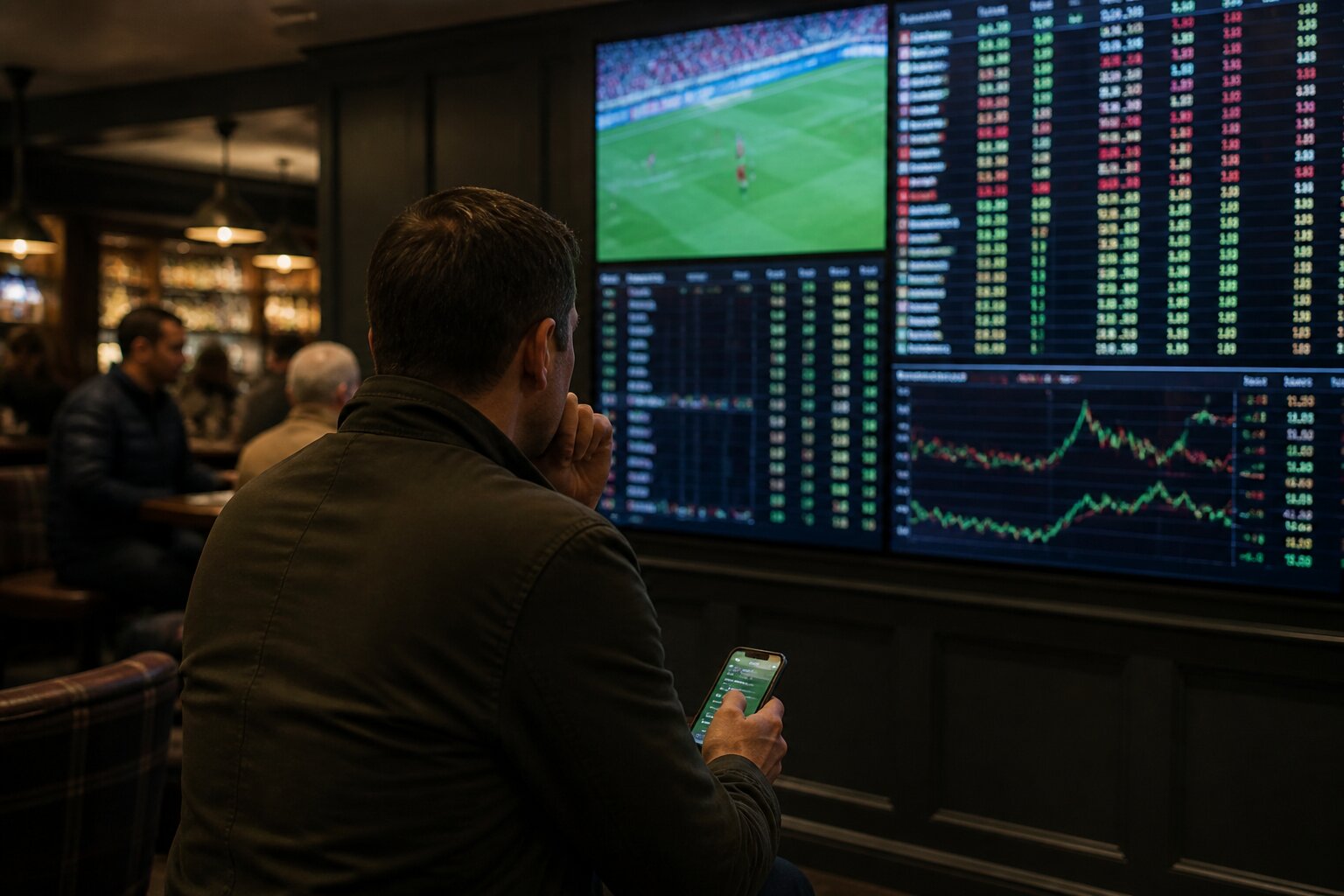
Ever noticed odds that looked appealing yesterday shift by the time you return? It happens all the time, and there are clear reasons behind those movements. Knowing what drives odds can help you read the market and make more informed choices.
This guide walks through how odds are set, what makes them move before and during events, and what those movements mean for any bet you place. Read on and you’ll get a clearer picture of the forces at work and how they affect potential returns.
What Are Betting Odds And How Are They Expressed?
Betting odds are a way of expressing the probability of an outcome and the return you would receive if that outcome occurs. They translate complex information — form, conditions, team news — into a price that punters can use to compare options and decide where to place money.
There are three common formats people encounter:
- Fractional odds: Traditional in the UK, written as 5/1 or 2/5. They show how much you win relative to your stake — 5/1 pays £5 for every £1 staked, plus your stake back.
- Decimal odds: Shown as a single number such as 6.00 or 1.50. That figure is the total return for each £1 staked, including the stake itself.
- American (moneyline) odds: More common in the US; positive numbers show potential winnings from a £100 stake, negative numbers show how much you must stake to win £100.
Once you understand these formats, it’s easier to track how prices change and what those shifts imply about probability and value.
Bookmaker Pricing And Opening Lines
Bookmakers set the first available prices through a process called pricing or opening the market. Their teams analyse data — recent results, injuries, weather, and other relevant factors — to produce an initial probability and translate that into odds.
Different operators use different models and might weight information differently, so opening prices can vary between them. Some prefer conservative lines, while others may offer slightly more generous odds to attract bets. Those initial prices are not fixed truths; they are an informed starting point that reflects current knowledge and the bookmaker’s appetite for risk.
Decisions at this stage are about balancing a marketable price with the need to manage exposure. As more information and bets come in, those prices are expected to evolve.

Discover The Best Online Casinos
Browse our list of top-recommended casino sites, read reviews from real players & be the first to get access to the latest casino bonuses
Why Do Odds Change After Opening?
Odds change after opening because the information set and the distribution of bets both change. New facts emerge — an injury, a team announcement, a shift in conditions — and markets respond to the updated picture of probability.
At the same time, bookmakers monitor how money is being placed. Strong backing of one outcome leads to shorter odds for that choice, as operators adjust to limit potential liability. Conversely, less-bet outcomes may be lengthened to invite action and restore balance across the market.
These adjustments are routine. They ensure that odds reflect the latest available information and the flow of customer demand, so prices remain meaningful as an indicator of market expectation.
A quick note before we move on: the way markets react to news and money can differ between operators, so prices rarely line up exactly across the board.
How Does Money On A Market Move The Odds?
The amount of money placed on each outcome — market liquidity — has a direct impact on pricing. When large sums are staked on one selection, bookmakers react to protect their position. Shortening the odds reduces potential payout if that outcome wins; lengthening other selections helps attract bets that offset the exposure.
This behaviour isn’t about one bookmaker acting alone. It is an expected market mechanism used across operators to maintain a manageable book. Liquidity also explains why the same event can show slightly different prices at different firms: some accept bigger stakes before moving, others adjust sooner.
Understanding liquidity gives context to rapid shifts in popular markets, especially for high-profile events where large sums can arrive in a short period.
What External Events Cause Rapid Odds Shifts?
Certain external events prompt fast price changes because they alter the perceived probability of outcomes. Common triggers include:
- Injuries or late withdrawals that remove a key performer from contention.
- Weather changes that make particular styles of play more or less effective.
- Breaking team or line-up news that reshapes expectations.
- Venue or schedule alterations that affect travel or preparation.
Each of these can change how bettors and bookmakers judge an event, and prices move accordingly. The speed and scale of a shift depend on how material the development is and how many people react to it.
Next, we’ll look at why different companies often offer different odds for the same event.
Why Do Different Bookmakers Show Different Odds?
Operators use their own data feeds, models and risk preferences, which leads to variations in pricing. One bookmaker’s assessment of a team’s chances can be slightly more optimistic or conservative than another’s; their trading teams may also react at different speeds to news and betting patterns.
Competition plays a role too. Firms sometimes shade prices to attract business or to create a particular customer mix. These differences don’t necessarily indicate a mistake — they simply reflect distinct approaches to pricing and customer flow.
If you want to compare how operators price the same event, checking several sources will reveal these variations and help you find the best available value.
In-Play Odds And Real-Time Pricing
In-play, or live, betting reflects the unfolding reality of an event. Prices update continuously as the match or race progresses to mirror changes on the field and in-game statistics. Goals, substitutions, bookings, and sudden shifts in momentum all feed into models that recalculate probabilities in real time.
Bookmakers use automated systems and live data feeds to issue these updates, and regulated firms follow industry standards and guidance to ensure markets remain fair and transparent. Because the pace is rapid, readers should be aware that live prices can move within seconds and may differ between operators depending on data latency and how quickly each firm’s models react.
Live pricing offers detailed ways to engage with an event, but it also demands attention to timing and an understanding that prices are highly responsive to what happens next.
What Is Closing Line Value And Why Does It Matter?
Closing line value (CLV) compares the odds you get when placing a bet to the final market price just before an event starts. If you secure longer odds than the closing line, that is described as positive CLV; the idea is that you have captured better value than the consensus at kick-off.
Traders and some bettors use CLV as a performance measure, because consistently beating the closing line can suggest an edge in finding favourable prices. However, CLV is an analytical tool, not a guarantee. It helps evaluate past choices but does not predict future outcomes on its own.
Viewed sensibly, CLV offers insight into pricing efficiency and how well you timed or selected a bet relative to where the market ended up.
What Does Odds Movement Mean For My Bet?
Changes in odds after you place a wager do not affect the payout for that bet. The price you accept when your wager is confirmed is the price that will determine any return if the selection wins. Odds movements that occur thereafter are relevant only to those placing new bets.
When an event settles, bookmakers use the outcome and the locked-in odds to calculate returns. This separation between the time of staking and settlement lets you review market development without changing the terms of your placed bets.
If you follow markets over time, watching how prices behave before and during events gives valuable context for future choices, but it does not alter past bets.
Always remember to stay within your limits and use available controls to manage how you engage with markets.
**The information provided in this blog is intended for educational purposes and should not be construed as betting advice or a guarantee of success. Always gamble responsibly.