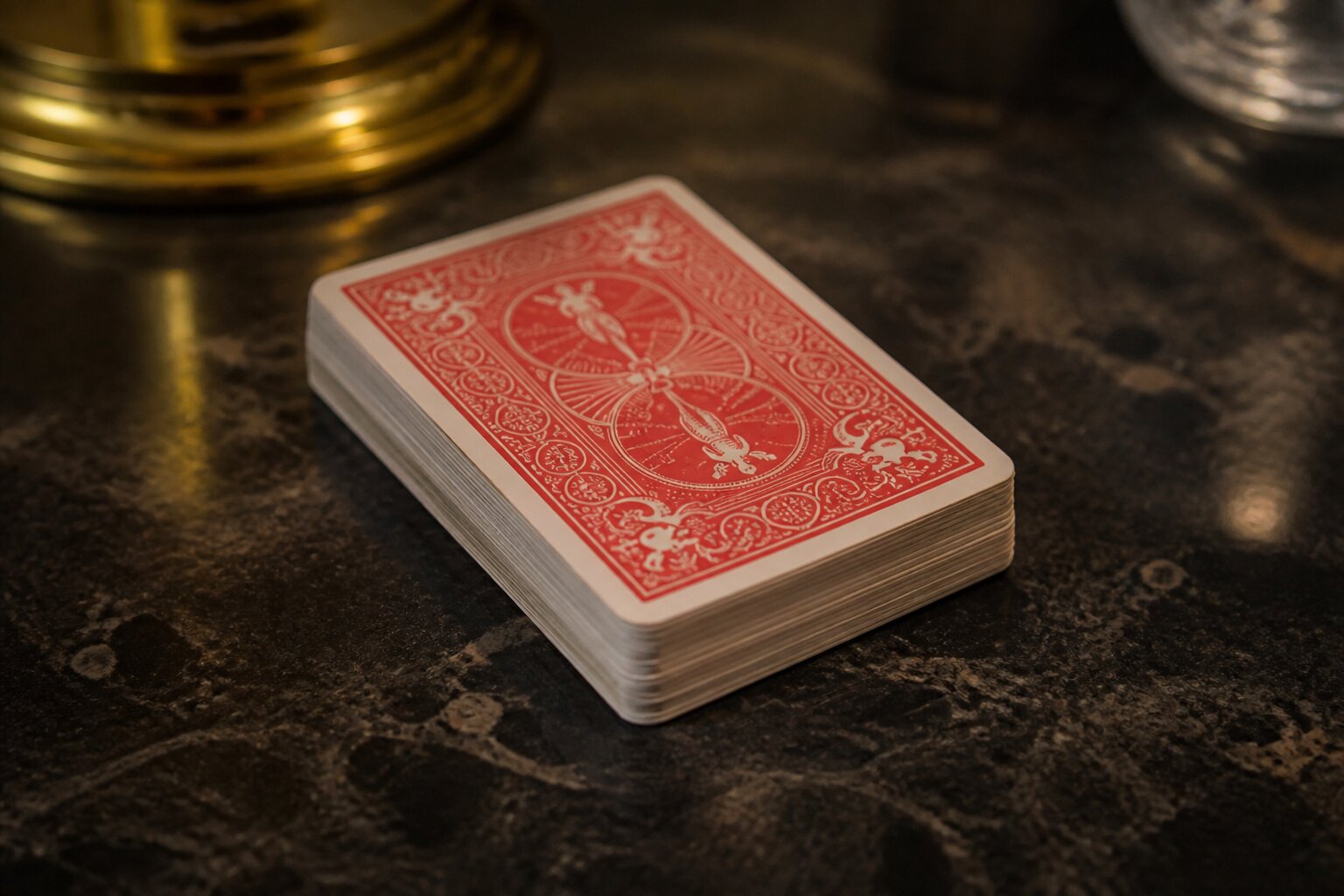
Ever wondered how magicians and card players make a simple deck look mesmerising? From seamless shuffles to eye-catching flourishes, handling a deck well can turn an ordinary game into a memorable moment.
Whether you want to impress friends at a social night, add polish to your card routine, or simply enjoy picking up a new manual skill, there is plenty to explore. Read on to learn key shuffles, some striking flourishes, and practical tips to help your deck work for you.
What Are Card Shuffles & Deck Flourishes?
Card shuffles are the techniques used to mix a deck so the order of cards is unpredictable to everyone at the table. Good shuffling reduces patterns and keeps play fair; it is a functional movement that supports any card game.
Deck flourishes focus on appearance rather than function. These are the stylish displays and movements that show off dexterity and timing. Flourishes can be simple and elegant or complex and theatrical, but their main purpose is to entertain and draw attention.
Shuffles and flourishes often appear together. A well-timed flourish can lead into a shuffle, and a neat shuffle can be punctuated with a flourish. Understanding both helps you handle cards with confidence and creates a smoother rhythm at the table.
Why Should You Learn Card Shuffling Techniques?
Learning shuffling techniques improves hand coordination and manual control, which is useful beyond card games. As your fingers gain precision, everyday tasks that require fine motor skills — such as tying knots, handling tools or doing detailed crafts — can feel easier and more deliberate.
There is also a social side. A tidy shuffle or a controlled flourish can break the ice and spark conversation without needing to be showy. For magicians and performers, these skills form the foundation of sleight of hand and stage presence, helping someone appear more polished and professional while they practise other routines.
Finally, learning shuffles encourages patience and regular practice. Progress is steady: small, frequent sessions build muscle memory, which leads to cleaner, more confident handling over time. That steady improvement can also boost focus and provide a calm, absorbing activity to return to when you need a short, constructive break.

Discover The Best Online Casinos
Browse our list of top-recommended casino sites, read reviews from real players & be the first to get access to the latest casino bonuses
Essential Card Shuffling Techniques for Beginners
Beginner shuffles are approachable and form the base for more advanced moves. Practising a small set of simple methods gives you options for different settings and helps you find what feels most natural.
Learning a few reliable shuffles also helps ensure fair play and consistent results when you are dealing or sharing cards with others. Start slowly, focus on control, and increase speed only once the motions feel comfortable.
Overhand Shuffle
The overhand shuffle is straightforward and gentle. It moves small groups of cards from the top to the bottom in a repeatable motion, making it well suited to casual play and informal gatherings.
Many people use it between hands when a quick but tidy mix is needed. It is easy on the cards and ideal for newcomers who are developing basic handling skills.
Riffle Shuffle
The riffle shuffle is recognised for its sound and the way the cards interleave. Splitting the deck into two roughly equal halves and letting the cards intermix gives a more thorough rearrangement than an overhand shuffle.
This shuffle is commonly used in social games and by players who want a cleaner, more even mix. Practice the grip and the release so that the cards mesh smoothly and reduce the risk of bending or damaging the deck.
Hindu Shuffle
In the Hindu style, small packets are drawn from the deck into the receiving hand in a continuous motion. It is quick to learn and effective for regular use, especially when you prefer a flowing hand movement over the sharper action of a riffle.
The Hindu shuffle can be gentler on newer or coated cards and is often favoured where speed and a smooth rhythm are important. It also lends itself to certain flourishes and controlled deals once you are more confident.
These three shuffles cover most everyday needs. Each has its advantages depending on the level of mixing you want, the speed required and the setting in which you are playing. Practice them in rotation to build versatility and to keep play fair and consistent.
How Do You Master the Classic Riffle Shuffle?
Mastering the riffle comes down to rhythm, finger placement, and timing. Begin by splitting the deck into two roughly equal piles and supporting each with the fingers along the outer edges. The thumbs on the inner short edges guide the cards so they release in an alternating pattern, creating the interleaving effect. After the cards have interlaced, bringing the halves together and compressing the stack into a single neat pile helps the deck sit evenly.
Practice helps you find a balance between control and looseness. Too rigid a grip makes the cards clumsy; too relaxed and they may scatter. Over time, the motion becomes fluid and satisfying to perform.
What Is the Overhand Shuffle & When Should You Use It?
The overhand shuffle suits situations where a gentle, quick mix is required. Its movement is compact and discreet, so it works well at crowded tables or when you simply want to keep play moving.
It is easy to learn and requires little space, making it a good choice for beginners or for informal games with friends. Because it is gentle on the cards, it can help preserve sleeves and card edges during long sessions.
The overhand is easy to adapt: slowing the motion increases control, while a steadier, quicker rhythm speeds up play. It is not the most thorough method for randomising a deck deeply, so it may not be ideal for competitive play or when a high degree of randomness is needed.
For many casual games it provides a reliable reshuffle without fuss. If you need a more thorough mix, consider combining the overhand with another technique, or use it to finish a longer shuffle.
Impressive Deck Flourishes to Wow Your Friends
Flourishes add visual flair and can turn routine card handling into a small performance. They are best introduced gradually. Start with straightforward displays and add complexity as your comfort grows.
Practice regularly but in short bursts to build muscle memory without tiring your hands. Use inexpensive or older decks for practice so you do not damage decks you want to keep in good condition. Focus on smoothness and control rather than speed, and try to work on one new flourish at a time.
The Fan: How to Spread Cards Smoothly
The fan showcases the faces or backs of the cards in a neat semicircle. With a steady hold and a gentle turning motion, the cards spread into a curved display. The technique emphasises control and presentation rather than speed, and it works well when you want to show a single card or display the deck between plays.
Useful tips for a better fan:
- Hold the deck lightly but securely between the thumb and the base of the fingers.
- Use a small rolling action of the wrist to create an even curve.
- Keep tension even across the cards so the fan is uniform.
- Practice with slightly fanned initial grips to reduce slipping until your fingers learn the motion.
Vary the size and angle of your fan to suit the moment. A larger fan is more eye-catching, while a tighter fan can look more refined.
The Spring: Creating a Cascade Effect
The spring produces a flowing cascade as cards travel from one hand to the other. It relies on controlled tension across the deck so cards release in sequence. The visual effect is dynamic and draws attention, especially when performed cleanly.
Key points to master the spring:
- Hold the deck in one hand with fingers along the long edge and the thumb providing controlled pressure.
- Apply steady tension and let the cards peel off one by one with a flicking motion of the fingers.
- Keep your receiving hand ready and slightly cupped to catch the cascade smoothly.
- Start by practising short springs over a soft surface to protect the cards and your surroundings.
Using an older deck while learning this move helps protect decks you wish to keep pristine. As you grow more confident, work on increasing the length and smoothness of the spring while maintaining control.
Both flourishes are striking without being disruptive, and they fit naturally into pauses in play or transitions between shuffles. With modest, regular practice you can integrate them into casual games or performances with minimal fuss.
Common Mistakes When Learning Card Shuffles
New learners often make similar errors that slow progress. A frequent issue is gripping the deck too tightly, which interferes with smooth motion and can crease cards. Letting your hands relax encourages better control.
Rushing is another common fault. Fast, jerky movements create messy shuffles and uneven stacks. Slower, deliberate practice builds a better foundation, and speed will come as the technique solidifies.
Failing to square the deck after shuffling can leave the cards awkward to handle. Gently tapping and aligning the edges restores order and makes subsequent moves easier. Finally, practising exhaustion can cause frustration and excess wear, so short, regular sessions tend to be more productive.
Do Fancy Card Flourishes Damage Your Cards?
Flourishes that bend or flex cards place extra strain on them over time. Repeated actions that stress the paper and glue may soften edges, create creases, encourage warping, or cause corners to round. Over weeks or months of frequent practise, wear becomes more noticeable and can affect how a deck handles.
Particular moves that accelerate wear include:
- springs that repeatedly stress the long edges,
- heavy riffles that abrade the card faces and edges,
- forceful handling or drops that crease or dent cards.
For frequent practise, consider using an older deck or cards specifically made for cardistry. These are often thicker, more durable, or finished to tolerate repeated handling better than standard playing cards, and they can save your nicer decks for performance.
Keeping hands clean and storing decks in a case or box reduces grime and edge wear. Avoid practising with greasy or damp hands, and keep decks out of direct sunlight and away from humidity to prevent warping and fading.
Those who enjoy practising a lot often rotate decks so one set is reserved for performance and another set is used for daily practise and experimentation. Small habits like using a dedicated practice deck, using sleeves for particularly fragile cards, and giving decks a rest between long sessions will help them last longer.
Tips for Practising & Improving Your Card Shuffles
Effective practice focuses on a few simple principles. Aim for short, regular sessions and pay attention to the feel of the cards rather than rushing for speed. Working with relaxed hands and a calm pace helps movements become natural and reduces the chance of strain or tension.
To keep progress steady, vary what you practise and build good habits. Useful approaches include:
- practising several different shuffles rather than repeating the same one for hours
- concentrating on smooth, consistent motion rather than trying to be fast
- taking regular short breaks to prevent fatigue and maintain focus
Watching experienced handlers, in videos or in person, can reveal small adjustments that make a big difference. Try to notice details such as hand placement, wrist action and how they transition between moves. Over time, those subtleties will integrate into your own style and help your shuffles look and feel more polished.
Myths About Card Shuffling: What’s True & What’s Not?
There are a few persistent myths about shuffling. One misconception says extravagant flourishes affect the deck’s randomness. In practice, showy moves do not substitute for proper mixing; randomness results from how thoroughly the cards are interleaved and rearranged.
Another myth claims a single shuffle is sufficient to randomise a deck. While one shuffle alters the order, several thorough shuffles give a more complete mix. The aim is to disrupt predictable sequences rather than to reach an unattainable perfect state.
Finally, some people assume physical shuffling matters when games are run by regulated providers. In settings where card distribution is managed electronically or under strict procedures, manual shuffling has no bearing on outcomes. Keeping this in mind helps set realistic expectations for what shuffling can and cannot achieve.
Where Can You Learn More About Card Shuffling Online?
Online tutorials, forums, and video demonstrations are rich sources for developing card skills. Video lessons are especially useful because they show timing and hand placement clearly. Dedicated cardistry sites and community forums offer feedback and variations you may not see in general tutorials.
If you want to practise in a community setting or try organised play, look for platforms that make fair play and clear rules a priority. As part of this site, we keep curated lists and comparisons to help you find safe, regulated options and resources that match your interest level. Remember to engage responsibly and stay within your personal limits when participating in organised games.