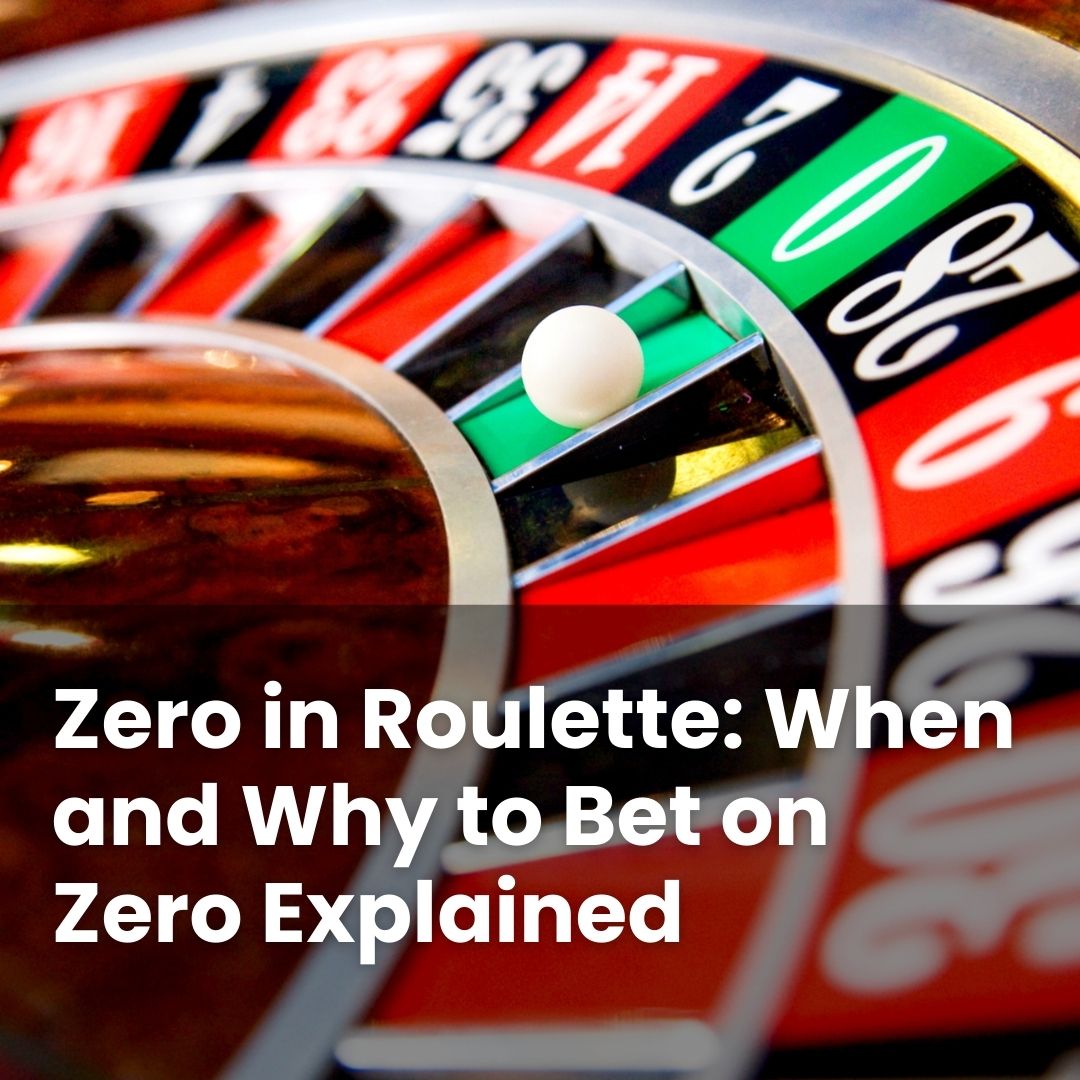
Many roulette players notice the green zero on the table but are unsure about its purpose or how it influences the game. The presence of this single number changes how all bets work and plays a key part in giving the casino its advantage.
Betting on zero is often overlooked or misunderstood, especially by newer players. Some believe it holds special value, while others might never consider placing chips on it at all.
This blog post explores what zero means in roulette, why it affects the odds the way it does, and how to place a straight-up bet on zero. It also covers the different probabilities in single-zero and double-zero games, plus common mistakes and myths. Along the way, you will find clear, practical context to help you make informed choices if you decide to play.
What Does the Zero Mean In Roulette?
The zero in roulette is a distinct green pocket on the wheel. In European roulette, there is one zero. In American roulette, there are two green pockets: a single zero (0) and a double zero (00).
Zero is not included in groups like red/black, odd/even, or high/low. It sits outside these betting categories, meaning that none of the outside bets cover zero. If the ball lands on zero, only bets directly placed on zero win.
The main role of zero is to give the house an edge over players. Its presence tilts the odds slightly towards the casino, as most bets on the table lose if zero comes up. That single pocket also explains the maths behind the casino’s advantage, which we break down next.
Why Does Zero Give The House An Edge?
The zero on a roulette wheel serves as an extra number that is not included in the main betting groups, such as red/black or odd/even. Because of this, the odds offered on most bets do not include the possibility of zero coming up.
In European roulette, there are 37 numbers in total, 1 to 36 plus zero, but payouts are usually based on 36 numbers. This tiny mismatch creates the house edge, which in European roulette is about 2.70%.
In American roulette, there are two green pockets, zero and double zero, making the total 38. The payouts are still the same, but the true odds are a touch lower, which lifts the house edge to about 5.26%.
Over many spins, that difference ensures the casino keeps a portion of the total money wagered. So what happens when you back zero directly?

Discover The Best Online Casinos
Browse our list of top-recommended casino sites, read reviews from real players & be the first to get access to the latest casino bonuses
How Betting On Zero Affects Your Odds
The odds of betting on zero in roulette are tied to the number of pockets on the wheel. Whether the table uses a single zero or both a zero and double zero changes these odds. Understanding this difference helps when deciding whether a straight-up bet on zero fits the way you like to play.
Single-Zero Vs Double-Zero Probabilities
In European roulette, there is only one zero, making a total of 37 pockets. A straight-up bet on zero has a probability of 1 in 37, which is roughly 2.70%.
In American roulette, there are two green spaces, zero and double zero, for a total of 38 pockets. A straight-up bet on either zero or double zero has a probability of 1 in 38, roughly 2.63%, for each pocket.
The payout for a straight-up number remains 35 to 1 in both versions, which is why the house edge differs between them, as explained earlier. Numbers aside, when might someone choose to include zero?
When Should I Bet On Zero?
Betting on zero is an option on every spin. Some players add a chip to zero alongside other inside bets because they enjoy the potential payout if it hits, or because they like covering the sector of the wheel around zero.
There are no patterns or signs that indicate zero is more likely to appear on a certain spin. Each spin is independent, and every number has the same chance of being selected each time. No strategy or staking system can change that.
Where tables offer wheel-based bets, such as neighbours of zero or the larger voisins du zéro set in European layouts, some players use these to cover the arc around zero on the wheel, sometimes with an extra chip straight on zero itself. Others simply mix a single chip on zero into a broader set of inside numbers to spread exposure. Either way, it is a high-variance choice that can add interest without needing to dominate a betting plan.
If you want to try it, the placement is straightforward.
How To Place A Straight-Up Zero Bet
A straight-up bet in roulette means putting a chip directly on a single number. To bet on zero, the chip is placed on the zero space on the layout. In European roulette, this is a single green pocket marked 0. In American roulette, both 0 and 00 may be available.
The wager is set once the chip is on the exact zero section and accepted by the dealer or, online, by the system interface. The dealer will call no more bets before spinning the wheel, and no additional chips can be added after that point.
If the ball lands on zero, the straight-up bet pays 35 to 1 and the original stake is returned. If it does not, the stake is lost.
Common Mistakes When Betting On Zero
One common mistake is assuming zero is more likely to come up after a long gap. Each roulette spin is independent, so previous results do not change the odds for the next spin.
Some players increase their stakes on zero to try to recover earlier losses. Chasing losses in this way can escalate quickly and often leads to further disappointment rather than a recovery.
Another mistake is believing systems that claim to predict when zero will appear. There is no reliable way to forecast outcomes in roulette.
It is also easy to forget that zero is not covered by most outside bets, such as red/black or odd/even. If zero lands and it is not specifically covered with a chip, those outside bets will not succeed. On some European tables, rules like la partage or en prison may soften the impact of zero for certain even-money bets, but they do not affect a straight-up zero bet.
Keeping stakes within personal limits and avoiding the urge to chase losses helps maintain control.
Myths About Betting On Zero
Many myths surround betting on zero in roulette. One common belief is that zero is due after not appearing for several spins. Each spin is random, and previous outcomes do not make zero any more or less likely in future rounds.
Another myth is that some roulette wheels or tables produce zero more often, especially in online or automated versions. Properly regulated games use random number generators or physical wheels designed to be fair and random, with all outcomes as equally likely as possible.
Some players think there are patterns or strategies that guarantee a win if betting on zero, but no method can predict when zero will come up. All numbers have the same probability on every spin.
If you choose to play roulette, set personal limits that suit your circumstances, take regular breaks, and never wager more than you can afford to lose. If gambling starts to affect your well-being or your finances, seek support early. Independent organisations such as GamCare and GambleAware offer free, confidential help for anyone who needs it.
Zero is a small pocket with a big influence on the game’s maths, and understanding its role is the best foundation for informed, measured play.