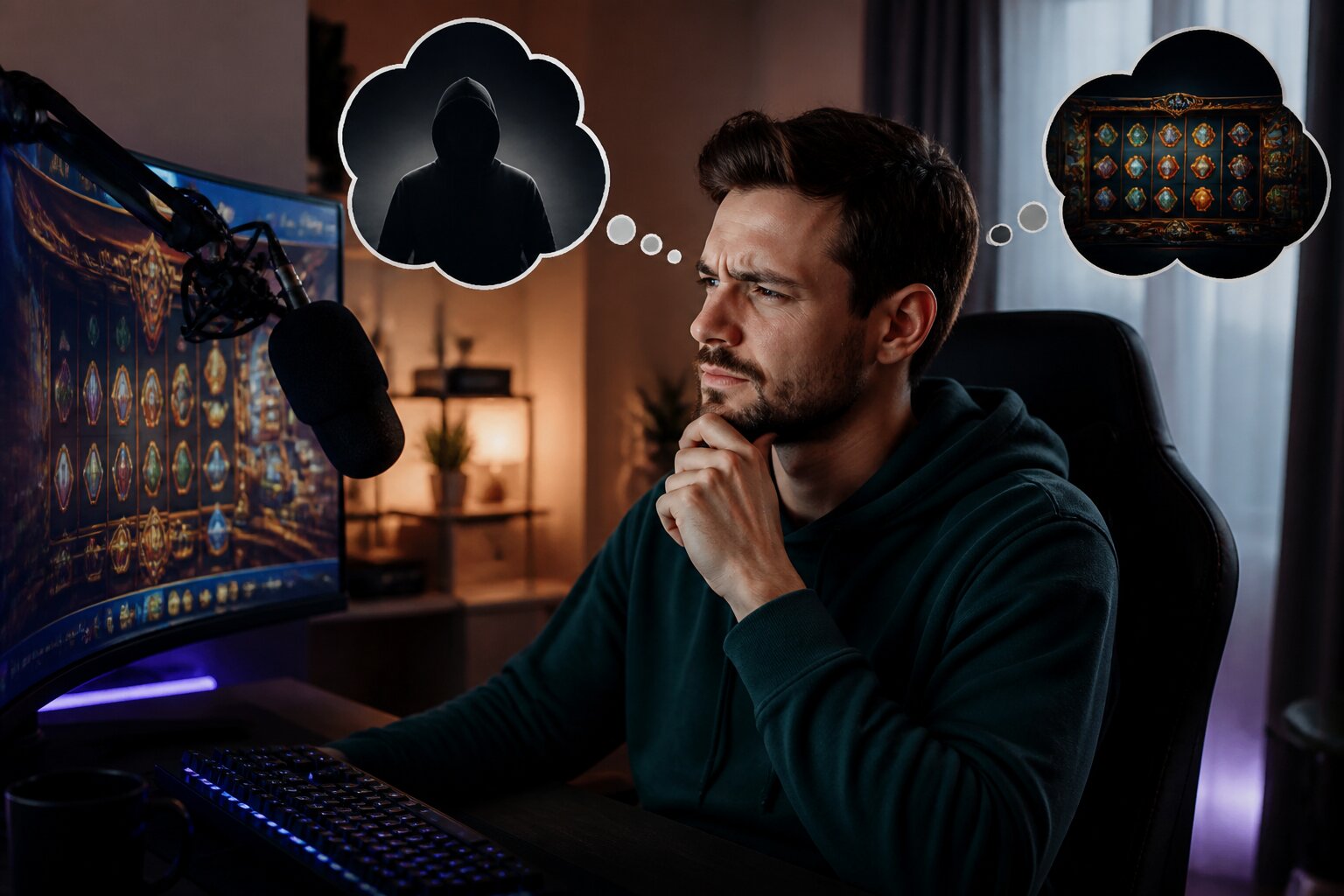
Slot streamers have exploded in popularity on platforms like Twitch and YouTube, pulling in huge audiences who love the entertainment of big spins and jaw-dropping wins. But as the reels spin and the bets get higher, many viewers start to wonder whether those streams are as genuine as they look.
Rumours swirl about streamers using bonus funds, demo modes, or sponsorship arrangements that change how their sessions appear. This article unpicks those claims and explains the common funding models, warning signs, and regulatory expectations so you can watch with a clearer view of what’s happening on-screen.
Read on to separate routine presentation and promotion from genuine play, and to understand how to spot when a stream might not be what it seems.
Why Are Slot Streamers So Popular?
Slot streams draw large audiences because they combine brisk visual action with live interaction. Viewers see colourful game screens, hear the streamer’s reactions, and follow each spin in real time. That immediacy creates a kind of shared event where people comment, ask questions, and react together.
Streamers also encourage participation by answering chat and taking suggestions about which games to try next. That personal touch turns passive viewers into a community, and for many people the social element is as important as the games themselves. Some viewers simply use streams to learn about features and bonus rounds before they try a game on their own, gaining a practical sense of what to expect.
If you’d like to check operators or games mentioned in streams, use independent comparison resources to verify licensing and fairness rather than relying on a streamer’s word.
Now that you know why streams attract viewers, it helps to understand how streamers actually fund their plays.
How Do Slot Streamers Fund Their Plays?
Streamers’ funds can come from several different sources, and that mix affects how much they personally risk.
Some streamers do use their own deposits and bet real personal money, which means wins and losses reflect their balance. Others receive promotional credits, free spins, or bonus funds from operators as part of sponsorships or marketing agreements. Affiliate arrangements are common too: a streamer may earn commission if viewers register through a provided link, and those partnerships sometimes include trial balances for the streamer to demonstrate games.
A further option is demo or practice modes, which mimic real slots visually but use no real money. These require no deposit and are solely for display or demonstration. Some streamers also film pre-recorded or edited sessions, which can make it harder for viewers to judge whether the stakes were genuine at the time of broadcast.
The critical point is that sourcing varies from streamer to streamer. The most transparent creators make clear when funds come from promotions, sponsorships, or demo accounts, and viewers should look for that clarity.
Before we look at how streams can be falsified, here’s what to watch for if you want to judge authenticity.

Discover The Best Online Casinos
Browse our list of top-recommended casino sites, read reviews from real players & be the first to get access to the latest casino bonuses
Is It Possible to Fake Casino Streams?
Yes. The visual nature of slot games makes it feasible to present sessions that don’t reflect a live, real-money betting sequence.
Common methods include using demo modes that replicate the gameplay without wagering, editing footage so wins appear more frequent or dramatic, and hiding deposits or bonuses that change the risk profile. Because the interfaces look similar, a casual viewer can easily be led to believe a session is live and funded personally when it is not.
These practices make transparency important. When a streamer is upfront about the nature of their funds or the use of promotional credits, it’s much easier to assess how representative their session is of ordinary play.
If you’re wondering how to spot questionable streams, the next section lists useful indicators to consider.
Signs a Slot Streamer Might Not Be Using Real Money
Below are common indicators that a stream may not reflect genuine, self-funded play. Use them as prompts to look further rather than as definitive proof.
Before the list, note that none of these signs alone proves anything; they simply highlight areas where a streamer’s presentation might merit a closer look.
Common Red Flags to Watch For
- Inconsistent balances: sudden unexplained jumps or resets in the on-screen account balance.
- No evidence of deposits: absence of any transaction history or clear deposit confirmation.
- Unlimited high bets: frequent very large bets with no sign of financial concern or realistic bankroll limits.
- Unrealistically frequent big wins: repeated large payouts that are uncommon in normal sessions.
- No acknowledgement of losses: a pattern of glossing over or never discussing losing sessions.
If a streamer transparently discloses sponsored funds or demo use, those signs are less worrying; the issue is when presentation suggests one thing while reality is different.
Now that you can read the signals, it helps to understand how operators and streamers interact.
How Do Online Casinos Work With Streamers?
Casinos see streaming as a marketing channel and often formalise relationships with streamers. These arrangements can include affiliate deals where a streamer receives commission for referrals, direct sponsorships that provide promotional funds or fees, and product placement where certain games are highlighted.
Such relationships are legitimate when fully disclosed. A viewer should expect any promotional or paid links to be identified clearly, and for streamers to note when they are using operator-provided credits or trial balances. Awareness of these arrangements helps you interpret content: praise or enthusiasm may reflect a commercial link rather than an impartial assessment.
These partnerships also affect what appears on-screen. For instance, a streamer using bonus funds supplied by an operator may be able to place higher bets than they would on their own account, which alters the viewing impression of how typical play looks.
Regulation around these partnerships is important, which brings us to how rules shape streaming practices.
Are There Regulations for Slot Streaming?
In the UK, regulations require that gambling content is not misleading and that promotional material is clear about sponsorships or commercial relationships. Rules further insist on avoiding content that could be interpreted as encouraging excessive or irresponsible behaviour, and on protecting under-18s from exposure.
Not all streamers fall under the same jurisdictional requirements, however. Some operate from countries with different rules, so their content might not meet UK standards. That makes it sensible to verify any operator mentioned in a stream is properly licensed and regulated in the relevant jurisdiction before taking their promotions at face value.
Knowing the regulatory backdrop makes it easier to spot when disclosures are missing or inadequate, and why transparency matters to viewers.
Next, consider how much weight to give to the wins you see on screen.
Should You Trust Slot Streamers’ Wins?
Big on-screen wins are attention-grabbing, but they are not reliable evidence of typical outcomes. Each spin in a slot game is independently determined by the game’s internal processes, so occasional large payouts can appear without reflecting a steady pattern.
A streamer’s session can be made to look especially successful through selective editing, the use of promotional funds that cushion losses, or simply by featuring the highlights while minimizing ordinary losing stretches. Therefore, viewing wins as illustrative rather than representative is a safer approach.
Do your own research when evaluating operators and games. Use trusted comparison resources to confirm licensing, terms and conditions, and fairness. Above all, treat streams as entertainment and maintain realistic expectations about outcomes and risk. Stream content should not be seen as an endorsement of a particular operator or a reliable guide to what you might personally experience.
This wraps up the key points you need to judge slot streams: where funds come from, how partnerships shape content, what warning signs to watch for, and the role of regulation. If you want more on finding fair operators and verifying disclosures, our site’s independent comparisons are a good place to start.