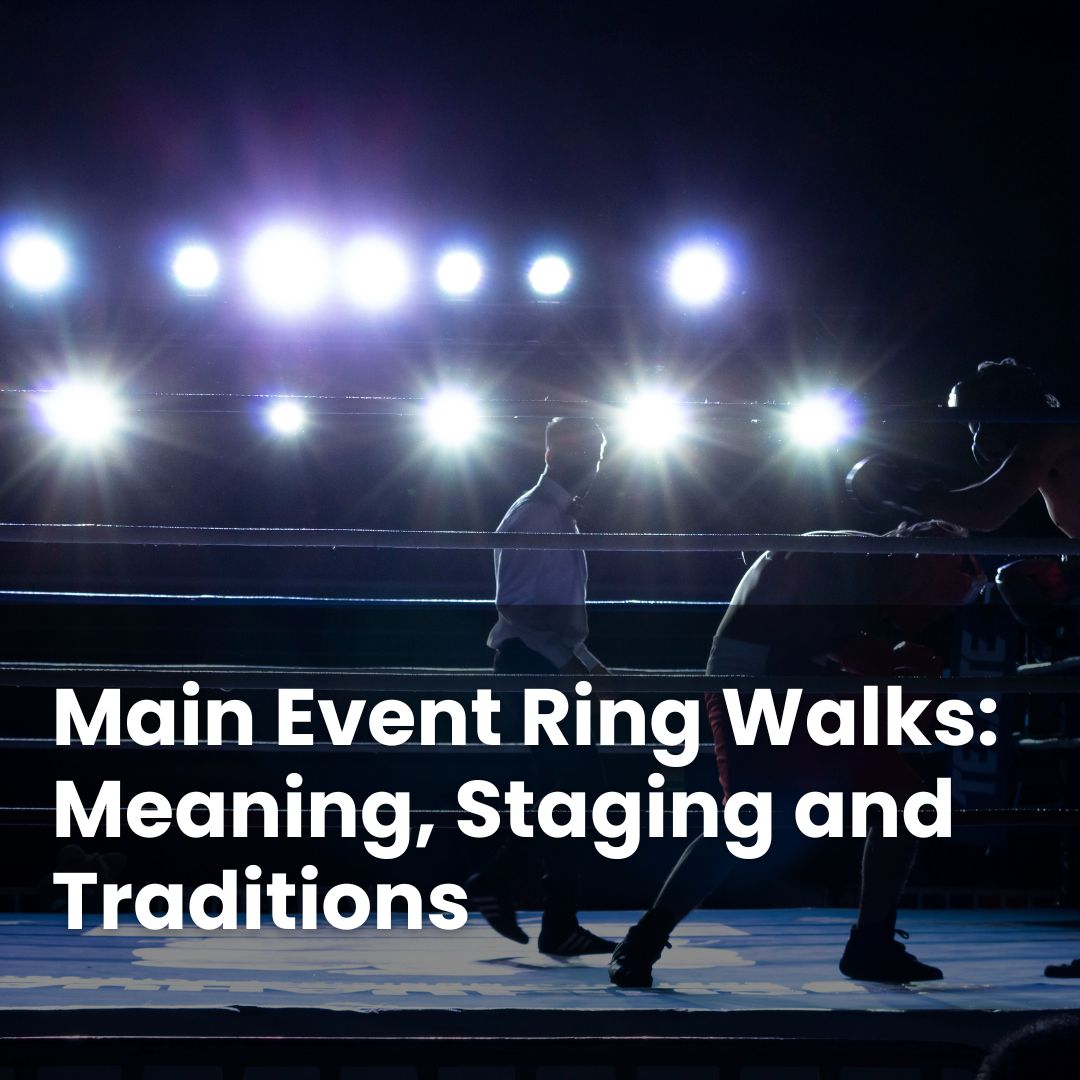
In combat sports, the main event ring walk serves as the formal transition from an athlete’s private preparation to their public appearance. It functions as a structured part of the event, signalling that the headline bout is about to begin and drawing the audience’s attention to the competitors.
A ring walk typically brings together several planned elements such as music, lighting, staging, attire and timing to create a coherent presentation. These components vary across sports, promotions and individual athletes, but each contributes to the overall atmosphere and helps shape how the moment is experienced by both the audience and the fighter.
This blog post outlines what a ring walk represents, how it is organised and the traditions that surround it, including the evolution of entrance styles, the role of production teams and the ways in which fans and venues contribute to the occasion.
Read on to learn more.
Understanding the Importance of a Ring Walk in a Main Event
The ring walk in a main event is far more than a simple journey from backstage to the ring. It marks the transition from preparation to performance, signalling to both athletes and the audience that the main contest is about to begin.
For the participants, this walk often serves as a bridge between the privacy of the warm-up area and the bright, public arena. During this time, athletes may experience shifts in focus—towards calmness, intensity, or inner steadiness—as they mentally prepare for the challenge ahead. They are typically accompanied by team members, who provide both moral support and practical assistance, handling items such as gloves, towels, water, and protective equipment.
For spectators, the ring walk is an early opportunity to form impressions. Visual cues, musical choices, and crowd reactions gradually build an atmosphere that sets the tone for what follows. Even casual viewers often remember these moments, as the combination of production, performance, and environment can create an interesting sequence.
Ultimately, the ring walk establishes the foundation for the traditions and rituals that define the main event, creating a sense of anticipation and ceremony for everyone involved.
What Traditions Are Followed During a Ring Walk?
Ring walks in major events are associated with a number of long-standing practices, which can vary depending on the sport, promotion, or rules in place.
One common practice is the order of entry. Initially, this may appear simply as a way to announce the running order, but it often reflects status: the reigning champion or more senior athlete typically enters second. This is observed in professional boxing and in MMA, where the title-holder usually follows their challenger.
The athlete’s entourage often includes trainers, cutmen or cutwomen, and other team members. Their presence provides practical support and contributes to the overall organisation of the walk. In some cases, family members may also participate, depending on venue regulations.
Music is used during the walk to establish a particular atmosphere. Fighters may select tracks that relate to personal experiences, cultural background, or the mental state they wish to convey. Flags, colours, and symbolic garments similarly serve as visual markers, with their full meaning becoming clear during the walk.
At larger events, production elements such as lighting effects, smoke, or digital screens are sometimes incorporated. While these may be seen during rehearsals, they are fully presented during the live walk. Coordination with venue staff, including fire and technical teams, is required to ensure that all elements operate safely and as planned.

Discover The Best Online Casinos
Browse our list of top-recommended casino sites, read reviews from real players & be the first to get access to the latest casino bonuses
How Do Fighters Choose Their Entrance Music and Attire?
Entrance music and attire play a notable role in a fighter’s presentation, often conveying more than is immediately apparent. Music may initially signal mood or hint at cultural background, but in many cases, it carries deeper significance.
Fighters typically select tracks that reflect their personal tastes, cultural heritage, or the mindset they wish to adopt before entering the ring. Some opt for songs that energise the crowd, while others choose pieces that are quieter and more reflective.
Over time, certain tracks can become closely associated with individual athletes. A theme song may evolve into a recognisable element of their public persona, allowing audiences to identify them even before they appear in the arena.
Attire follows a similar approach. At first glance, robes, jackets, or customised outfits provide colour and form, but they often hold additional meaning. Garments may display national colours, personal symbols, or sponsor logos.
The degree of personalisation varies between sports: professional boxing generally allows more freedom, while some MMA promotions have uniform requirements shaped by contractual arrangements.
Walk-out clothing can also serve to honour cultural heritage, highlight charitable causes, or represent significant moments in a fighter’s personal story. Repeated across multiple events, both music and attire contribute to a fighter’s identity and the impression they make on audiences.
Who Decides the Order and Timing of the Ring Walk?
The order of entrances may seem straightforward at first, but planning a ring walk involves input from several parties. Event organisers, matchmakers, and sometimes sanctioning bodies usually establish the preferred sequence in advance, deciding which participant enters first and which follows.
Typically, the champion or higher-ranked fighter enters after their opponent. While this may appear largely ceremonial, it has become a well-established tradition that shapes audience expectations. This pattern is particularly consistent in professional boxing and is also common in MMA.
The timing of entrances begins as a general outline and is then refined. Broadcasters, production crews, and venue staff coordinate to ensure entrances fit within scheduled broadcast slots. Television networks often synchronise them with adverts, commentary, or feature segments, making precise timing essential.
Backstage teams—including ring announcers, referees, inspectors, and security—rely on these schedules to guide participants. Fighters usually wait in a designated area until their cue to enter.
Promoters and managers may occasionally request minor adjustments, but the final decision rests with the organisation responsible for overseeing the event.
How Is the Stage and Lighting Designed for Maximum Impact?
Stage and lighting design begin as broad concepts intended to support the overall atmosphere of the event, before being developed through detailed planning and technical coordination.
The stage layout is designed to provide clear sightlines for both the arena audience and viewers at home. Raised walkways or ramps, which may initially seem like simple pathways, serve a practical purpose by improving visibility and access. Camera crews position equipment around these areas, while production teams plan routes for cables, medical staff, and security.
Lighting typically starts with general colour schemes and spotlight ideas, which are later refined into precise cues. Beams, lasers, and patterned lighting sequences are often synchronised with the rhythm of the fighter’s chosen music. Screens along the walkway may display graphics or national colours, echoing themes introduced earlier in the walk.
Additional effects, such as pyrotechnics, smoke, or flame, contribute to the visual presentation and are carefully managed under strict safety checks by venue and fire staff. These elements are rehearsed to ensure sound levels and visual clarity, particularly on ramps and steps.
Combined with music and staging, lighting forms part of a coordinated presentation that develops gradually, creating a cohesive impression as the walk progresses.
What Role Do Fans Play in the Atmosphere of a Ring Walk?
Audience presence contributes to the overall environment of a ring walk. As the athlete enters, crowd reactions increase, forming a standard element of the event.
Supporters may clap, chant, or display banners, particularly for home fighters or those with larger followings. In larger venues, microphones capture these responses, which are often included in the broadcast.
For viewers at home, the sound of the audience helps convey the scale and intensity of the entrance. The combination of crowd response, staging, and music turns the walk from a simple approach to the ring into a coordinated part of the event.
If you choose to place bets, it is important to follow responsible gambling practices and never wager more than you can afford to lose. Set personal limits that suit your circumstances, take regular breaks, and treat betting as an occasional form of entertainment rather than a primary activity.
If gambling begins to affect your well-being or finances, seek support promptly. Independent organisations such as GamCare and GambleAware provide free and confidential assistance to anyone who needs it.