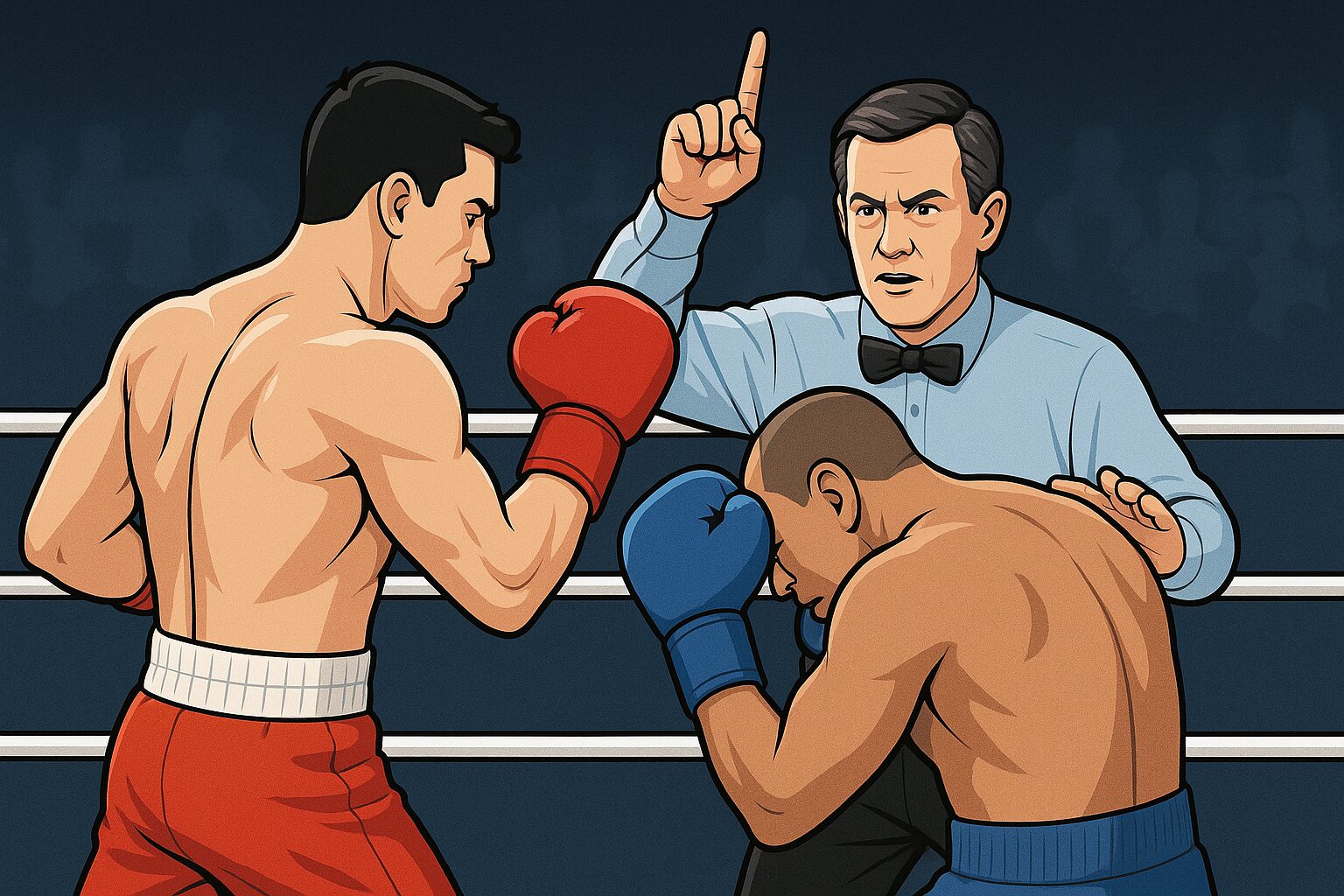
Boxing is entertaining to watch, but it rests on clear rules designed to keep contests fair and fighters safe. When those rules are broken, a bout can end in a disqualification (DQ).
Understanding what can trigger a DQ, how referees and officials apply the rules, and what follows helps make close calls and controversial moments easier to follow, whether you’re ringside or watching from home.
In this blog post, we explain what a disqualification is, the common fouls that can lead to one, how decisions are made, the types of penalties and their consequences, whether accidental fouls can result in a DQ (including low blows, head clashes and intentional fouls), who decides if a boxer is disqualified, what happens afterwards, notable DQs from the sport, and how boxers can avoid breaking the rules. These topics are discussed for your reference throughout.
If you’re betting, set sensible limits and use trusted comparisons to make informed choices.
What Is a Disqualification in Boxing?
A disqualification in boxing happens when a fighter is removed from the match for breaking the rules. It isn’t the same as losing by knockout or on points. Instead, the decision comes directly from the referee or, in rare cases, after consultation with the overseeing commission.
A DQ usually occurs when a boxer commits a serious or repeated foul. This can involve actions like hitting below the belt, using illegal moves, or refusing to follow instructions from the referee. If the behaviour is dangerous or clearly unsportsmanlike, the referee can stop the fight immediately and award the win to the other boxer.
Official rules are set by governing bodies such as the British Boxing Board of Control. The referee applies those rules in real time using their judgement. Some situations are clear, while others can be tight calls, which is why it helps to know which fouls matter most before the bell rings.
Common Fouls That Lead to Disqualification
Boxing has a clear set of rules, and breaking them can lead to serious consequences, including disqualification. Some fouls are more likely than others to result in a DQ, especially if they’re severe or repeated.
Hitting below the belt is one of the best-known fouls. Punches must land above the waistband, and repeated low blows can quickly lead to a DQ.
Headbutting is a serious offence. Whether intentional or reckless, using the head to strike an opponent is banned and puts both fighters at risk of injury.
Holding and hitting, or punching while an opponent is down, are clear violations. The referee may issue a warning first, but if the behaviour continues, disqualification becomes likely.
Biting, spitting, or using elbows in a deliberate way are highly unsportsmanlike and can result in an immediate DQ if seen by the referee.
Ignoring referee instructions after being warned can also lead to a boxer being disqualified. Referees are there to protect both fighters and keep the contest fair.
Knowing these common fouls helps you spot when a warning might escalate into something more serious.
How Are Disqualification Decisions Made in Boxing?
Disqualification decisions are made by the referee. They enforce the rules, issue warnings, deduct points for fouls, and, when needed, stop the fight.
For minor offences, the referee will usually warn a boxer first. If the foul continues or is more serious, they may deduct points. If a foul is judged to be dangerous or clearly intentional, the referee can disqualify a fighter on the spot without prior warning.
Referees follow the regulations set by recognised authorities, which outline how to apply penalties consistently and protect the safety of the boxers. Ringside officials can offer input if a situation is complex, but the final call rests with the referee inside the ring.
This decision-making sits within a wider framework of penalties, which are applied in stages depending on what happens in the ring.
Types of Boxing Penalties and Their Consequences
Officials have a few options when dealing with rule breaches. The lightest is a clear, verbal warning for a minor foul. That gives a boxer the chance to adjust before harsher action is taken.
If the same foul is repeated or more serious, the referee can order a point deduction. Points matter. Losing even a single point can swing a close round on the judges’ cards and change how both corners approach the rest of the fight.
For very serious or repeated fouls, the referee can go straight to a disqualification. This ends the bout immediately, and the opponent is awarded the win regardless of the score up to that point.
Understanding this ladder of penalties makes it easier to follow what you see in the ring, especially when an incident looks accidental.
Can a Boxer Be Disqualified for Accidental Fouls?
Fouls happen, but not every rule breach is treated the same way. Officials consider intent and the impact on the bout. An unintentional foul may earn a warning or a point deduction. A deliberate or dangerous foul is treated far more severely.
Referees aim to be fair when weighing up intent, the pattern of behaviour, and whether the fouled boxer has been affected. Their decision can influence the rest of the fight and, at times, a boxer’s standing with the regulator.
Low Blows, Headbutts and Intentional Fouls
Low blows, in other words, punches below the belt, can sometimes be accidental, especially in close exchanges. If the referee believes a low blow was not deliberate, the boxer may receive a warning or a point deduction, but not an immediate disqualification. However, repeated accidental low blows can still lead to a DQ if the referee feels the offending boxer is not taking enough care.
Head clashes can also be accidental, particularly between aggressive fighters. A referee will usually warn or deduct points unless the clashes are persistent or appear intentional.
Intentional fouls are treated much more seriously. If a boxer is seen to deliberately break the rules, such as clearly hitting after the bell or using elbows on purpose, the referee can disqualify them straight away.
Ultimately, someone has to make that call in the moment, which brings us to the official who holds that responsibility.
Who Decides If a Boxer Is Disqualified?
The decision to disqualify a boxer rests mainly with the referee in the ring. They closely observe both fighters and use their judgement to apply the rules fairly and consistently.
In the UK, referees follow regulations set out by official bodies such as the British Boxing Board of Control. These provide clear guidance on when and how disqualifications should occur, helping to ensure transparency across matches.
While the referee makes the final call, other officials, such as ringside judges or a representative from the governing body, can offer advice if a situation is particularly complex. Even so, the authority to act during the contest remains with the referee.
If a DQ is called, what follows is straightforward and recorded officially.
What Happens After a Disqualification in Boxing?
When a boxer is disqualified, the match ends immediately, and the official result is recorded as a win for the opposing fighter. This outcome appears on both boxers’ professional records and is noted by the relevant authority.
After the bout, the governing body may review the incident to confirm that procedures were followed correctly. If a boxer or their team disagrees with the decision, they can file an appeal. The case may then be reassessed using available footage and statements from those involved before a final ruling is made.
These processes help maintain standards and protect boxers’ rights. They also underline the value of discipline in the ring, which is highlighted by some well-known cases.
Famous Boxing Disqualifications: What Can We Learn?
A few high-profile disqualifications have sparked debate over the years. Some involved serious fouls in championship bouts. Others centred on repeated warnings that were ignored until the referee had little choice but to step in.
The lesson is consistent. Actions in the ring carry consequences, and respect for the rules protects both fighters and the integrity of the sport. Seen through that lens, famous DQs become useful case studies on how quickly a contest can change course.
Those lessons naturally lead to the practical steps boxers can take to avoid a DQ in the first place.
How Can Boxers Avoid Disqualification?
The best way for boxers to avoid disqualification is to know the rules inside out and follow them under pressure. Listening to the referee, keeping control when exchanges get messy, and avoiding borderline tactics all reduce risk.
Good coaching makes a difference too. Drills that focus on clean technique, legal inside work, and what to do when warned help a fighter adjust in the moment. So does clear corner advice when a point has been deducted or the referee’s patience is wearing thin.
Above all, competing with respect for your opponent and for fair play keeps everyone safer and keeps the contest within the rules. With a solid grasp of DQ rules and how officials apply them, you can watch or analyse any bout knowing exactly what might trigger a penalty and why the final decision was made.