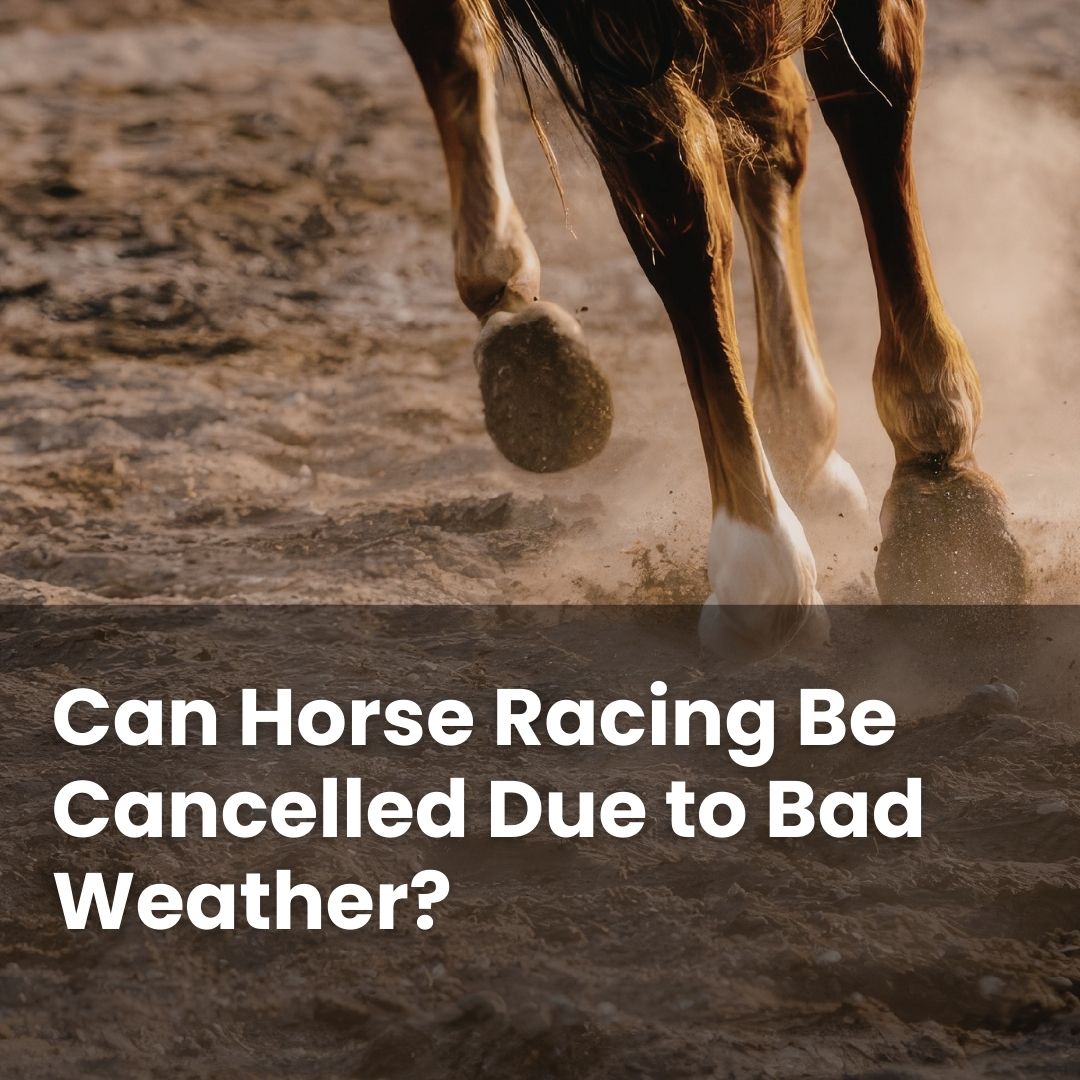
Horse racing has a long history in the UK and the events themselves often carry a sense of excitement for fans and punters alike. But if you’ve ever planned to watch a race or place a bet, you might wonder what happens when the weather takes a turn for the worse.
Heavy rain, thick fog and snow can all show up throughout the year, sometimes quite suddenly. The impact is not just damp coats, it can change how a course rides and whether a meeting can run at all.
So, is there a point where races no longer go ahead? What needs to happen for a meeting to be called off? Here is a clear guide to how the weather can affect horse racing in the UK.
What Weather Conditions Can Trigger Cancellation Or Abandonment?
Heavy Rain And Waterlogging
If you’re familiar with the British weather, you’ll know that sudden downpours are not uncommon. When there’s a lot of rain, the ground at the racecourse can become waterlogged. Waterlogging happens when the soil becomes so soaked that it turns soft and uneven, which can make take-off and landing points unpredictable and increase the risk of slips. To prevent injury to both horses and jockeys, organisers sometimes have to call off meetings if the track is too wet for safe racing.
Frost, Snow And Frozen Ground
During colder months, frost and snow can also disrupt horse racing. Frost occurs when low temperatures freeze the grass and soil on the course. This creates a hard, slippery surface that is especially risky at racing speed. The same goes for snow, particularly if there is a frozen base underneath. Even with protective covers, a sustained freeze can leave parts of the track unsafe to use, so events are often cancelled until conditions improve.
High Winds And Poor Visibility
Strong winds can be hazardous at the racecourse. High winds might blow debris onto the track or damage equipment such as railings and temporary structures. Poor visibility caused by thick fog, mist or heavy rain can be just as problematic, as officials need to see the whole course to monitor a race properly. If hazards cannot be seen or secured, races may be abandoned for safety reasons.
Are Flat And National Hunt Races Cancelled For The Same Reasons?
Flat and National Hunt races are both popular in the UK, but they do not always face the same issues when the weather turns.
Flat racing takes place on level ground, mostly in the warmer months. It relies on a consistent surface that is not so wet that it causes loss of balance. If the course becomes flooded or very heavy underfoot, flat races may be cancelled because the risk of slipping or uneven strides is too high.
National Hunt racing, sometimes called jump racing, usually happens in autumn and winter. These events involve hurdles and fences for horses to jump. Severe weather, like frost or snow, can be especially problematic here. If the ground freezes or if obstacles and run-in areas are unsafe, the meeting might not go ahead. Jump races are more likely to be cancelled if the ground is too hard, as landing after a jump on frozen ground could be dangerous.
Both codes can be affected by poor visibility, because stewards and officials need a clear view of each section of the course. In practice, that is why the condition of the ground is checked and reported so carefully before racing begins.

Discover The Best Online Casinos
Browse our list of top-recommended casino sites, read reviews from real players & be the first to get access to the latest casino bonuses
How Is The Going Assessed And Reported?
In horse racing, “the going” describes the condition of the racecourse ground. The state of the ground can change with the weather, and it is important for everyone involved to know this before a race begins.
Clerks of the course and ground staff are in charge of checking the going. They walk different parts of the track and use a tool called a going stick, which is pushed into the surface to measure how much it gives. The readings, together with visual inspection, help them judge how firm or soft the surface feels underfoot.
Once the ground has been checked, the results are shared using standard terms you will see on UK racecards. The main descriptions are:
- Hard (very dry and firm)
- Firm
- Good to Firm
- Good
- Good to Soft
- Soft
- Heavy (very wet and testing)
If the condition is not the same across the entire course, separate comments may be added. For example, one part might be “good to soft in places.” The official going is updated if the weather changes or more checks are carried out, and it is published through official channels and the racecourse itself.
If conditions slide from testing to unsafe, fixtures can change, which brings us to what happens with wagers placed on those races.
What Happens To Bets If A Race Is Cancelled Or Abandoned?
If a horse race is cancelled or abandoned before it begins, most bookmakers in the UK will refund any bets you have already placed. This is treated as a void bet, so your stake is returned to your account as if the bet never happened. Some bookmakers do this straight away, while others may take a little longer, depending on their processes.
Sometimes a meeting may start but be called off before all races are finished. Bets on any races that have not run are usually treated as void and your stake is returned. If some races go ahead, bets on those races stand.
If a race you have bet on is postponed and rescheduled to the next day at the same venue, bookmakers may give you the choice to let your bet run or request your stake back. Policies can differ, so it is worth checking the rules where you place your bet.
If gambling is causing worry for you or someone you know, free and confidential help is available from GambleAware.
Can Meetings Be Postponed Or Rescheduled?
Organisers do sometimes decide to postpone or reschedule meetings when the weather disrupts the original plans. If a meeting cannot take place as scheduled, perhaps because of a waterlogged track, frozen ground or poor visibility, officials may look for another suitable date, often within a day or two if conditions are likely to improve.
Postponing a race meeting involves careful coordination. The availability of the racecourse, stable staff, horses, and the people who run the day safely all need to be considered. There are also rules set by the British Horseracing Authority that must be followed before arranging a new date.
Sometimes only part of the programme is affected and selected races are moved to a different time, rather than the entire fixture. In other cases, if there is no realistic option for rescheduling, the meeting may be called off altogether. If you have placed a bet and the event is moved, the bookmaker’s terms and conditions will explain whether your stake is returned or carried over.
With that in mind, it helps to know what racecourses do to keep the show on the road when the forecast is against them.
How Do Racecourses Prepare For Bad Weather?
Racecourses across the UK take a range of steps to get ready for whatever the weather might bring. Ground staff keep a close eye on forecasts and adjust their plans if heavy rain, frost or strong winds are expected.
Many courses have drainage systems under the turf to move excess water away quickly during prolonged rain. When conditions are wet, staff may also use pumps or sand to deal with patches that could make the surface unsafe.
If frost is likely, large areas of the track can be covered with protective fleece or plastic sheeting overnight. This helps to stop the ground from freezing and keeps the surface in a better condition for racing. When temperatures rise, these covers are removed so the track can be checked and readied for action.
For high winds, staff secure temporary structures such as grandstands and signage, and remove anything that could blow onto the course. By working behind the scenes, ground teams do their best to keep race meetings going safely, making quick decisions if the forecast changes at short notice.
In the end, cancellations and postponements are made to protect participants and maintain fair competition, and updates are shared promptly so spectators and bettors know where they stand.