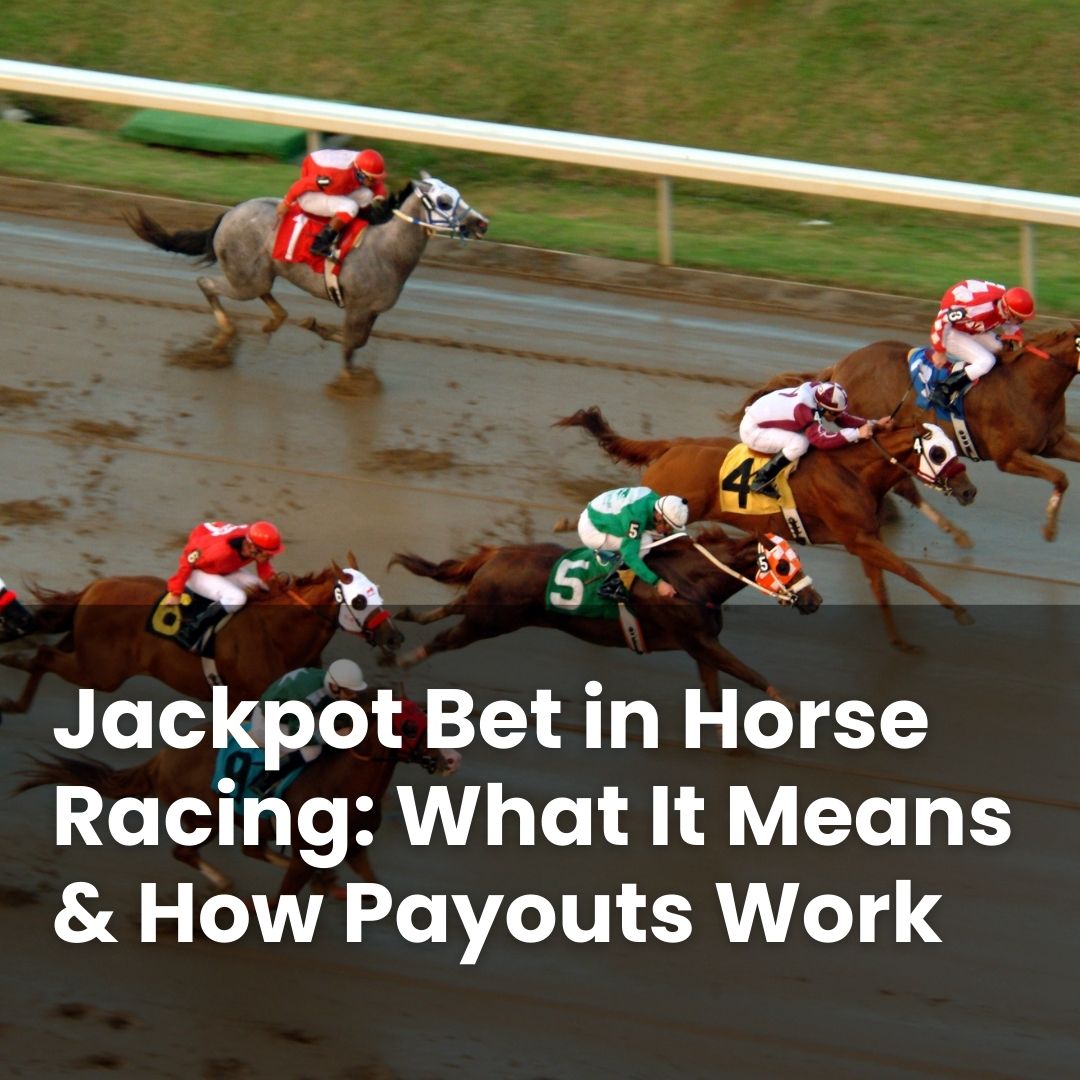
If you’ve ever watched a big race day and heard talk about a “Jackpot” but felt lost, you’re not alone. Horse racing has its own set of terms, and the Jackpot bet is one that often confuses beginners and even some experienced punters.
You might have seen people excitedly discussing their Jackpot tickets at the racecourse or read about impressive wins in the news. But what exactly is a Jackpot bet in the world of horse racing? And how do the payouts get worked out?
Whether you’re new to horse racing or just want a bit more clarity, this guide breaks down how the Jackpot works, how to enter, and how the returns are settled, so you can follow the action with confidence.
What Is a Jackpot Bet in Horse Racing?
A Jackpot bet in horse racing is a type of pool bet. Instead of fixed odds, everyone placing this bet contributes to one shared prize pot.
To take part, you need to pick the winner of a set number of races on a single day at a specific meeting. In the UK, this usually means the first six races at one track.
You can choose one horse in each race, or cover more outcomes by selecting multiple horses in a leg. Each extra pick creates another line and increases the total stake.
To land the Jackpot, every winning horse in the sequence must be named correctly on a single line. One miss and that line does not win.
Jackpot bets are offered by licensed pool operators, such as the Tote. What you could receive is shaped by the pool and the number of winning lines, which we explain next.
How Are Jackpot Payouts Calculated?
Jackpot payouts are settled from a shared pool. All stakes for that event are combined, then a set deduction is taken for operating costs and taxes. The remainder is the net pool.
The net pool is split equally between all winning lines. If there are three correct lines, each one receives a third of the net pool. If a single customer holds more than one winning line, they receive a larger overall share because each line counts separately.
If no line matches all required winners, the pool usually rolls to the next eligible Jackpot, boosting the starting fund there. More on rollovers follows shortly.
Because this is pool betting, there are no fixed odds. The final return depends on how much was staked in total and how many lines won, and it is confirmed after the last race in the sequence.

Discover The Best Online Casinos
Browse our list of top-recommended casino sites, read reviews from real players & be the first to get access to the latest casino bonuses
How Do Tote Pools Affect Jackpot Returns?
As covered above, a Jackpot is driven by a shared pool. What tends to influence returns most is how much money goes into that pool and how many winning lines remain at the end.
On busy days, such as major meetings, more people usually get involved, so the pool can grow. If only a few lines are correct after the sequence, each of those lines takes a larger slice. If lots of lines end up correct, the same pot is split more ways and the return per line falls.
The final dividend per winning line cannot be known in advance. It settles once the last result is in, all deductions are applied, and the number of winning lines is confirmed.
With the shape of returns in mind, it helps to understand the entry rules before placing a ticket.
Qualifying Rules For Jackpot Bets
To place a Jackpot bet, select a horse in each of the designated races for that meeting, typically the first six. Each complete set of selections forms one line.
A line must name a single winner for every race in the sequence. Choosing extra horses in a race creates additional lines and increases the total stake accordingly.
Bets must be placed before the first race in the Jackpot begins. Once that race starts, entries for that day’s Jackpot close.
If a selected horse becomes a non-runner, most operators will substitute it with the starting price favourite for that race so the line remains valid. Policies can vary slightly, so it is worth checking the operator’s rules.
Jackpot bets must be placed with a licensed pool operator. Customers must be over 18 and have a verified account to take part. If gambling stops being fun, support is available at BeGambleAware.org and GamCare.
What Happens If No One Wins The Jackpot?
Sometimes no line correctly names all the winners in the sequence. When that happens, the net pool does not pay out on the day.
Instead, the fund is normally rolled forward to the next Jackpot event. That rollover amount is added to the new pool, which can create a larger starting pot. The process repeats until at least one line matches all the required winners and the dividend is paid.
With rollovers covered, the next piece is how the money is shared when there are winners.
How Dividends Are Split Between Multiple Winners
When there are one or more correct lines, the operator calculates the net pool, then divides it equally by the number of winning lines. Every winning line receives the same dividend.
If a customer holds more than one winning line, they receive the dividend multiple times, once for each line. Settlement is based on the number of winning lines, not the number of people who hold them.
This approach keeps the payout fair and transparent across all successful entries.
Can I Combine Jackpot Bets With Other Bet Types?
Jackpot bets are handled separately from fixed-odds bets such as singles, doubles, or accumulators, and from other pool bets. They are entered and settled in their own pool and cannot be merged into a single combined wager.
You can, of course, place a Jackpot alongside other bets on the same day. Each will be treated independently, with its own rules and settlement.
Understanding how the pool works, the entry rules, rollovers, and how dividends are shared puts you in a strong position to follow or take part in a Jackpot with clarity.