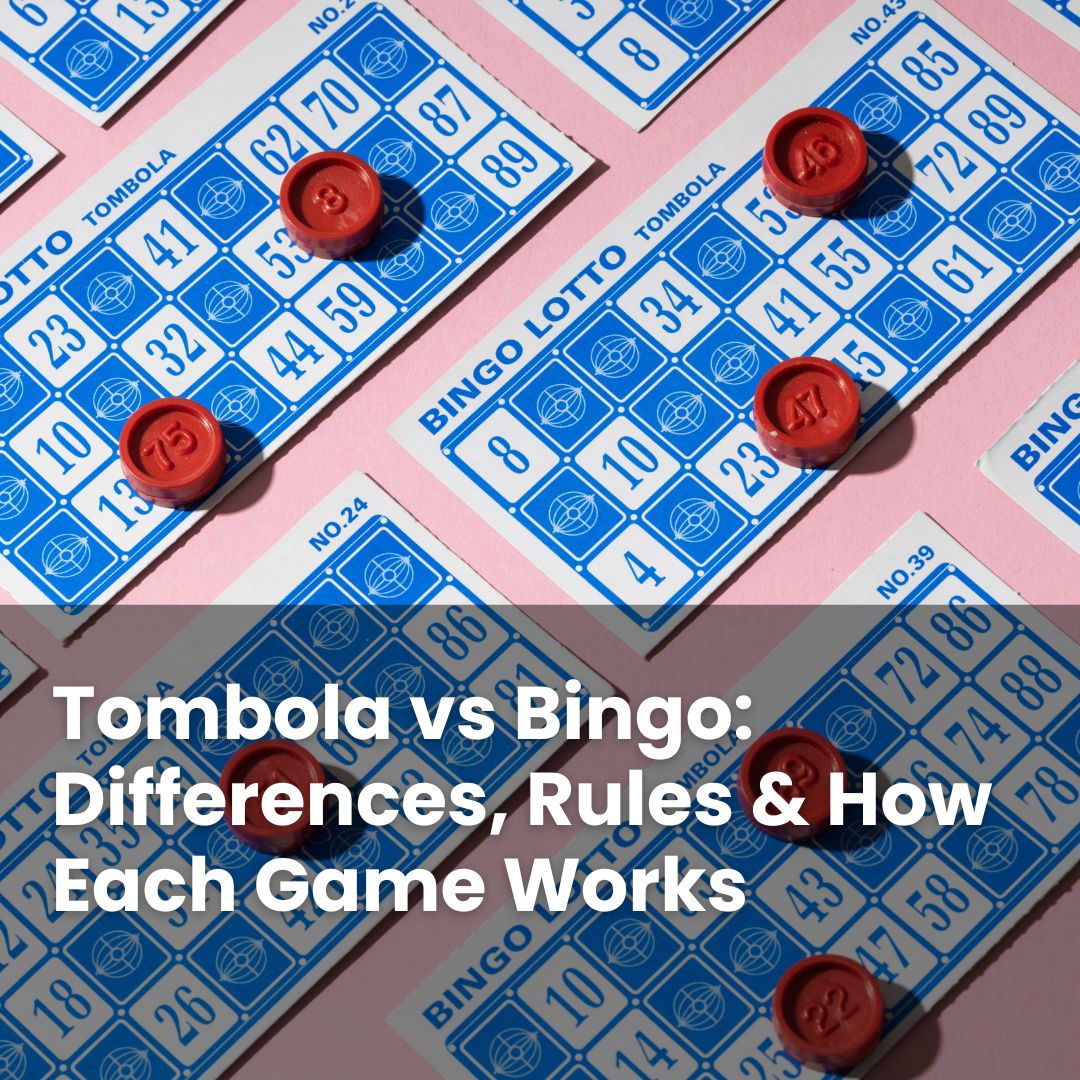
Tombola and bingo are often mentioned together, but they are distinct games with their own rules, equipment, and ways to win.
Knowing how they differ can make it easier to choose the experience that suits you, whether you enjoy a quick draw for set prizes or a more involved game that builds towards a pattern.
This blog post walks through the essentials for each game, including ticket formats, how numbers are drawn, prize structures, common variants, and how online play compares with playing in person.
Read on to learn more.
How Do Tombola And Bingo Differ?
Tombola is typically a raffle-style draw. Players buy tickets with printed numbers, and the organiser pulls tickets at random from a drum or container. If a ticket matches one of the pre-set winning numbers, the corresponding prize is awarded. Tombola is usually quick and straightforward, which is why it often appears at fairs, charity stalls, and community events.
Bingo is a card-based game. Players have a ticket with a grid of numbers and mark off numbers as they are drawn and called. The aim is to complete a pattern such as a single line or a full house. Bingo tends to be more interactive, lasts longer than a tombola draw, and usually has a caller leading the game.
Both games can be played in person or online, but the pace and feel are quite different. With those contrasts in mind, it helps to look at how each one runs from start to finish.
How Do You Play Tombola?
Players buy tickets from the organisers, each ticket showing a number or short code. All sold tickets, or matching stubs, are placed into a container, mixed, and drawn one by one.
If a drawn number matches a player’s ticket, they win the prize linked to that number. Prizes are often displayed in advance, sometimes in tiers, so participants know what is on offer before the draw. Some events put winning numbers on the back of tickets, so players can check immediately after purchase and claim on the spot.
Tombola draws are usually brisk. There is no caller and no sequence to follow. Players simply hold their tickets and watch for matching numbers, which keeps the focus on the draw and prize table rather than ongoing gameplay. This simplicity is part of the appeal for fundraisers and local stalls.

Discover The Best Online Casinos
Browse our list of top-recommended casino sites, read reviews from real players & be the first to get access to the latest casino bonuses
How Do You Play Bingo?
Bingo starts with players purchasing one or more tickets, each containing a grid of numbers. The format depends on the variant being played. In the UK, 90-ball bingo cards have three rows and nine columns, while 75-ball games use a 5×5 grid.
Numbers are then drawn at random and announced by a caller or displayed on screen. Players check their cards and mark off any matching numbers. The first to complete the required pattern calls to claim. The organiser verifies the claim against the numbers drawn so far and, if everything checks out, the prize is awarded.
Because numbers are called individually and patterns can vary, bingo builds in stages. Smaller prizes might be awarded for early lines, with a larger prize reserved for a full house later in the game.
Ticket Format And Equipment
Tombola uses simple, numbered tickets or strips, often perforated and easy to hand out in busy settings. The equipment list is short: printed tickets, a container or drum for mixing, and a visible list or display of prizes linked to winning numbers.
Bingo uses numbered cards arranged in grids. In venue games, players use pens or dabbers to mark their cards. Online, cards are digital and marking is often automated, with the platform highlighting called numbers or completing the card for you.
These formats shape the experience. Tombola keeps attention on the draw and the prize table, while bingo encourages ongoing engagement as numbers build towards a result. With that groundwork in place, it is clearer how each game handles the draw itself.
How Are Numbers Drawn And Called In Each Game?
In tombola, the organiser mixes the tickets and draws them one at a time. The selected ticket is the result, so there is no need to announce a sequence of numbers or for players to do anything beyond checking their tickets.
In bingo, numbers are drawn individually, either by a physical machine in a venue or by a random number generator online. Each number is called out or displayed, and players mark it if it appears on their card. The draw continues until someone makes a valid claim for the set pattern.
Both games rely on random selection. In bingo, that randomness is shown step by step; in tombola, it appears in the single ticket drawn at a time. Next comes what everyone wants to know: how wins are confirmed and prizes are handed out.
How Do You Win And Claim Prizes?
In tombola, a win occurs when the number on a player’s ticket matches a drawn ticket or a posted winning number. The organiser checks the ticket and awards the prize assigned to that number. Prizes are commonly goods or vouchers, and claims are usually resolved immediately.
In bingo, wins depend on completing the required pattern on the card. When a player calls, staff or the system verify the card against the numbers drawn. If correct, the prize is awarded. This may include smaller payouts for a single line and a larger one for a full house, depending on the game rules.
Online versions of both games streamline the claim process. Platforms confirm wins automatically and credit prizes to the player’s account or explain how to collect physical items.
Prize Structure And Payouts
Tombola prizes are typically fixed in advance and linked to particular numbers. Stalls often display the main items and note how many smaller prizes remain, so the prize table is transparent from the outset.
Bingo prize structures vary by game size and format. Venue games might offer set amounts for one line, two lines, and a full house. Larger or online games sometimes split prizes among multiple winners if more than one person completes the pattern at the same time. Many platforms show the prize breakdown before tickets are sold, so players know what they are playing for.
Prizes are never guaranteed in either game. What differs is whether the reward is attached to a specific ticket, as in tombola, or to completing a pattern before anyone else, as in bingo. With the rewards covered, it is useful to see how the experience changes online.
How Does Online Play Differ From In-Person Play?
Online tombola and bingo move the essentials into a digital setting. Tickets are purchased on a website or app, numbers are drawn by software, and wins are confirmed by the platform. In online bingo, features like auto-marking, chat rooms, and scheduled game lobbies are common. Online tombola is typically a quick draw with on-screen results and instant prize notifications.
In person, players handle physical tickets or cards, and a host runs the draw. The atmosphere is shaped by the crowd, the caller, and the visible prize table for tombola or the stage board for bingo.
Licensed online platforms usually provide safer gambling tools such as deposit limits, time-outs, and activity tracking. These features are there to help players stay in control.
Is Tombola Faster Than Bingo?
Tombola is generally quicker. Tickets are drawn straight from a drum or container, prizes are matched, and the draw can be wrapped up in minutes.
Bingo often takes longer because numbers are called one by one and players need time to mark their cards. The game runs until someone completes the required pattern and the claim is checked.
Pace also depends on the setting. A small community tombola can finish rapidly, while a busy bingo room with multiple prizes builds to a finish that takes a little more time. If speed is the priority, tombola tends to suit. If you prefer a game that unfolds and invites a bit more participation, bingo is the better fit.
Common Variants And Game Types
Tombola usually keeps to the core format of drawing tickets against a pre-set prize list. That said, stalls sometimes add twists such as “every ticket wins” rounds or special-number bonuses during a fair or charity day.
Bingo has several established variants. In the UK, 90-ball bingo is most common and awards prizes for one line, two lines, and a full house. The 75-ball version uses a 5×5 grid with a wider choice of patterns, while 80-ball and 30-ball games offer faster formats with different layouts and goals. Online rooms often add themes, side prizes, or ticket bundles to suit different budgets and session lengths.
If you decide to take part, set a clear spend limit and use the safer gambling tools available, especially online. If gambling ever stops being enjoyable or begins to affect your well-being or finances, free and confidential help is available from organisations such as GamCare and GambleAware. Making informed choices is the best way to enjoy either game on your terms.