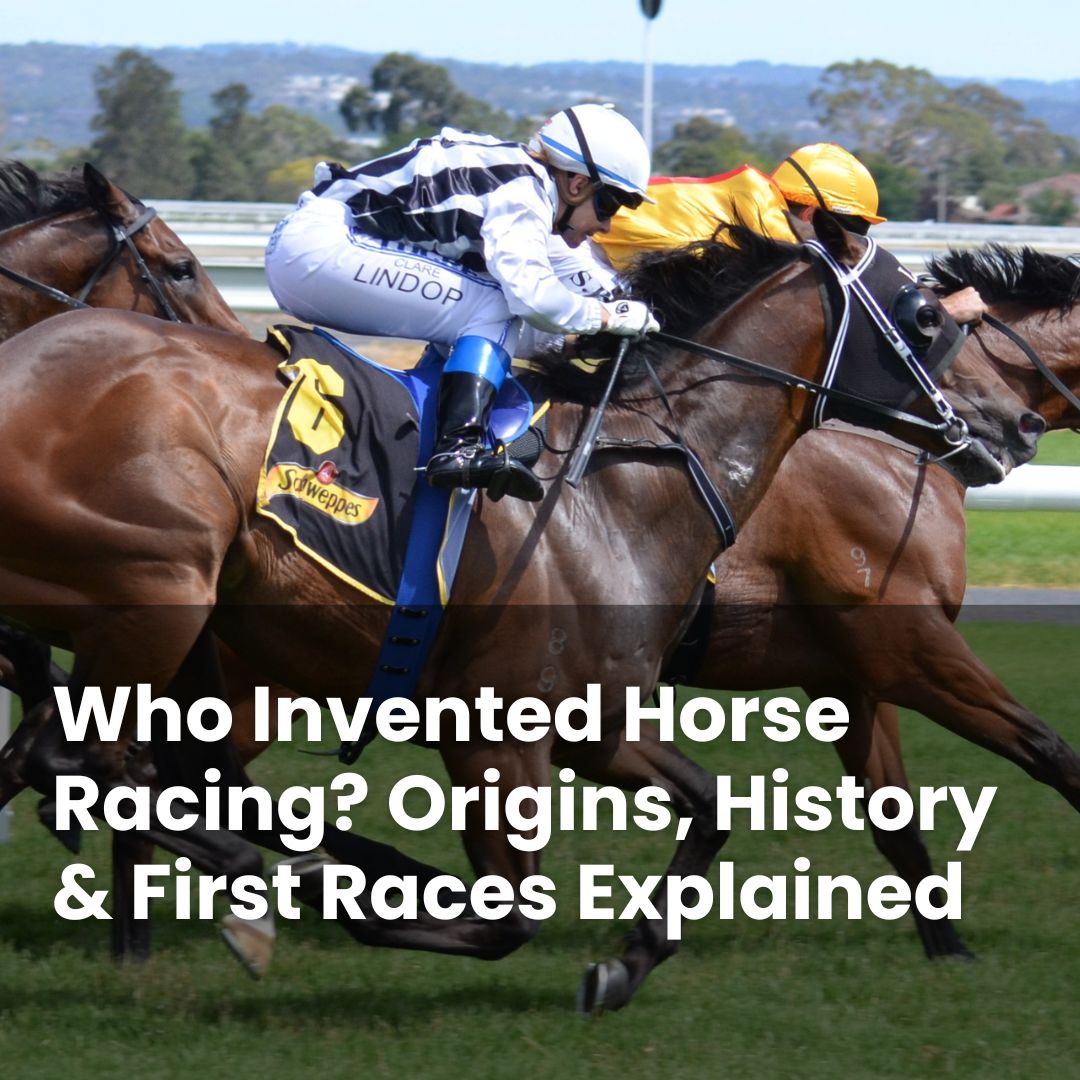
Horse racing has been part of human life for thousands of years, yet its true beginnings are scattered across time and place. Different communities created their own versions, each shaped by local needs and traditions.
This article traces where racing first took root, how styles evolved from chariots to mounted riding, and what those early contests actually looked like. It also explores how breeding, training, social class and public events steered the sport’s growth.
Along the way, we clear up common myths and show how early practices still influence modern rules, from race distances to safety standards. Ready to see how it all fits together?
Who Really Invented Horse Racing?
No single person or group invented horse racing. As people domesticated horses for transport, warfare and ceremony, the idea of testing speed and skill appeared again and again in different places.
Evidence from Central Asia, the Middle East and North Africa shows organised contests long before formal rulebooks or permanent courses. Races served many purposes: rivalry between neighbours, displays for leaders, or entertainment during festivals.
Rather than a single starting point, racing grew from many small beginnings that gradually took on structure and meaning within each culture. So where do the earliest traces appear?
Horse Racing Origins In Ancient Civilisations
Long before detailed written records, Greeks, Romans, Egyptians and peoples of Central Asia were racing horses in various forms.
In Ancient Greece, mounted and chariot events featured in major festivals such as the Olympic Games, using arenas designed for speed and spectacle. The Romans took this to an enormous scale, filling venues like the Circus Maximus with teams, trained stables and fan followings.
Further east, nomadic groups in Persia and the Central Asian steppe used races to sharpen riding skills, often linked to military training or seasonal gatherings. Egyptian art also shows scenes of chariots and riders, confirming how widespread these contests were.
Different cultures used racing for different ends, but the core idea was shared: put horse against horse and see whose preparation and handling came out on top. That raises a practical question: what did those first races actually look like?

Discover The Best Online Casinos
Browse our list of top-recommended casino sites, read reviews from real players & be the first to get access to the latest casino bonuses
What Were The Earliest Forms Of Horse Racing?
Early races were simple affairs. Riders or drivers picked a start, chose a landmark for the finish, and set off. There were few, if any, grandstands or officials, and timing was judged by eye rather than instruments.
Surfaces varied from open fields to hard-packed tracks. Distances could be a short dash for speed or a longer test of stamina. Horses were ridden by owners, skilled local riders or soldiers, often using tack and techniques suited to the region.
Chariot racing offered a different challenge. Lightweight carts pulled by one or more horses demanded balance, control and precise teamwork between driver and team. Purpose-built arenas allowed several chariots to compete together, adding tactics to the test of pace.
From these beginnings, two distinct traditions stood out and developed along their own paths.
Chariot Racing Versus Mounted Racing
Chariot racing placed the competitor on a two-wheeled cart behind the horses, common in Greece and Rome. Drivers managed pace, cornering lines and team coordination while avoiding collisions. Events often featured multiple teams on oval tracks, with turns that rewarded nerve and positioning as much as straight-line speed.
Mounted racing kept the rider on horseback. It could be run over varied distances on straight or circular courses, with an emphasis on balance, pace judgement and the rider’s feel for the horse. In many regions, mounted events were easier to stage, needing fewer resources than large chariot arenas.
Both forms built their own customs and rules. Over time, mounted racing proved more adaptable across landscapes and societies, and it would become the backbone of the sport in Britain. As competitions drew larger crowds, the need for consistent organisation grew stronger.
The Emergence Of Organised Horse Races
What began as informal contests slowly formalised. In medieval and early modern Britain, aristocrats and royalty sponsored races with agreed distances, stakes and basic rules, often on open ground or straight courses.
Permanent racecourses followed, along with officials to start races, judge finishes and record results. Clearer categories emerged, grouping horses by age or previous success to make contests comparable. Weights and later handicapping systems aimed to balance fields and keep outcomes competitive.
With dates set in advance and prizes on offer, attendance grew. Regular meetings encouraged owners to plan campaigns for their horses and helped spectators follow familiar formats from one season to the next. As structure took hold, attention naturally turned to the horses themselves and how best to prepare them.
Breeding And Training: How Early Practices Shaped Racing
Early owners quickly noticed that some horses excelled. Selective breeding focused on traits such as stamina, acceleration and a steady temperament, producing lines suited to different distances and going. Over time, records of ancestry and performance allowed breeders to be more deliberate, laying the groundwork for stud books and recognised bloodlines.
Training moved from informal, experience-led routines to more considered programmes. Handlers developed work that built aerobic fitness, strong joints and responsive schooling. Feeding, shoeing and veterinary care became part of the preparation, not afterthoughts. Riders also refined techniques for breaking from the start, settling a rhythm and producing a finishing effort at the right moment.
These practices created the foundations for the standards used today, where preparation and breeding are central to performance. With horses better prepared and races reliably organised, the commercial side of the sport gathered momentum.
How Did Betting And Wagering Impact Horse Racing’s Growth?
Wagering added energy to race days and helped turn occasional contests into regular fixtures. Patrons, owners and onlookers staked outcomes, and organisers noticed that betting drew larger crowds and funded richer prizes.
As meetings became established, more formal systems appeared. Records of bets, clear settlement rules and bookmaker-led betting rings professionalised the activity and built trust among participants. In some countries, pooled systems were developed, but in Britain the bookmaker model shaped the on-course scene for generations.
Betting remains part of racing’s appeal for many. If you choose to have a flutter, set a clear budget, keep it within your means and seek support if it ever stops feeling manageable.
The Role Of Social Class And Public Spectacle In Racing
Social class strongly influenced racing’s path. Wealthy owners bred and trained horses, staged races on private land and used events to display status. These gatherings often coincided with celebrations or important dates, drawing attention and investment.
Over time, race days became public occasions. Markets, fairs and community celebrations sprang up around meetings, bringing together people from different backgrounds. Spectators came for the horses and stayed for the wider experience, which in turn encouraged organisers to improve facilities and scheduling.
The mix of elite ownership and broad public interest shaped the sport’s identity: prestigious enough to attract investment, open enough to fill stands and fields. With such a long history, it is no surprise that a few stories have become muddled over time.
Common Myths About The First Horse Races Debunked
One frequent claim is that a single country or figure invented organised racing. In reality, similar contests emerged independently across several ancient cultures.
Another myth suggests early races began with strict rules and officials. Most started informally, with local customs deciding distances, entries and starts.
It is also untrue that early racing only involved one breed. Communities raced the horses they had, and selective breeding for racing performance developed gradually.
Some believe early races were always public spectacles. Many of the earliest contests were private affairs held by rulers or local leaders before later opening up to wider audiences.
Finally, while wagering has long been linked with racing, early betting was not uniformly structured. Formal systems grew alongside the professionalisation of meetings.
How Early Races Influenced Modern Racing Rules And Traditions
The shift from informal challenges to organised meetings created standards that still define the sport. Fixed distances, agreed starting points and official timing made results comparable across venues and seasons.
Rules on eligibility, weight carried and race conditions evolved to balance competition. Age groupings and weight-for-age scales, stewarding to enforce fairness, and handicapping to bring horses together by ability all have roots in earlier attempts to level the field.
Ceremony and spectacle also persisted. Annual meetings, prize presentations and parades reflect traditions that stretch back centuries. Safety has advanced in step, influenced by long-standing concerns for horses and riders: better course preparation, veterinary checks, improved protective gear, photo-finishes to judge close calls and starting methods designed to reduce false starts.
If betting is part of how you follow racing, keep it occasional, set limits that suit your circumstances and take breaks. If you ever need support, organisations such as GamCare and GambleAware provide free, confidential help.
Understanding where racing began, how it evolved and why its rules exist today brings the story full circle, linking past and present every time the stalls open and the field sets off.