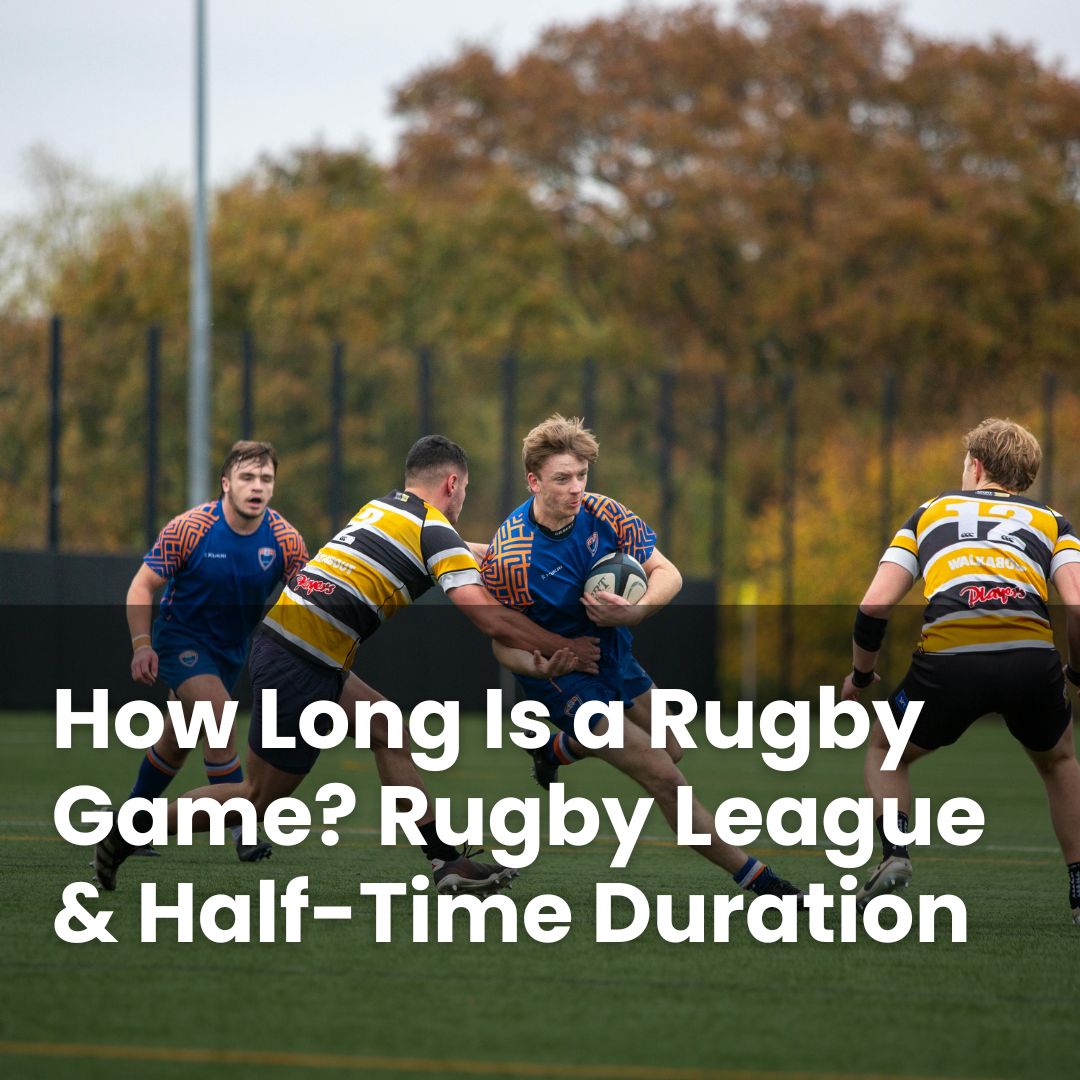
Understanding how long a rugby game lasts is useful for anyone watching, betting, or just learning about the sport. Match duration does not just depend on the type of rugby being played, there are several factors that affect how much time the game actually takes.
This guide explores the length of standard rugby league and rugby union matches, the difference in half-time durations, and the impact of stoppage time. It also covers extra time rules, how match lengths differ in youth, women’s, and amateur games, and what this may mean for in-play betting decisions.
You will also find a simple overview of what to expect during a rugby match and clear explanations that address some common misconceptions about how long these games really last.
How Long Is A Standard Rugby League Match?
A standard rugby league match is made up of two halves, each lasting 40 minutes, for a total of 80 minutes of playing time. The clock may stop for specific reasons, such as injuries or when the referee checks with video officials, so the time you spend watching can run beyond 80 minutes on the wall clock.
Half-time in rugby league is usually 10 minutes long. This break separates the two halves, giving players a chance to rest and coaches an opportunity to discuss tactics.
In most cases, the match finishes at the end of the second half. Where a winner must be found in a knockout game, competition rules set out how extra time works. For regular league fixtures, the 80-minute structure applies.
If you follow live markets, knowing this structure helps you time decisions as the halves develop. Rugby union follows a similar pattern, with a few procedural differences.
How Long Is A Standard Rugby Union Match?
A standard rugby union match is also played over two 40-minute halves, making 80 minutes in total. The referee controls the official time and may pause the clock for injuries, substitutions, or television match official reviews. Play resumes once the issue has been dealt with.
There is a break between the two halves, known as half-time, which gives players a chance to regroup and prepare for the remainder of the match.
Extra time can apply in competitions where a draw is not permitted after the regular 80 minutes. The exact format depends on the tournament. With that in mind, it helps to know how the interval itself differs between the two codes.

Discover The Best Online Casinos
Browse our list of top-recommended casino sites, read reviews from real players & be the first to get access to the latest casino bonuses
How Long Is Half-Time In Rugby League And Rugby Union?
In both rugby league and rugby union, half-time provides a fixed break between the two halves of play. It is an essential pause for recovery and adjustments.
For rugby league matches, the standard half-time interval usually lasts 10 minutes. This gives players a short window to reset before the second half.
Rugby union matches typically have a half-time interval of up to 15 minutes. The slightly longer break is standard in most competitions, although organisers can set exact timings in their regulations.
These intervals are predictable, but the rest of a match does not always run to a neat clock, which brings us to stoppages.
How Does Stoppage Time Affect Total Match Length?
Stoppage time refers to time that is accounted for when the clock is paused because of interruptions such as injuries or official reviews. This can mean the event lasts a little longer than 80 minutes in real time, even though playing time remains the same.
Both codes manage stoppages differently, which is why it is useful to understand the timing approach in the sport you are watching.
Stoppage Time Rules In Rugby League
In rugby league, the match clock is generally paused by the referee during significant stoppages, such as injuries, video reviews, or extended delays.
Play restarts only once the reason for the pause has been resolved. The stadium clock is usually visible, so the remaining match time is clear. Because the clock is stopped for major interruptions, there is no need to add a separate block of time at the end of a half.
Stoppage Time Rules In Rugby Union
Rugby union uses a running match clock for 40-minute halves, with the referee in charge of timekeeping. If an incident occurs, such as an injury, scrum reset, or substitution, the referee may stop the clock.
Unlike sports that add a set amount of time at the end of a half, rugby union continues until the next natural break after the match clock passes 40 or 80 minutes, depending on the half. This is known as playing until the ball is dead.
When a draw is not enough, extra time or other tiebreak methods step in.
What Happens In Extra Time And Golden Point?
Extra time is used in rugby matches when a winner must be decided, such as in knockout competitions. Regular season matches in many leagues can end level, but tournaments often require a clear result.
In rugby union, extra time is usually two periods of 10 minutes. The team with the most points at the end of extra time wins. If scores remain level, some competitions move to sudden death or a kicking competition to separate the teams.
Rugby league often uses a golden point period in knockouts. After a brief break, play restarts and the first team to score any points wins immediately. If neither team scores within the set period, the match may remain a draw or proceed to another method, depending on the rules in place.
Understanding these formats helps you anticipate how a tight game might be settled. Outside elite competitions, timings can change again.
How Long Are Youth, Women’s And Amateur Rugby Matches?
Match length can differ at youth, women’s, and amateur levels to reflect the needs and safety of players.
For youth rugby, matches are shorter and increase with age. Exact timings are set by local unions or leagues. As a guide, under-13s might play two 25-minute halves, with older age groups rising in stages towards the adult length.
Women’s rugby at senior level commonly follows two 40-minute halves, in line with standard adult rugby union. Some community or development fixtures may use shorter halves, which organisers communicate in advance.
Amateur rugby can vary by league, ground conditions, or mutual team agreement. Many competitions use full-length halves, while others adopt reduced times to manage player numbers, daylight, or pitch availability.
These variations are worth checking before kick-off, especially if you follow in-play markets that open or close at specific phases.
How Does Match Length Affect In-Play Betting?
The length of a rugby match shapes how in-play betting is offered and when markets are active. Knowing whether a fixture includes shorter halves, a longer interval, or the possibility of extra time helps you understand when certain options might appear or settle.
Stoppages and tiebreak formats can also influence totals and next-to-score markets. For example, a game that goes to extra time may see points lines or result markets updated to reflect the added phases.
Always check the competition rules and confirmed match structure before you bet. Set personal limits that suit your circumstances and keep play within your means.
Timing A Rugby Match: What To Expect
A rugby match is usually split into two equal halves, the length depending on whether it is league or union, and whether it is a senior or modified game. The referee controls the clock and may stop time for injuries, substitutions, or official reviews, so real-world duration can extend beyond the headline 80 minutes.
Half-time is a set interval that allows recovery and tactical planning. In broadcasts and at grounds, a visible clock often shows how much time remains.
Extra time or sudden-death scenarios are used only when a clear winner is required by competition rules. Otherwise, the match ends after the standard two halves. Even with that overview, a few myths about timing still crop up.
Common Misconceptions About Rugby Match Duration
Many people think all rugby matches run for exactly the same amount of time. In reality, lengths differ by code, competition, and age group. Standard adult timings are a reference point, not a universal rule.
Some believe stoppage time works like it does in football. In rugby, each code manages interruptions in its own way, which can extend the event beyond the scheduled finish without adding a fixed block of time.
It is also sometimes assumed that all matches include extra time or sudden death. In fact, those apply only when a winner is needed, such as in knockout stages.
Another misconception is that the clock runs without interruption. Referees can and do stop time for injuries or official reviews, which alters how long the occasion lasts from first whistle to last.
If you choose to bet, keep it within your budget and set limits that work for you. If gambling starts to affect your well-being or your finances, seek support early. Independent organisations such as GamCare and GambleAware offer free, confidential help for anyone who needs it.
Understanding how the clock works removes confusion and lets you enjoy the game on its own terms.