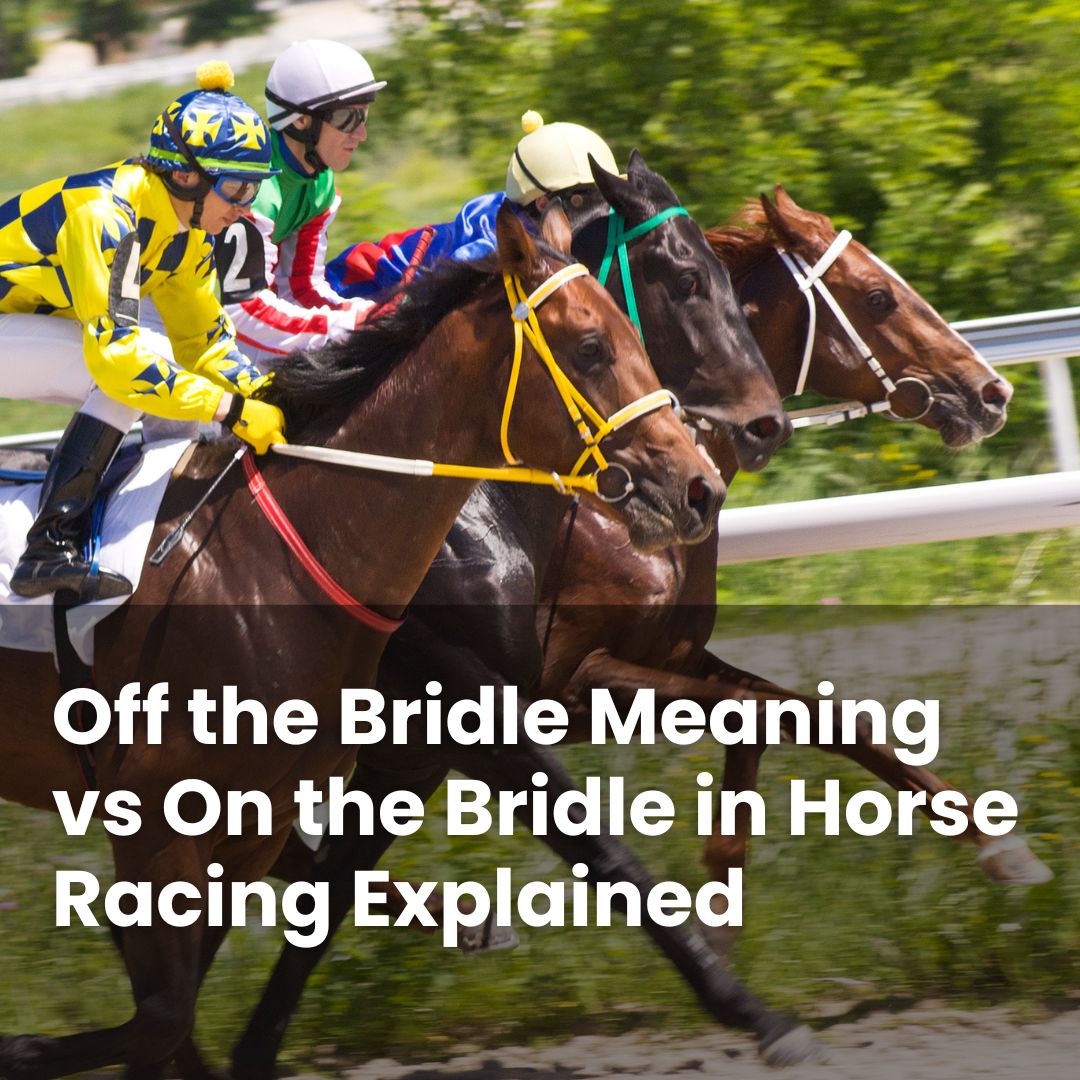
If you have ever tuned in to a horse race or listened to a racing commentator, you might have heard the phrases “off the bridle” and “on the bridle” thrown around. These aren’t just bits of racing jargon; they give you useful clues about what’s happening with the horses during a race.
It’s easy to feel left out when people start talking horses and you’re not sure what these phrases mean. Don’t worry, these terms are actually quite straightforward once you know what to look for.
Understanding the difference between a horse that is “on the bridle” and one that’s “off the bridle” will help you follow the action and make sense of what you see on the track, especially if you’re new to racing.
What Does “Off The Bridle” Mean In Horse Racing?
When a horse is described as “off the bridle” during a race, it means the jockey has started asking the horse for maximum effort. You might see the rider get lower in the saddle, push more strongly with hands and legs, and, within the rules, use the whip to encourage a response.
You’ll usually spot a horse going off the bridle when it no longer travels smoothly and the rider is clearly working hard to keep it moving. This often happens in the latter stages, as they turn into the final straight or approach the last few furlongs.
At this point, the running starts to look more effortful. The movement may become choppier, and the horse can appear to be tiring, which shows how much is being asked of it. This stage reveals which horses have something left and which are close to their limit.
So what does the opposite look like when a horse is still travelling well?
What Does “On The Bridle” Mean In Horse Racing?
When a horse is “on the bridle”, it is moving comfortably without needing much encouragement from the jockey. The horse travels smoothly and willingly, and the rider often looks still and quiet, almost as if being carried along.
You might notice a relaxed head carriage, a steady rhythm, and soft contact on the reins. Horses travelling on the bridle tend to look composed and ready to respond, with the jockey doing very little at this stage.
Commentators use this phrase to highlight runners that appear full of running as the race unfolds. Seeing a horse glide past rivals who are being pushed tells you it is having an easier time matching the pace, at least for now.
With those pictures in mind, it helps to set them side by side.

Discover The Best Online Casinos
Browse our list of top-recommended casino sites, read reviews from real players & be the first to get access to the latest casino bonuses
How Do Off The Bridle And On The Bridle Differ In A Horse’s Performance?
The contrast is about effort and efficiency. A horse on the bridle is moving within itself, conserving energy and keeping position without being asked for its all. The jockey is largely a passenger, ready to ask for more only when needed.
Once a horse goes off the bridle, the dynamic changes. The rider becomes busier, urging for extra effort, and the horse’s stride can look shorter or less fluent. It does not automatically mean the horse is finished, but it indicates the point where more is being required to maintain speed.
Reading these shifts helps you understand how the race is developing. A horse still on the bridle later in the contest usually has more to offer; one off the bridle earlier may need to work harder to stay involved.
Knowing the difference is one thing. Spotting it live is where it clicks.
How Can You Tell If A Horse Is On Or Off The Bridle During A Race?
It often comes down to the rider’s body language and the horse’s action. Horses on the bridle carry the jockey quietly, with smooth strides and a relaxed outline. Reins may look slightly looser, and the rider sits still, waiting.
By contrast, off the bridle usually means the jockey is more animated. You might see stronger riding, arms working, the seat driving, and sometimes the whip used within the rules. The horse can look as if it needs encouragement to hold its position.
Focusing on this partnership tells a clear story about how each runner is coping with the tempo, the ground, and the distance. Once you can read it, the next question is why a horse might shift from one state to the other.
What Causes A Horse To Go Off The Bridle?
Several factors can nudge a horse from travelling sweetly to needing a push, and it is a natural part of how races play out.
A rising pace is the obvious trigger. When the leaders quicken, any horse near its comfort zone will need to find more. Ground conditions and distance matter too. On softer going or over longer trips, fatigue can creep in earlier, and even strong travellers may start to need help.
Some horses prefer company and can idle if left alone in front. If a runner eases down when hitting the lead too soon, the jockey may have to get busier to keep it focused. The shape of the race also counts. Stop-start fractions, wide trips around bends, or jumping errors in a chase can all knock a horse out of its rhythm and force extra effort.
Often it is a mix of these elements. The important thing is that going off the bridle is a signal of where the horse is physically and mentally at that moment, not a verdict on its overall ability.
That moment can change how a race is ridden, and even how the markets react.
Does Being Off The Bridle Affect Betting Odds And Race Tactics?
In live betting, markets react to what is unfolding. If a horse starts needing plenty of encouragement while key rivals are still on the bridle, prices can drift as traders and punters reassess. The opposite is also true. A strong traveller late on is often shortened because it looks poised to deliver when asked.
Tactics shift with these signals. Jockeys watch each other closely. Spotting a rival go off the bridle can prompt an earlier move to gain position, force an error, or stretch the field while others are working harder. Equally, if a rider still feels a strong response under them, they may delay for a clearer run, confident their horse will pick up.
These are snapshots, not guarantees, which is why seasoned race-watchers pay as much attention to the manner of travel as to raw position. If you choose to bet, set limits and keep it affordable. If you are concerned about your gambling or someone else’s, free advice and support are available at BeGambleAware or via the National Gambling Helpline on 0808 8020 133.
Why Would A Jockey Ask A Horse To Be On The Bridle?
Jockeys aim to keep their horses on the bridle for as long as possible because it preserves energy for when it matters most. A horse travelling comfortably can hold a handy position, avoid early battles, and still be ready to quicken when a gap appears.
In longer races, or when the early fractions are strong, patience is crucial. Waiting until the right moment allows the rider to use one decisive effort rather than several small ones. You will often see jockeys sit still and keep their mounts balanced, only asking for everything when the line is in sight and the horse is best placed to respond.
Put simply, being on the bridle signals efficiency, and timing the move from comfort to full effort can decide the result. Understanding that shift helps make any race easier to read from start to finish.