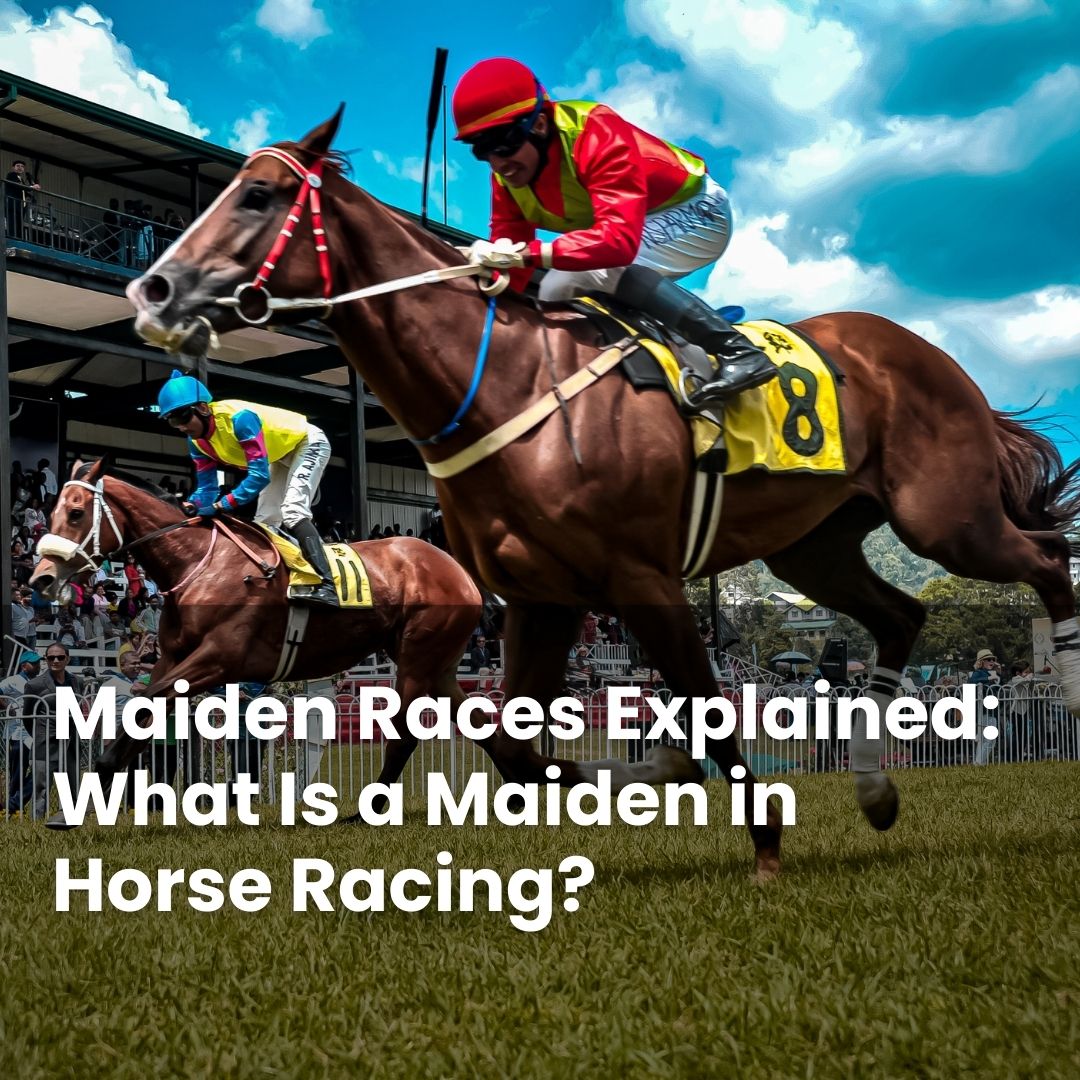
If you have ever looked at a day’s horse racing card in the UK, you might notice certain races are marked as “maiden.” These are a common sight at both big racecourses and smaller local tracks, but the word itself can cause confusion for new fans.
Whether you’re curious about the meaning behind the term or wondering why these events exist, understanding maiden races is a great place to start if you’re interested in horse racing. There’s more to them than simply the name, as these races can offer a glimpse into the early days of a horse’s career and sometimes reveal potential future stars.
If all this sounds a little unfamiliar, don’t worry. This guide will clear things up, helping you know exactly what a maiden in horse racing is and why these races matter.
What Is A Maiden In Horse Racing?
In horse racing, the word “maiden” is used to describe a horse that has never won a race. This applies to both flat racing and jump racing in the UK.
A maiden can be any age, though you’ll often see younger horses taking part, especially those just starting out. Some older horses remain maidens if they have yet to secure a victory. The moment a horse wins a qualifying race, it is no longer classed as a maiden for that code.
You might also come across the term “maiden race.” This is a race restricted to horses who have never won before. Because every runner is chasing a first win, fields often include horses with limited experience, making these contests useful starting points.
For some, success in a maiden is the first stepping stone towards tougher assignments. Others need more time and may take several attempts before getting that first win.
With the basics in place, it helps to know the main types of maidens you’ll see on a racecard.
Types Of Maiden Races
Maiden races come in two main forms in the UK: flat maiden races and jumps maiden races. Each type is shaped by the surface and, for jumps, the obstacles involved.
Flat Maiden Races
Flat maiden races are run on courses without any jumps or hurdles. These events often feature two and three-year-olds who have yet to finish first in an official race.
Run over set distances, they allow inexperienced horses to compete with others at a similar stage. The emphasis is on pace, balance and responding to race pressure without the added challenge of obstacles. Many well-known horses begin here to gain experience before moving into novice company, handicaps or higher grades.
Jumps Maiden Races
Jumps maiden races cover both hurdle races and steeplechases. Horses must clear obstacles while still being classed as maidens in that sphere. These races take place at National Hunt meetings, mostly through autumn, winter and spring.
They test more than speed and fitness. Jumping technique, rhythm and the ability to settle are vital. Some horses switch from the flat to jumping later on, and a maiden over hurdles or fences can be a useful way to learn the craft before tackling sterner tests.
Knowing the types is one thing. Next comes who can actually line up in them.

Discover The Best Online Casinos
Browse our list of top-recommended casino sites, read reviews from real players & be the first to get access to the latest casino bonuses
Who Is Eligible To Run In A Maiden?
To enter a maiden race, the key rule is simple: a horse must not have won a race under the same code as the maiden. A flat maiden is for horses without a flat win; a jumps maiden is for those without a win over the relevant obstacles.
Age is not a barrier in itself, although many runners are youngsters at the start of their careers. Some maidens include extra conditions, such as a maximum age, sex restrictions, or limits based on sales price or breeding. These conditions help group horses of similar profiles.
Wins recognised by the racing authorities count wherever they occurred. If a horse has a previous win in that code, it is no longer a maiden for those events. However, it might still be considered a maiden in a different code if it has not won there.
Once a horse is eligible, practical details like entries and weights decide the shape of the race.
How Are Entries, Weights And Conditions Set For Maidens?
Entries are made by trainers or owners before a published closing date, usually through the official online system. Each race sets out its own conditions in the programme, including who can run and any restrictions.
Weights are allocated using set rules. Factors such as age and sex determine allowances to balance the field. Younger horses often carry less weight than older rivals, and fillies or mares usually receive a small allowance compared with colts or geldings. Some maidens also include further concessions for horses with little or no placed form.
Conditions also specify the distance, surface type, and any extra criteria, such as sales-based restrictions. For example, auction or median auction maidens limit entries to horses bought below certain price bands, creating contests where competitors have broadly comparable backgrounds.
If a race is oversubscribed, balloting can apply, meaning some horses will not make the final line-up. Occasionally, a well-supported maiden may divide into two races to accommodate demand.
Understanding these details makes the race card much easier to read.
Reading A Maiden Race Card
A race card for a maiden event brings together key facts about the race and its runners. It lists each horse with its age, weight to be carried, trainer and jockey. You will also see the distance, going description and, on the flat, the stall draw.
Form figures appear next to each horse’s name to summarise recent finishing positions. Numbers show finishing places, while letters can indicate things like a fall in jumps racing. A long dash is often used to split different seasons, and a slash can mark a lengthy break. If a horse is debuting, you may see a single zero or a dash to show it has no previous form.
Further notes can add context. Headgear such as blinkers or a hood will be flagged, as will a tongue-tie. Breeding details sometimes appear in previews, offering clues about whether a horse might be suited by the trip or ground. In maidens, many runners will not yet have an official rating, so the market and stable records can provide extra colour, though experience on the track remains the most telling guide.
Once you can decode the card, one phrase you will hear time and again starts to make sense.
What Does Breaking The Maiden Mean?
“Breaking the maiden” means a horse has won its first race. That first success changes its status: it can no longer contest maidens in that code.
This milestone often opens new routes. On the flat, a winner may switch to novice races, step into a handicap once a rating is issued, or target a conditions race. Over jumps, a first win still leaves a horse eligible for novice races for the rest of the season, allowing it to build experience against similarly qualified rivals.
Beyond the technicalities, it is a clear marker in a horse’s progression. Connections gain insight into what suits the horse, which helps shape the next steps.
So why do trainers use maidens in the first place?
Why Do Trainers Enter Horses In Maiden Races?
Maiden races are designed to be fair starting points, pitching inexperienced horses against comparable opposition. Trainers use them to introduce a horse to the race-day routine, from the preliminaries to the start, and to see how it copes with race tempo and traffic.
They also offer a controlled way to learn about distance preferences, suitable ground and temperament under pressure. In practical terms, runs in maidens contribute to the evidence handicappers need to issue an official rating, which then unlocks handicaps. For some horses, the aim is to win a maiden and move on quickly. For others, the education is just as valuable as the result.
Put simply, maidens help map out a horse’s early career with structure and purpose, giving connections information they cannot get at home. Understanding how they work makes a race day easier to follow and adds context to a horse’s journey from its first run to more competitive company.
If you choose to bet on racing, keep it within limits that work for you. Free, confidential support is available at begambleaware.org.