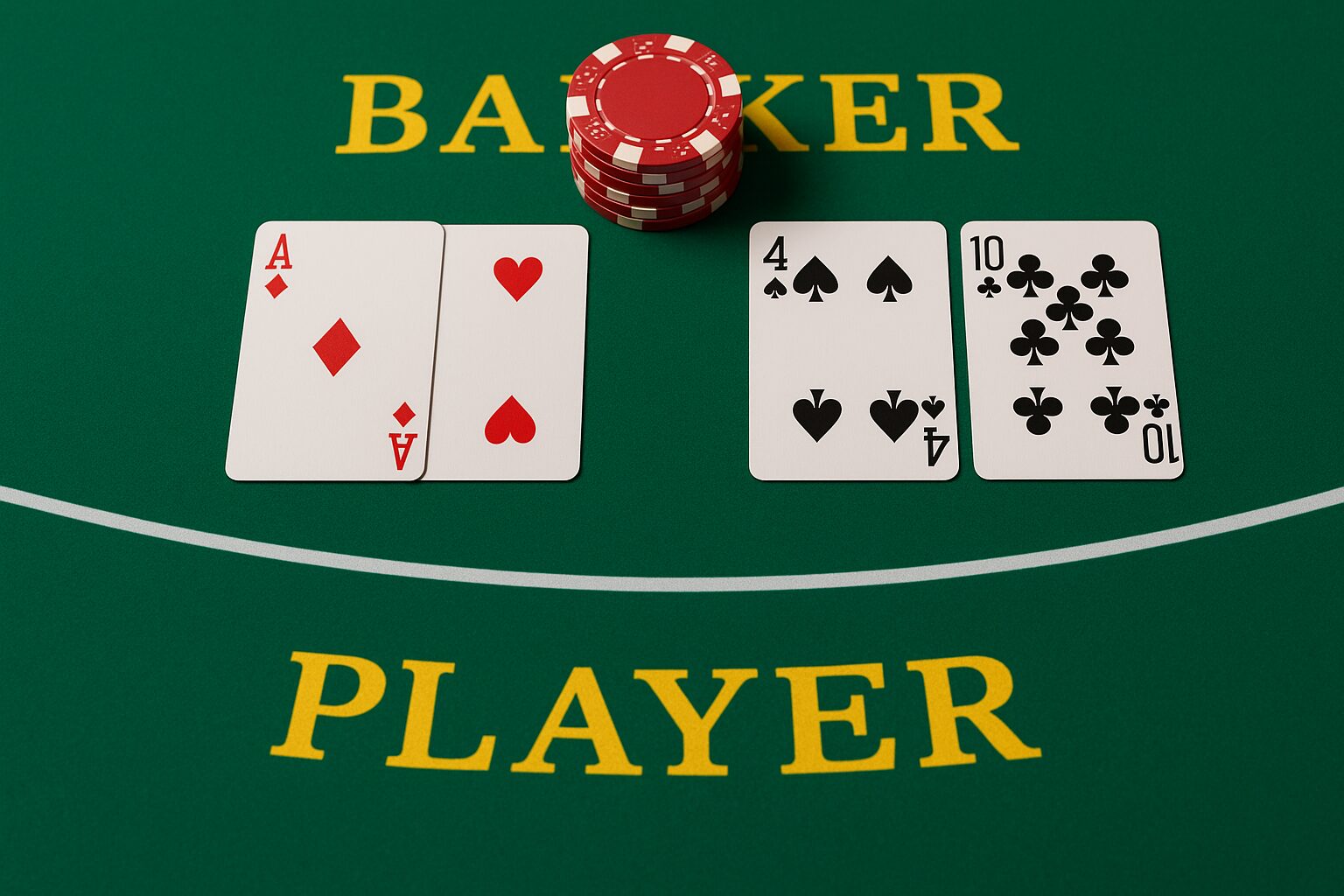
The age-old question for anyone playing baccarat is whether it’s best to always bet on the Banker. Many believe this bet has advantages, but is it really the smartest move every time you play?
Choosing between Banker and Player bets might seem straightforward, yet there are a few myths and misconceptions to sift through. Each option carries its own benefits and drawbacks.
No betting strategy can guarantee a win in baccarat, and the outcome of every round is determined by the rules and random card draws. This guide walks you through how the two main bets compare so you can make decisions that suit your style and limits.
What Does Betting on Banker Mean in Baccarat?
Placing a bet on the Banker in baccarat means you are predicting that the Banker’s hand will have a total closer to nine than the Player’s hand. This is one of the two main betting options in the game.
Under standard rules used by licensed UK gambling operators, both the Player and Banker receive two cards. Sometimes, depending on the total points, a third card may be drawn for either hand. The hand closest to a total of nine wins the round.
If you bet on the Banker and it wins, your bet is paid out at even money minus a small commission, usually around 5%. This commission is set by the rules and helps balance the slight edge the Banker hand has due to how cards are drawn.
As with any wager in baccarat, picking the Banker does not guarantee a win. Results follow fixed dealing rules and are not influenced by previous rounds.
Why Is the Banker Bet Popular Among Players?
Many players are drawn to the Banker bet because of the game’s statistics and the way baccarat is structured. Over a large number of rounds, the Banker hand tends to win slightly more often than the Player hand, due to the rules governing how cards are dealt. This stems from the third-card drawing rules, which give the Banker a small advantage when no natural 8 or 9 appears.
This small statistical edge has made the Banker bet popular with those who like to base their decisions on numbers. In many standard games, the Banker bet carries a house edge of around 1.06%, compared with about 1.24% on Player, while Tie is much higher. Exact figures can vary with the number of decks and the paytable, so it is worth checking the specifics at your table.
It is also important to note that most tables take a commission on Banker wins, typically 5%, and this is part of how those odds are balanced. Some no-commission variants change the payout structure, for example paying 1:2 on a Banker win with 6, which adjusts the edge, so it is sensible to review the rules before you play.
Some prefer sticking with the Banker for a sense of consistency and to reduce decision-making. However, each hand is independent. Streaks happen, yet they do not indicate what will occur next. Keep your play within a set budget, consider using limits and time-outs where available, and avoid chasing losses so your sessions remain manageable.

Discover The Best Online Casinos
Browse our list of top-recommended casino sites, read reviews from real players & be the first to get access to the latest casino bonuses
Pros of Betting on Banker
One of the main advantages often mentioned with the Banker bet is its lower house edge. Industry sources note that, compared to other bets in baccarat, the Banker option is statistically less costly to players over the long run. Even with the standard commission on Banker wins, it generally remains one of the most favourable core bets at the table, though the house still holds an overall advantage.
Another benefit is consistency. Because the Banker hand follows a set drawing rule that can result in slightly more wins, some see it as a more predictable option when compared with betting on the Player hand. This can make results feel steadier over time, while still being subject to normal short-term swings.
The Banker bet is also straightforward. There are no complicated side rules or strategies to learn, just a simple wager on the Banker’s hand to see what happens. That simplicity suits newcomers and anyone who prefers a no-fuss approach, and it can help you focus on setting a budget and pacing your play.
Cons of Always Betting on Banker
One drawback of the Banker bet is the commission. Usually, a 5% fee is taken from your winnings each time you win on Banker. This slightly reduces your overall returns compared to a standard even-money bet. A winning Banker bet usually pays 0.95 to 1, and commission rounding at low stakes can trim returns.
Sticking only to Banker bets can also make the gameplay feel repetitive. Some find that always choosing the same option takes away from the variety that baccarat offers. It may not suit those who prefer to vary their bets or explore rule variants.
Despite the statistics, no bet in baccarat guarantees a result. The Banker can lose multiple rounds in a row, just as the Player can. Short stretches can move against expectations, so short-term outcomes can differ widely from the theoretical edge.
How Does the Player Bet Compare to the Banker Bet?
Both the Player and Banker bets are straightforward options in baccarat and are equally easy to place. While some focus on statistics, others like to switch between the two for variety or personal preference.
When weighing up which bet to choose, it’s helpful to understand how the numbers work, and what to consider when it comes to payouts and commission.
House Edge Differences Explained
The house edge is a way of describing how much, on average, the game favours the operator over time. In general, the Player bet has a slightly higher house edge than the Banker bet. This means that, across many rounds, the Player option is a bit less favourable in terms of potential returns.
For the Player bet, the house edge is usually around 1.24%. The Banker bet’s house edge, taking the commission into account, is about 1.06%. While this is a small difference, it’s the reason why some players pay closer attention to these figures.
Payouts and Commission: What to Know
If you win a Player bet, you’ll receive even money on your wager, with no commission deducted from your winnings. This means a winning £10 bet pays out £10.
For the Banker bet, although it wins slightly more often, your winnings come with a commission, most often 5%. So, a £10 winning bet on Banker would return £9.50 after the commission.
Both bets carry their own mix of advantages and trade-offs. It comes down to which factors matter most to you.
Do Baccarat Myths Affect Betting Choices?
Baccarat has its fair share of myths and superstitions, some of which can influence the way people bet. Many players believe in hot streaks, betting systems, or that certain patterns can predict future outcomes. Scoreboards and roadmaps can be interesting to follow, but past results do not alter the odds of the next hand.
The reality is that every hand in baccarat is independent, and the dealing rules determine when additional cards are drawn. There is no proven system, pattern, or strategy that can guarantee wins or predict outcomes. Progression systems such as Martingale only change stake size and can escalate losses quickly, especially with table limits. The Banker bet usually has a slightly lower house edge due to the drawing rules, but it is not a certainty and often comes with commission.
It’s best to rely on clear, accurate information from trusted sources. Operators licensed by the UKGC are required to follow strict rules, helping to ensure fairness in every game. Licensed sites use independently tested random number generators or standardised dealing procedures, display RTP information, and provide safer gambling tools such as deposit limits, time-outs and reality checks.
Which Bet Suits Different Baccarat Players?
Baccarat bets can appeal to players for all sorts of reasons, depending on what they enjoy about the game. Some prefer the simplicity of sticking with one type of bet, while others like to switch for a bit of variety. You might also find your choice changes with your budget or the pace of play you prefer, whether that is steady hands or a more stop-start approach.
Players who enjoy following statistics might lean towards bets with a lower house edge, while others focus on what feels most engaging from one round to the next. Some favour Banker because it tends to win slightly more often, even with commission taken into account, while others like Player for its even-money payout that is easier to follow. Table rules can vary, including no-commission formats with adjusted payouts, so it helps to check how a game pays before you decide.
There’s no right or wrong choice, only what makes the game more enjoyable for you. Both Banker and Player bets offer straightforward gameplay, and neither can guarantee any specific result. Outcomes are random and previous hands do not influence the next, so treat patterns and scoreboards as information rather than something that can predict what will happen.
If you are tempted by Tie or side bets, remember they usually carry a higher house edge and can be more volatile. Many players treat them as occasional extras rather than a main approach. Whatever you choose, consider setting limits, keeping stakes within your means and taking breaks so the experience stays comfortable and in control.
Conclusion: Making Informed Baccarat Bets
Choosing between the Banker and Player bets comes down to understanding the facts, knowing the odds, and deciding what matters most to you. Both options have their own features and risks, and none can deliver certain wins.
Treat baccarat as entertainment and set limits that work for you. If you’re keen to find safe, trustworthy places to play, our regularly updated lists and comparisons are a helpful starting point. Baccarat should be enjoyable, and staying in control comes first.