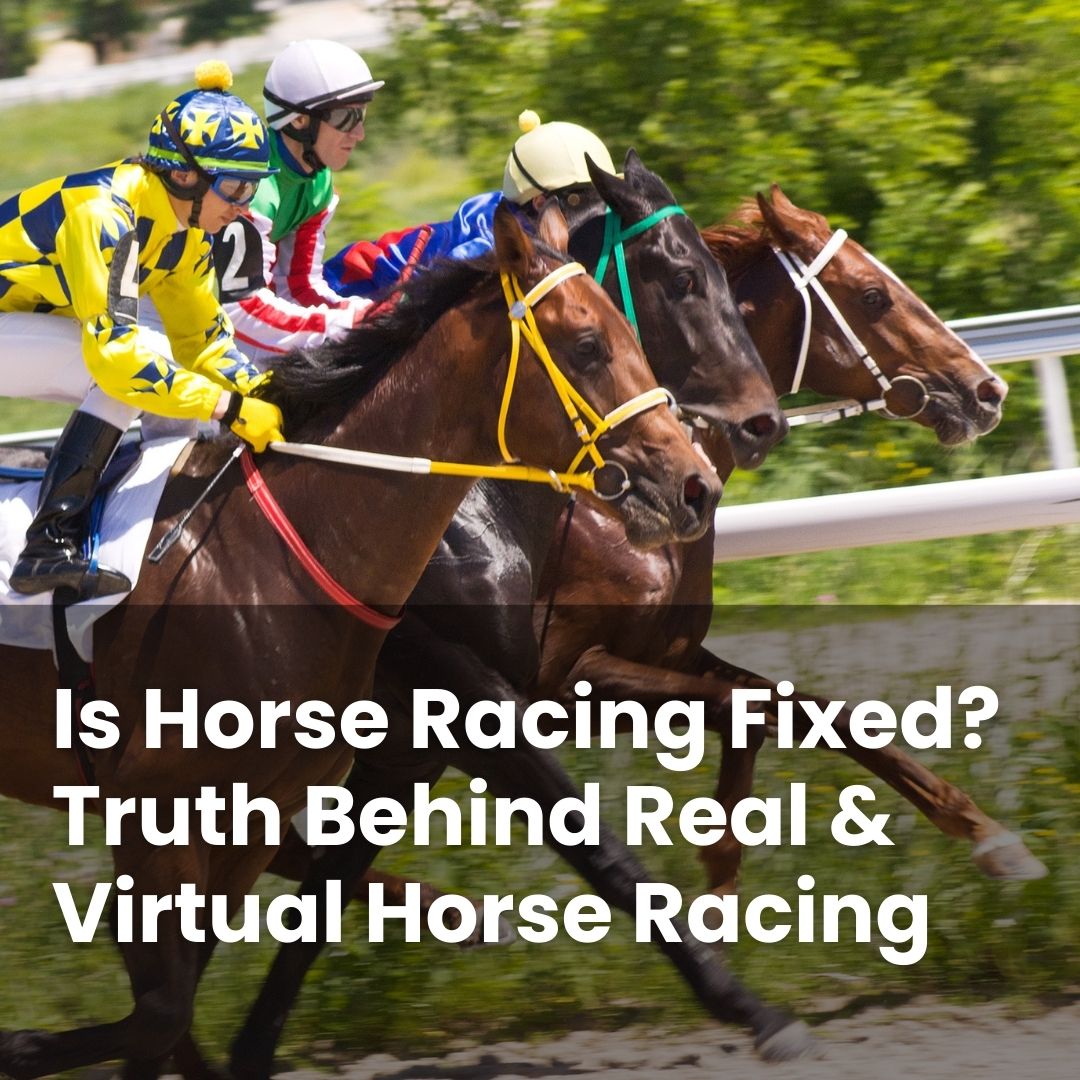
Horse racing has been part of British life for centuries, from busy race days to a quick flutter at the bookies. With so much interest and money around the sport, it’s natural to wonder how fair and well-managed it really is.
Questions also pop up about virtual horse racing. How does it work, and who checks it? Stories about odd results can add to the confusion, especially when technology is involved.
This guide breaks it all down. You’ll find out how real races are overseen, how virtual races are decided, and what safeguards exist in the UK to keep everything in line.
How Common Is Race Fixing In Real Horse Racing?
Race fixing means interfering with a race to try to produce a specific outcome, often for financial gain. It can involve people connected to horses, trainers, or jockeys. In the UK, the sport is tightly regulated and closely watched to prevent this.
Incidents do occur, but they are rare. The British Horseracing Authority (BHA) runs integrity operations that monitor betting markets and race performances, using data analysis and expert teams to spot anything unusual. When patterns do not match a horse’s known form or when betting activity looks out of place, they investigate.
Penalties are severe. Those caught face lengthy bans, loss of licences, and, in serious cases, criminal prosecution. With strong rules and modern monitoring, genuine attempts to interfere are very hard to get past the safeguards.
Most participants value the sport’s reputation and compete on merit. Isolated cases make headlines precisely because they are out of step with how racing normally operates. With that in mind, it helps to understand what fixing can look like in practice.
How Is Race Fixing Carried Out In Real Racing?
Match-Fixing And Jockey Collusion
Match-fixing can happen when individuals agree to influence a race for personal gain. This is collusion. It might involve a jockey easing off, following instructions that disadvantage their mount, or riding in a way that helps a particular rival. The purpose is often to profit through the betting market, such as by supporting a horse at longer odds or ensuring a specific result.
This behaviour is a serious breach of the rules. The BHA sets out strict standards for riding, communication, and betting conduct, and stewards have the authority to review rides, interview participants, and impose sanctions where the rules have been broken.
Doping, Tampering And Veterinary Abuse
Doping involves giving a horse prohibited substances to boost or suppress performance. This goes beyond legitimate veterinary treatment and includes illegal medications or enhancers that must never be present on race day. Tampering could also mean switching horses, altering declared equipment without permission, or concealing injuries.
Regulations cover everything from medication records to race-day checks. Vets and other professionals face heavy penalties if they assist in or conceal wrongdoing. Horses can be tested before and after races, with labs analysing samples to a high standard to detect even trace amounts of banned substances.
Betting Market Manipulation And Insider Betting
Betting markets can be distorted when people use confidential information or spread misleading claims to influence odds. Insider betting is when those with privileged knowledge, such as stable staff or owners, place wagers using details not available to the public.
Rules in Britain are designed to block this. Certain participants are restricted from betting, and passing on inside information for reward is prohibited. Operators and regulators monitor accounts and market moves to identify unusual activity.
Given the range of methods that could be attempted, the obvious question is how the sport catches and stops them.

Discover The Best Online Casinos
Browse our list of top-recommended casino sites, read reviews from real players & be the first to get access to the latest casino bonuses
How Do UK Racing Authorities Detect And Prevent Fixing?
The BHA leads on integrity and works with racecourses, bookmakers, and law enforcement. Dedicated teams analyse betting data, race videos, sectional times, and form to spot inconsistencies. Sudden market swings, unusual riding tactics, or performances far out of line with a horse’s profile can trigger a review.
On-course, stewards hold inquiries, examine equipment, and can order veterinary checks. Away from the track, licensing and background checks apply to owners, trainers, and jockeys. Operators share suspicious betting reports, and information can be escalated to the police when a potential crime is identified.
Drug control is robust. Horses are tested at random and on a targeted basis, and samples are processed by accredited laboratories. If a substance breach is found, cases are taken through formal disciplinary processes with clear penalties.
That covers live racing. Virtual horse racing, though, is a different set-up entirely, so it helps to see how software-led events are kept fair.
Can Virtual Horse Racing Be Fixed?
Virtual horse racing uses computer software rather than live animals or jockeys. Results are decided by Random Number Generators (RNGs), which produce outcomes that cannot be predicted or altered during a race.
In the UK, virtual racing products must meet standards set by the Gambling Commission. Independent testing houses examine the software to confirm the RNG works as intended and that results are not pre-set. Only once testing is passed can an operator offer the product.
When a virtual race runs, the outcome is determined within the system and cannot be seen or changed mid-race by the operator or developer. With the technology ring-fenced by testing and licensing, the focus then turns to how those outcomes are actually created.
How Virtual Horse Racing Works And How Outcomes Are Decided
Virtual racing recreates the look of a race on screen, but the animation is just a visual layer. The result is generated behind the scenes by an RNG using probability models. Each runner is assigned a chance of winning, reflected in the starting odds you see. Higher-rated runners will win more often over time than outsiders, but no result is guaranteed on any single race.
The software runs frequent events, often every few minutes, and the finish order is decided before the animation plays out. Independent labs test the RNG and the weighting logic, and audits ensure the set-up remains compliant after launch. The aim is straightforward: consistent, unbiased results that match the stated rules of the game.
If you prefer the excitement of live racing, the next question is how to view markets with a critical eye and spot when something feels off.
How Can Punters Spot Suspicious Races Or Markets?
It can be hard to judge in the moment, but a few signs may warrant caution. Sharp, unexplained odds moves close to the off can be a clue, especially if there is no obvious public reason such as a change in the going, a non-runner, or widely reported stable news. Large, concentrated bets on a lower-profile race can also stand out.
On the track, riding or running styles that jar with a horse’s past efforts may raise eyebrows. A strong finisher that is repeatedly held up in a slowly run race, or a sprinter kept wide without cover, might prompt questions. That said, tactics, pace, draw bias, wind operations, and changes in trip or headgear all legitimately influence outcomes, so unusual results do not automatically point to wrongdoing.
Patterns over time can be more telling than a single upset. Repeated odd moves around the same connections, or a cluster of results that do not sit well with published form, deserve extra scrutiny. Official stewards’ reports and post-race comments are useful context when assessing what you have seen.
When doubts harden into evidence, the final piece is what the law says and how penalties are applied.
What Legal Penalties Apply To Race Fixing In The UK?
Race fixing is a serious offence. The Gambling Act 2005 makes cheating at gambling a crime, which covers fixing races, using inside information for betting, and manipulating markets. Convictions can bring up to two years in prison, an unlimited fine, or both. In some cases, proceeds can be confiscated under separate legislation.
Sporting sanctions sit alongside the law. The BHA can impose lengthy bans, revoke licences, and levy fines. Individuals can also be excluded from racecourses. Investigations may be led by the police, brought by the BHA, or pursued jointly where appropriate.
Taken together, strong regulation for live racing and certified RNGs for virtual events mean the UK framework is designed to keep outcomes fair and misuse uncommon.