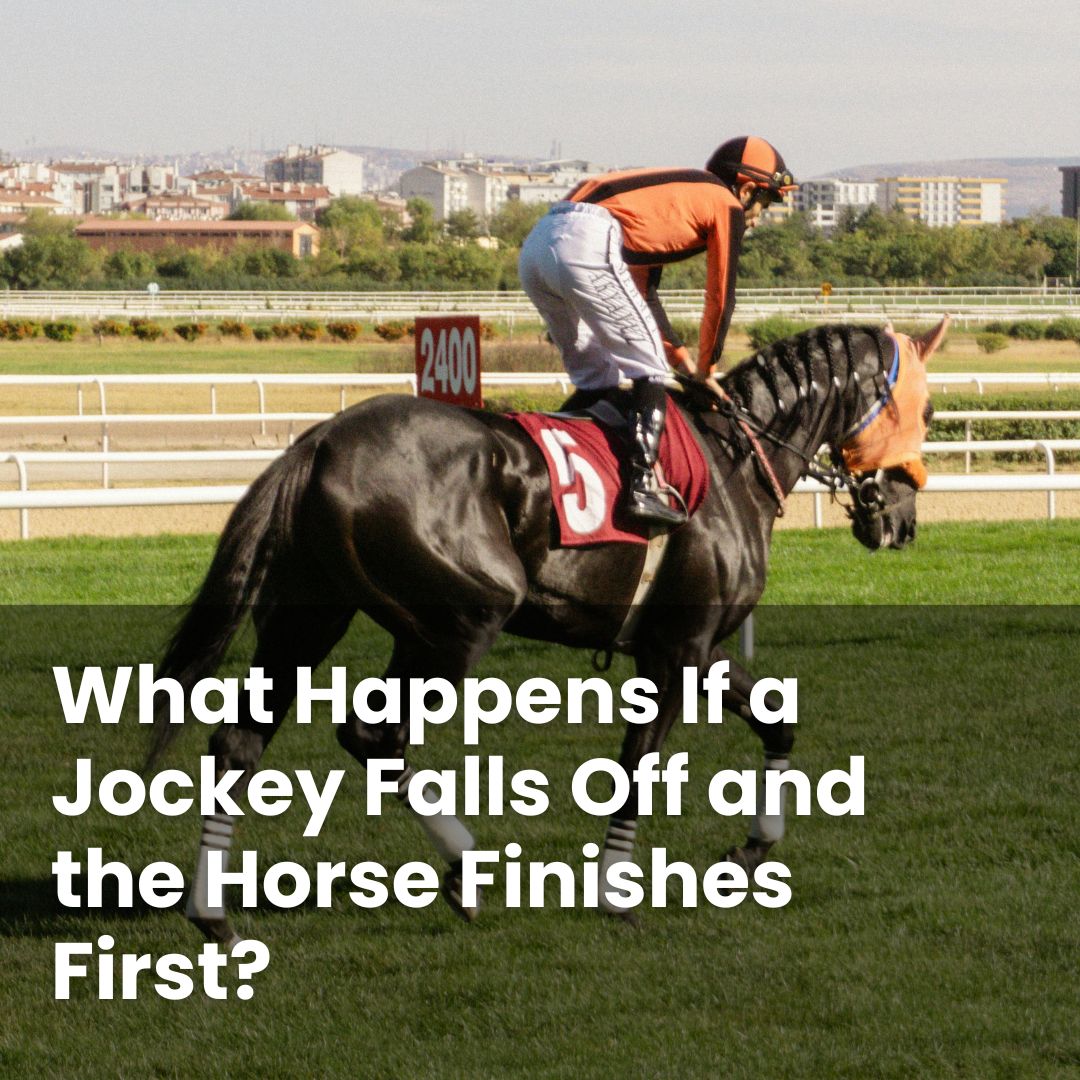
It is not something you expect to consider when watching a race, but what happens if the jockey comes off and the horse still charges on to pass the post in front?
Maybe you have seen it happen or heard it debated in a shop, and wondered how the rules work or what it means for a bet.
In UK racing, there is a clear process. Here is what really happens when a riderless horse crosses the line first, how the result is decided, and how bets are settled.
How Are Race Results Determined When A Jockey Falls Off?
In UK horse racing, a horse only counts as a finisher if it completes the full course with its jockey on board. The British Horseracing Authority rules set this out plainly.
If a jockey falls off during a race, no matter when it happens, the horse becomes a loose runner. Even if it gallops on and passes the post ahead of the field, it is not included in the official result because there is no rider in the saddle.
On the results sheet you will see the horse recorded with an outcome such as unseated rider or did not finish. Only those that complete the course with a jockey are placed or declared the winner.
Who Makes The Final Call On The Result?
So, who confirms that call on the day? At every UK meeting, a team of Stewards oversees the racing and makes the official ruling.
Appointed by the British Horseracing Authority, Stewards are experienced officials who ensure the rules are followed from start to finish. If something unusual happens, such as a jockey parting company with the horse, they review the footage, check the timings, speak to those involved where needed, and publish the result.
Their decision is the one that appears on the record and it is the version bookmakers use to settle markets.

Discover The Best Online Casinos
Browse our list of top-recommended casino sites, read reviews from real players & be the first to get access to the latest casino bonuses
What Happens To Win And Each-Way Bets If The Horse Finishes First?
Because a riderless horse is a non‑finisher, any win or each‑way bets on it are settled as losers. For a bet to stand, the horse has to be an official finisher, which means crossing the line with the jockey mounted.
For each‑way bets, both parts are treated the same. If the jockey is not on at the finish, neither the win part nor the place part pays out, and there is no refund. For example, if your selection unseats two out and runs on, it will still be recorded as unseated rider, and the whole each‑way stake loses.
If you are ever unsure how we have settled a race, get in touch and we will explain the ruling with a link to the official result.
Bookmakers And Tote Payouts After A Rider Falls Off
When it comes to payouts, bookmakers in the UK follow the official result issued by the Stewards. If a jockey comes off before the finish, the horse is not a finisher, so bets on that horse do not return anything, whether placed online or in a shop.
The same principle applies to Tote pools. Dividends are calculated only on horses that are officially placed or named the winner. A loose horse is treated as unplaced or did not finish, so it does not feature in the dividend at all.
That covers straight bets. What about the more complex options?
Which Other Bet Types Are Affected?
Place And Forecast/Tricast Settlement Rules
A place bet is settled on the official placings, which include only horses that finish with a jockey on board. If the rider falls at any stage, the selection is not placed, even if the horse runs past the post alongside the others.
For forecast and tricast bets, settlement follows the published finishing order. A straight forecast needs the first and second in the exact order, and a tricast requires the first three in sequence. If any horse in your combination loses its jockey, that horse cannot form part of the result, so the bet is settled as a loser. For example, if your forecast is built around a runner that unseats at the last, the forecast will not pay even if your other pick wins.
If in doubt, check the race result displayed with the market you played or on an official results service.
Does A Riderless Horse Get Official Credit For A Win?
No. A horse that completes the course without its jockey does not receive credit for a win or a place. The rules require a completed ride, so a loose horse is recorded with an outcome such as unseated rider, brought down or ran out, depending on what happened.
You will not see prize money, ratings credit or a winner’s mark against its name for that race. Only the horses that carry their jockeys over the line are listed as the winner and placed finishers.
With the result settled, attention often turns from the numbers on the board to the people involved.
What Happens To The Jockey And What Comes Next?
When a jockey comes off during a race, their safety is the first priority. Medical teams are on standby at UK racecourses and reach the rider quickly. The race itself continues under the eyes of officials, while the medics assess and treat the jockey as needed.
If a jockey is taken for checks, qualified staff examine them for injury. They may be cleared to ride again the same day, or they may be stood down for further care. Strict concussion and injury protocols apply, and a jockey can only return once passed fit by the relevant doctors.
The incident can also be reviewed by the Stewards, especially if there might have been interference or an issue with the start, a jump or another runner. Handlers and ground staff will work to catch the loose horse and make the course safe for everyone.
In short, a riderless horse cannot win or place, bets are settled to the official result, and welfare sits at the centre of how racing responds. If you ever need support with gambling, free and confidential help is available from services such as GamCare and GambleAware.