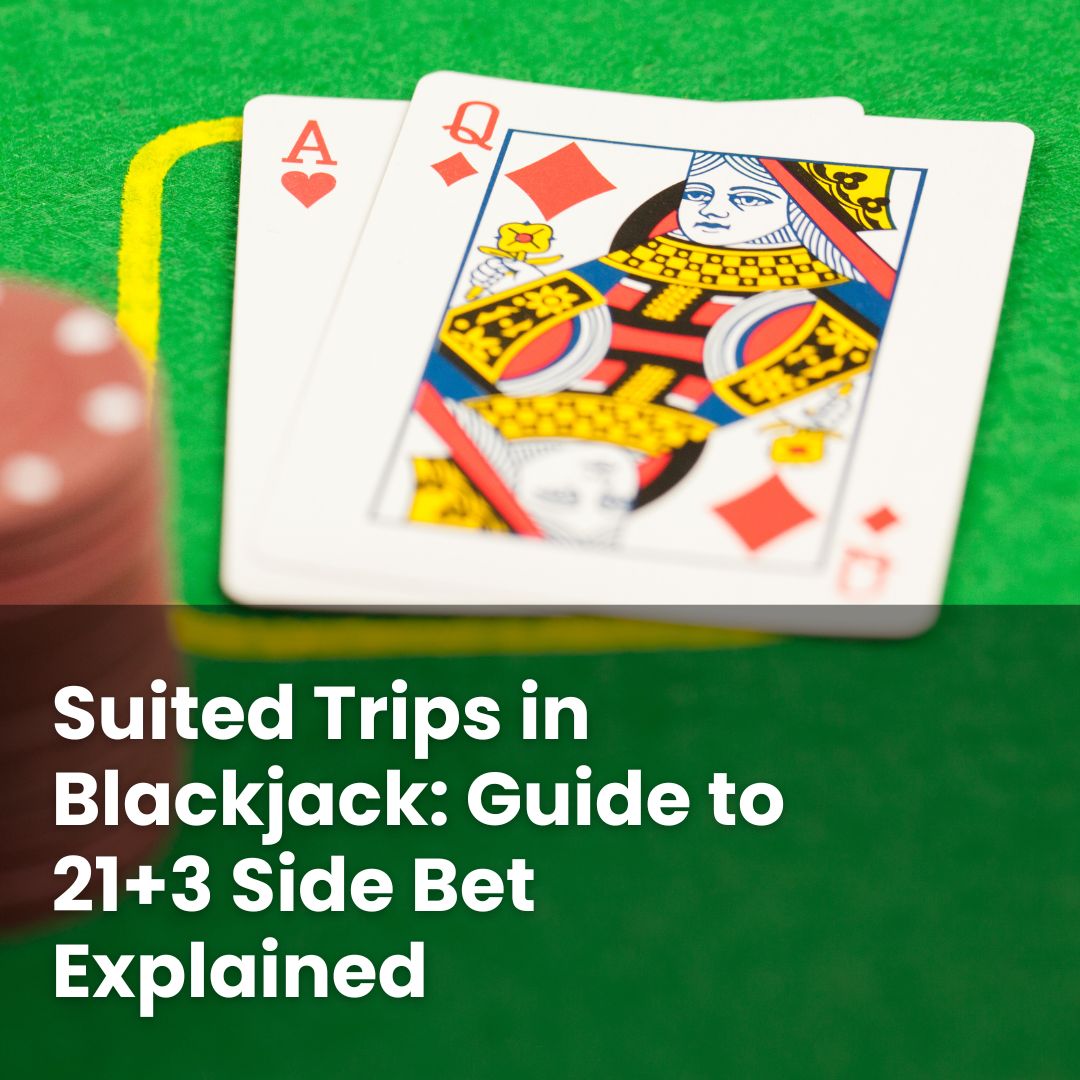
The 21+3 side bet adds a poker-style twist to blackjack, paying out on three-card combinations formed from the player’s first two cards and the dealer’s face-up card. Among these outcomes, “suited trips” gets the most attention.
This blog post explains how 21+3 works, what counts as suited trips, the odds and payouts involved, and how the house edge compares with the main game. It also clears up common misunderstandings and sets expectations around how often suited trips appear.
By the end, you will have a clear, practical picture of where suited trips sits within 21+3, how to read the paytable, and what to watch for before adding this optional bet to your session.
What Is the 21+3 Side Bet in Blackjack?
The 21+3 side bet is an optional wager that sits alongside the main blackjack hand. It pays out on the best three-card poker-style hand made from the player’s first two cards and the dealer’s upcard. Hands such as flushes, straights, three of a kind, straight flushes and suited trips are all typically included.
The bet is placed before any cards are dealt. Once the first two player cards and the dealer’s upcard are on the table, the three-card hand is evaluated for the 21+3 bet only. The side bet is separate from the main hand, so it does not change how the usual blackjack decisions play out.
With that foundation in place, let’s look closely at the headline outcome in 21+3: suited trips.
How Do Suited Trips Work in 21+3?
In 21+3, “suited trips” means the player’s first two cards and the dealer’s face-up card are identical in both rank and suit. For example, three king of hearts cards together qualify as suited trips. This is only possible in multi-deck shoes, where duplicates of the same card exist.
Every card must match exactly. Three cards of the same rank but different suits count as three of a kind, not suited trips. Because the requirement is so specific, suited trips are among the rarest 21+3 results.
When they do land, suited trips usually pay at the highest rate shown on the 21+3 paytable. Exact payouts can vary by game, so it is always worth checking the on-screen or table paytable before you play.
That exactness naturally raises a question: how often does this outcome actually appear?

Discover The Best Online Casinos
Browse our list of top-recommended casino sites, read reviews from real players & be the first to get access to the latest casino bonuses
What Are the Odds of Getting Suited Trips?
Suited trips need all three relevant cards to be the same rank and suit, which is only feasible in multi-deck games. In a single-deck game it cannot occur at all, because there is only one copy of each card.
The odds change with the number of decks because more duplicates increase the chance that all three cards match. As a guide:
- 4 decks: about 1 in 7,100
- 6 decks: about 1 in 4,800
- 8 decks: about 1 in 4,100
These figures come from the simple idea that, after the first card appears, the next two specific cards must both be the same again. The exact probability depends on the shoe size and the fact cards are dealt without replacement.
Knowing it is rare is useful context. The next thing most players look for is how the paytable rewards that rarity.
Suited Trips Payout Table
The payout for suited trips is usually one of the highest on the 21+3 menu. A common figure is 100 to 1. So, if a player wagers £1 on 21+3 and hits suited trips, the return would be £100 in winnings plus the original £1 stake.
Here is a typical example of a 21+3 payout table:
Hand Type
Usual Payout
Suited Trips
100 to 1
Straight Flush
40 to 1
Three of a Kind
30 to 1
Straight
10 to 1
Flush
5 to 1
Paytables can differ by game, so check what applies where you play. Higher listed payouts often come with rules or deck sizes that also influence the overall house edge.
High payouts are only part of the picture though. It is just as important to understand the long-term maths behind the bet.
House Edge Impact on Suited Trips
The house edge describes the built-in advantage the game holds over time. For 21+3, the house edge is typically much higher than for the main blackjack hand. Depending on the paytable and number of decks, it commonly sits around 3% to more than 7%. By comparison, the main blackjack game can be below 1% with basic strategy.
Rarer outcomes such as suited trips sit at the top of the payout chart, but that does not reduce the long-term edge. Over many rounds, 21+3 will cost more on average than playing only the main hand. If adding side bets, setting sensible limits and keeping stakes affordable helps maintain control.
With the maths in mind, a practical question follows: do your main-hand decisions ever change a 21+3 result?
Does Basic Blackjack Play Affect 21+3 Outcomes?
No. The 21+3 side bet is settled only on the first two player cards and the dealer’s upcard. Once those three are on the table, the result of the side bet is already fixed. Choices such as hitting, standing, doubling or splitting have no bearing on whether a suited trips hand, or any other 21+3 combination, appears.
Understanding that separation helps keep expectations clear. If 21+3 is not the only extra on offer, how does suited trips stack up against other side bets?
Comparing Suited Trips To Other Side Bets
Suited trips is one outcome within 21+3, but blackjack tables often feature other extras. Perfect Pairs pays when the player’s first two cards form a pair, with higher returns for matching suits and ranks. Insurance is a separate wager offered when the dealer shows an ace and pays if the dealer has blackjack. Royal Match rewards receiving a king and queen of the same suit.
Compared with these, suited trips is far rarer but typically comes with one of the biggest listed payouts. Something like Perfect Pairs may occur more often, although it pays less for the most common results. Each side bet has its own odds, paytable and house edge, so it pays to read the rules and check what is on offer before committing any stake.
That brings us to a few persistent myths that can lead to confusion.
Common Misconceptions About Suited Trips
A frequent belief is that patterns in previous hands can influence the chance of seeing suited trips. They do not. The result depends only on the three relevant cards in the current deal. Another misconception is that suited trips are more likely in single-deck games. In fact, they are impossible with a single deck and remain uncommon even with multiple decks, though the chance increases as more duplicates are present.
It is also sometimes assumed that any three cards of the same rank count as suited trips. They do not. All three must be exactly the same rank and suit to qualify for the suited trips payout.
Example Suited Trips Hands And Payout Calculation
Seeing one example often makes everything click into place. In a multi-deck shoe, identical cards can appear more than once.
For example:
Player’s hand: 7 of hearts, 7 of hearts
Dealer’s face-up card: 7 of hearts
This combination qualifies as suited trips. If a player places £1 on 21+3 and the paytable lists 100 to 1 for suited trips, the return is £100 in winnings plus the £1 stake. Three sevens of mixed suits would not count as suited trips, though they may qualify as three of a kind under the same side bet.
If you choose to add side bets, keep stakes affordable, set personal limits that fit your circumstances and take breaks. If gambling starts to affect your well-being or finances, seek support early. Independent organisations such as GamCare and GambleAware offer free, confidential help.