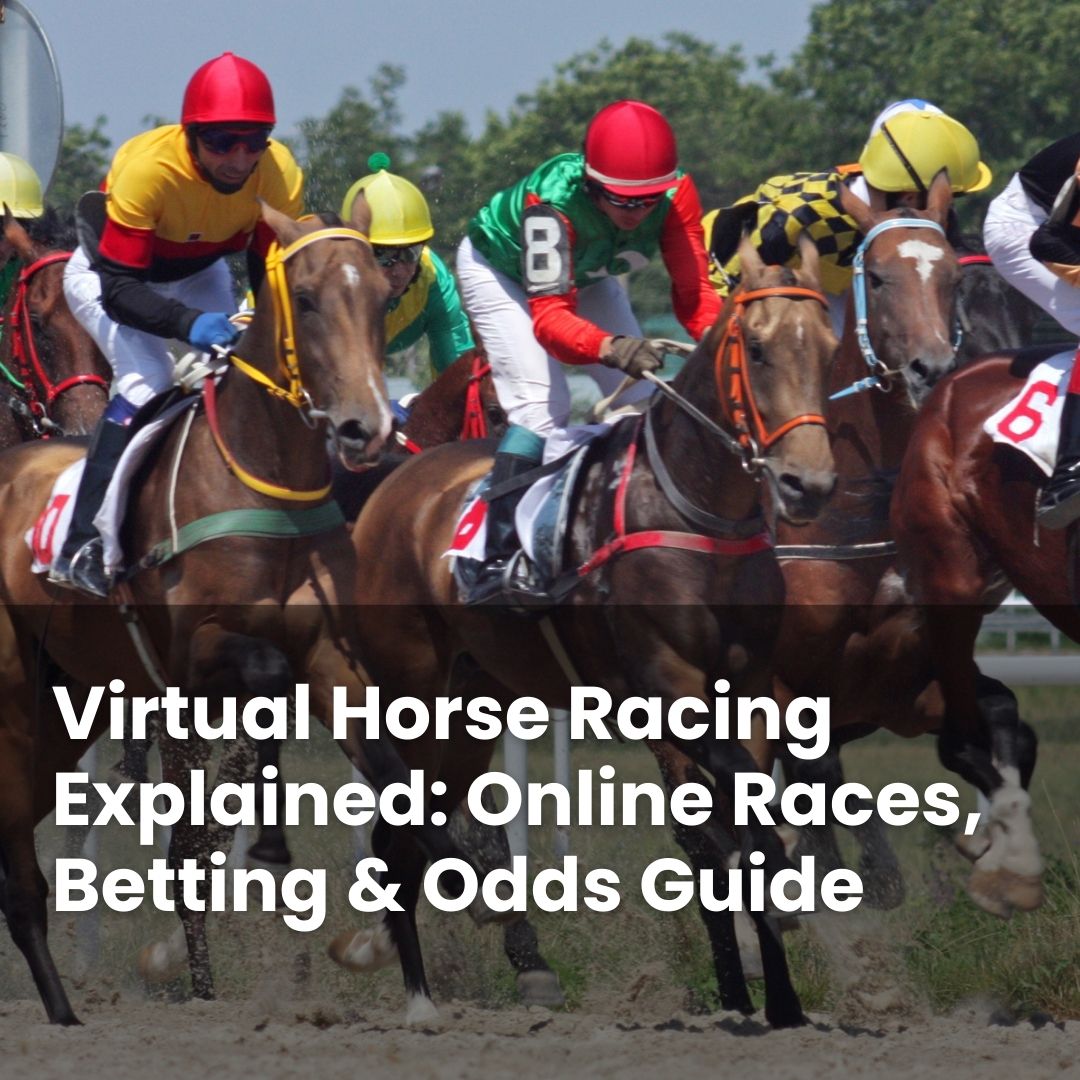
Stepping into virtual horse racing can feel a bit much at first. The action looks like a live broadcast, yet everything on screen is created by software rather than real horses on a track. Knowing how races are put together, how odds are set, and what you’re actually looking at makes the whole thing far clearer.
This guide walks through how virtual races are generated, how to read the race card, and what odds and payouts really mean. It keeps things simple and practical so you can follow along without getting lost in technical detail.
If you want a straightforward explainer that cuts out the jargon and shows you what matters, you’re in the right place.
What Is Virtual Horse Racing And How Does It Work?
Virtual horse racing is a software-driven version of the sport where computer-generated horses, names and colours are used to create short, TV-style races. Everything you see is animated, from the camera angles to the commentary.
Results are produced by a random number generator, or RNG, which sets the finishing order the moment a race begins. UK-licensed operators are required to use independently tested RNGs under rules set by the Gambling Commission, so outcomes follow strict standards.
When placing a bet, you simply choose from the runners shown on the race card and watch the race play out over a couple of minutes. There are no real-world variables like ground conditions or jockey decisions involved. The software decides the outcome and everyone sees the same result at the same time.
How Are Virtual Race Results Generated?
As covered above, an RNG sits at the heart of every event. It assigns each runner a predefined probability, then produces a finishing order for that specific race in line with those probabilities. The process is immediate, automated and independent of previous results.
To keep things robust, the underlying systems are assessed by accredited testing labs and monitored for consistency. The animation and commentary are there to bring the race to life, but the result is already set in the background before the first stride appears on screen.

Discover The Best Online Casinos
Browse our list of top-recommended casino sites, read reviews from real players & be the first to get access to the latest casino bonuses
Types Of Virtual Horse Races Available
Most platforms start with flat races, where six to twelve animated runners compete around a digital course. You’ll see sprints that wrap up quickly, as well as slightly longer contests that build a bit more tension towards the line. Tracks can vary in look and feel, with day or night settings to keep things fresh.
Some sites also offer virtual jump racing inspired by steeplechasing. These races feature fences and a different visual style, echoing famous jump events. Although the visuals change, the underlying structure remains the same, with software setting probabilities and the RNG deciding the order.
The main differences you’ll notice from race to race are field size, distance and the style of the track. Prices, or odds, are aligned with these setups and reflect how the software rates each runner for that event.
How Frequently Do Virtual Races Run?
Virtual racing is built for pace. New events typically start every few minutes, around the clock, because there are no real-world constraints such as transport, weather or daylight. It is a continuous schedule driven entirely by software.
This quick turnaround creates a very different rhythm compared to a day at a racecourse. If you like the idea of dipping in for a short burst of action, the format makes that easy without long gaps between contests. Next, it helps to know how to read what appears on screen just before the off.
How Do I Read A Virtual Race Card?
A virtual race card lists the runners for the upcoming event. Each horse is shown with a number, name and colours that match what you’ll see in the animation. You do not need to study form, because virtual horses do not have a racing history.
Alongside each runner you’ll see the starting odds. These can be displayed as fractions, like 4/1 or 7/2, or as decimals such as 5.0. They show the potential return on a winning bet relative to your stake at that moment.
You may also notice extras like a silks icon or a fictional trainer name. These details are there to add flavour rather than provide performance clues. Once you’re familiar with where to find the number and the price, the card is quick to scan.
How Do Odds Work In Virtual Horse Racing?
Odds are the price you’re offered for each runner and are shown in the same formats used for other betting, such as fractional and decimal. Behind the scenes, the software assigns probabilities to every horse, then converts those probabilities into the prices you see.
Lower odds indicate a higher programmed probability of finishing first, while higher odds reflect a lower probability. Because every event is generated on its own, prices are set for that race only and are not tied to any past performance. This also means public betting patterns or real-world news do not move the market.
How Are Virtual Racing Odds Calculated Compared To Real Races?
Live racing prices are influenced by form, jockey bookings, ground conditions and where the money is going. In virtual racing, none of that applies. The software sets a probability for each runner, which is then turned into odds for that single event, as explained earlier.
Once displayed, those prices usually remain steady until the race runs, because there are no outside forces to change them. In short, virtual odds are a straight reflection of the programmed probabilities for that specific contest.
How Do I Place Bets On Virtual Horse Races?
Betting on a virtual race follows the same broad pattern you’ll recognise from other online markets. After selecting the virtual racing section, you choose an upcoming event, look over the race card and decide which runner to back at the price shown.
Common bet types include a straight win, where your selection must finish first, and an each-way option that splits your stake between the win and a place return. Place terms depend on the field size and will be shown alongside the market. Once a wager is confirmed, the race runs within minutes and any returns are credited automatically if your selection qualifies.
How To Interpret Payouts And Returns In Virtual Racing
Payouts flow directly from the odds and your stake. With fractional odds, such as 6/1, a £2 stake returns £12 in winnings plus your £2 stake, paying £14 in total. Decimal odds show the total return, so 7.00 means a £1 bet would return £7 including the original £1.
Each-way bets are paid in two parts. One part is settled at the win odds if the horse finishes first. The other part is settled at a fraction of those odds if the horse places, with the fraction and the number of places depending on the race terms shown by the operator. Terms can vary between sites, so it is worth checking how places and place fractions are listed on the market you are viewing.
Are Virtual Horse Races Fair And Regulated?
In Great Britain, virtual racing is covered by rules set by the Gambling Commission. Products must use certified RNGs and undergo independent testing to confirm that outcomes are random, that probabilities are applied correctly, and that the software performs as described. These checks continue after launch to ensure standards are maintained.
Licensed operators must also explain how their virtual games work and provide access to safer gambling tools such as deposit limits and time-outs, with signposting to support services like GamCare and BeGambleAware. With these safeguards in place, you know how results are produced, how prices are set and what to expect each time you watch a virtual race.